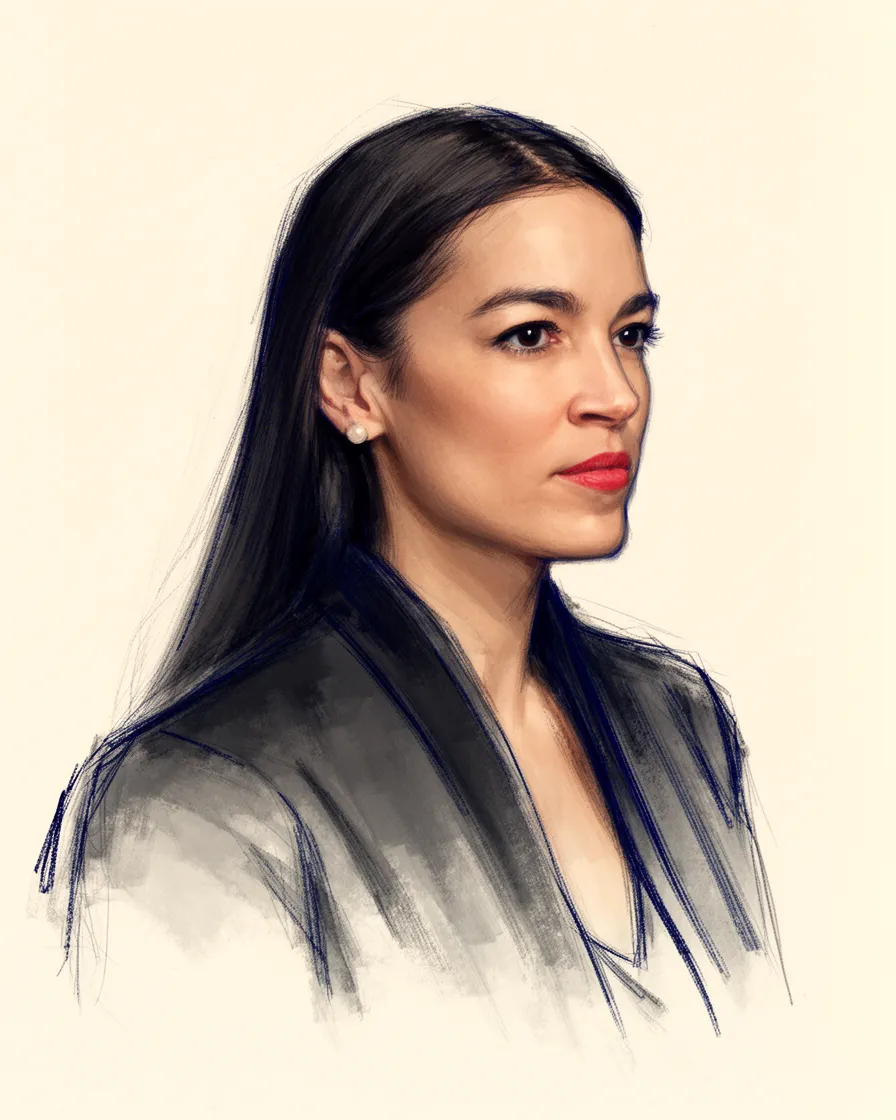
Alexandria Ocasio-Cortez on Global Trade
Alexandria Ocasio-Cortez's position on global trade is characterized by a strong progressive critique of existing frameworks, arguing that they frequently favor multinational corporations at the expense of the working class and the environment.
She has consistently opposed major trade deals, such as the Trans-Pacific Partnership (TPP), citing concerns over offshoring of American jobs and weak labor and environmental standards. Ocasio-Cortez demands greater transparency and stronger enforcement mechanisms in trade agreements, viewing them as having historically caused damage to labor across the continent.
More recently, her focus has included criticizing specific tariff policies, such as those implemented by Donald Trump, for allegedly being used to manipulate markets for the benefit of corporate allies rather than truly supporting domestic manufacturing. This indicates a view that trade policy must be directly aligned with her broader economic goals for workers and community investment.
Context
Alexandria Ocasio-Cortez's work on global trade connects directly to her broader progressive platform, which emphasizes economic democracy and skepticism of corporate influence in government. Her service on committees like Financial Services and Energy and Commerce gives her a vantage point to scrutinize international financial agreements and policies related to environmental impact.
Her campaign in 2018 focused heavily on rejecting corporate money and fighting against established political norms, which naturally extended to criticizing large-scale agreements like the TPP that are often negotiated outside of public view.
Actions Taken
- Legislation AdvocacyCo-signed a letter with other progressive Democrats demanding the Trump administration renegotiate the USMCA (which replaced NAFTA) to include stronger enforcement mechanisms for labor and environmental standards.
- Voting RecordVoted NAY on the USMCA Implementation Act, maintaining her opposition to the agreement in its final form because it did not meet her desired high standard for labor and climate commitments.
- Public StatementCriticized President Trump's global tariffs as a "disastrous" policy and part of a scheme to manipulate markets, linking tariff volatility to potential insider trading by Congress members.
Key Quotes
The new text also includes new terms that we oppose, including some that would lock in high U.S. drug prices.”
The new deal “is essentially NAFTA 2.0: while it includes some important improvements from the original NAFTA, critical unfinished business would perpetuate NAFTA's damage,”
Criticism
Argued that while Democratic negotiators improved the deal, the final USMCA did not reach the high standard hoped for regarding labor and environmental standards.
Sources7
AOC on Free Trade
* This is not an exhaustive list of sources.