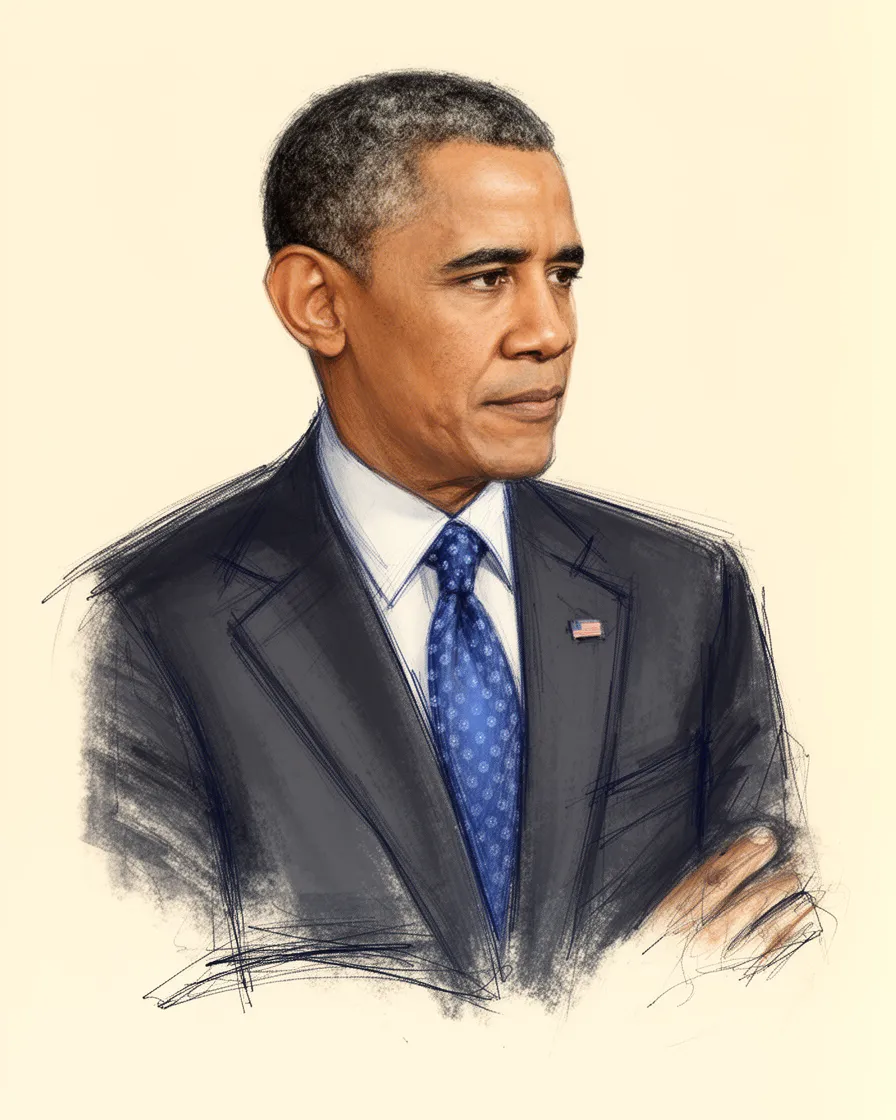
Barack Obama on China
Barack Obama's approach to China during his presidency was characterized by a strategic mix of deep engagement and balancing against its growing regional influence. His administration prioritized cooperation on global issues while simultaneously implementing the Pivot to Asia to strengthen alliances near China and maintain regional stability.
Obama consistently articulated the belief that a successful, stable, and peaceful China is in the interest of the United States, serving as an effective partner on transnational challenges. However, this engagement was coupled with clear efforts to manage differences, particularly regarding maritime disputes and human rights concerns, often leading to periods of tension.
Later in his tenure, diplomatic friction became more visible, exemplified by the perceived snub during his 2016 G20 arrival, suggesting that while he sought partnership, the relationship remained fundamentally competitive.
Timeline
- Barack Obama made an early visit to China, unusual for a first-term president, signaling the importance of the relationship.
- The Obama Administration announced the 'return to Asia' or Pivot to Asia strategy, intended to build relationships in East Asia to counter China's rise as a potential rival superpower.
- Obama commented on President Xi Jinping's rapid consolidation of power, noting both the internal 'clout' and external worries about associated nationalism and maritime disputes.
- President Obama experienced a highly publicized, chaotic arrival at the G20 Hangzhou summit, which many observers interpreted as a deliberate diplomatic snub by Chinese officials, highlighting underlying tensions.
Actions Taken
- Foreign Policy StrategyAnnounced the Pivot to Asia strategy, later termed the 'Pivot to East Asia' in 2012, to shift U.S. focus to the Asia-Pacific region.
- Bilateral DiplomacyHeld a joint press conference with President Xi Jinping to discuss bilateral relations and global challenges.
- Diplomatic VisitVisited China for the first time as president in the first year of his term, which was considered unusual for a U.S. president.
Key Quotes
Since I've been President, my goal has been to consistently engage with China in a way that is constructive, to manage our differences and to maximize opportunities for cooperation.
I believe it is in the interests of the United States to see China grow, to pull people out of poverty, to expand its markets, because a successful and stable and peaceful China can then serve as an effective partner with us on a range of international challenges.
"He (Xi) has consolidated power faster and more comprehensively than probably anybody since Deng Xiaoping. And everybody's been impressed by his clout inside of China after one a year and a half or two years."
Criticism
Believed the 'Pivot to Asia' emphasized engagement over 'balancing,' suggesting the substance of the pivot lacked seriousness and was merely symbolic.
Argued that the 'pivot' strategy was creating a self-fulfilling prophecy, unnecessarily increasing Beijing's insecurities and fueling Chinese aggressiveness.
Sources5
Barack Obama 'deliberately snubbed' by Chinese in chaotic arrival at G20
President Obama downplays China arrival incident
US President Obama's China Policy: a Critical Assessment
Remarks by President Obama and President Xi of the People's Republic of China in Joint Press Conference
President Obama 'Impressed' By 'Clout' of China's Leader
* This is not an exhaustive list of sources.