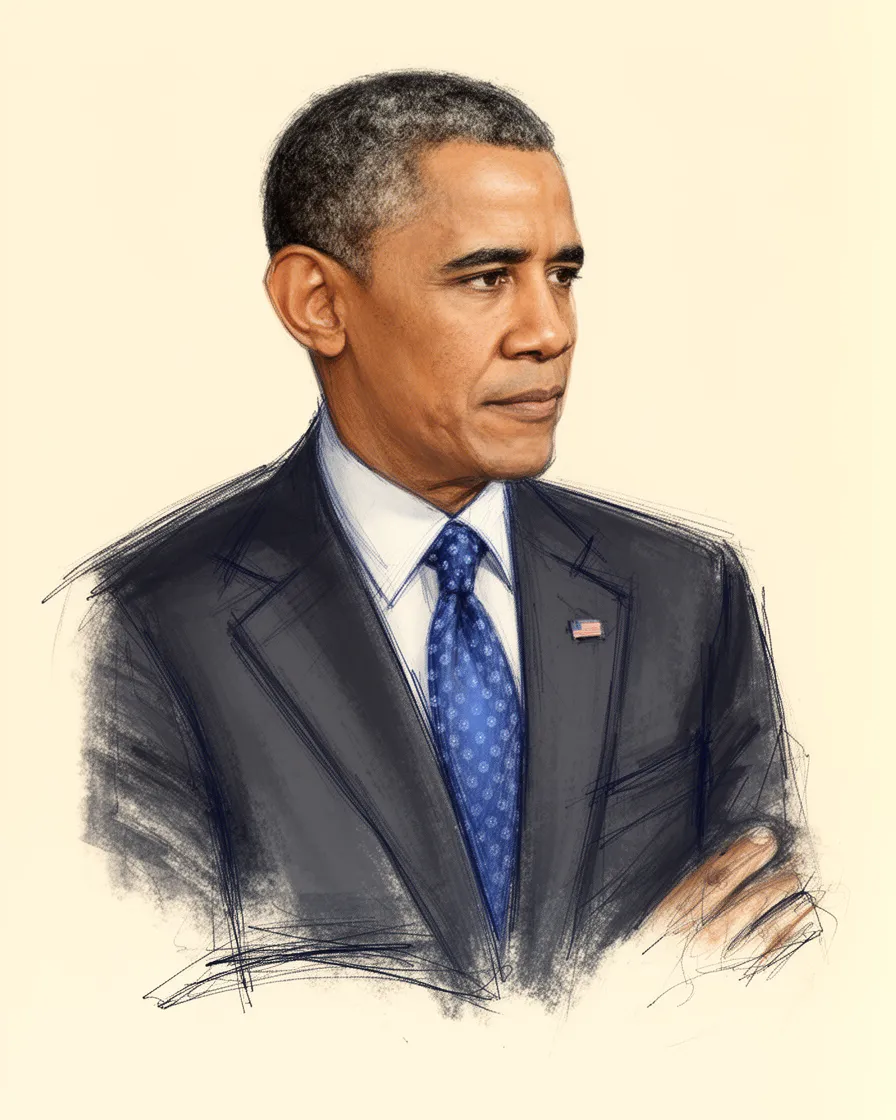
Barack Obama on Healthcare
Barack Obama centered his healthcare policy around the passage and implementation of the Patient Protection and Affordable Care Act (ACA), colloquially known as "Obamacare", which he signed into law on March 23, 2010.
His overarching goal was to expand health insurance coverage to the uninsured, cap premium increases, and prevent insurers from denying coverage due to pre-existing conditions. The initial proposal included a public option to compete with private insurance as a primary cost-lowering mechanism, though this feature was ultimately excluded from the final legislation passed by Congress.
Key provisions of the ACA included expanding Medicaid eligibility and providing subsidies for premiums for individuals earning up to 400 percent of the federal poverty level (FPL), aiming for a more equitable system. The law was financed through a mix of new taxes, fees on high-income brackets and medical devices, and cost-saving measures within Medicare.
Obama consistently defended the law against numerous legal and political challenges, celebrating its anniversary during his post-presidency. The successful passage of the ACA remains widely cited as the defining legislative achievement of his two terms in office.
Context
Barack Obama's focus on healthcare reform was a central promise of his 2008 presidential campaign and a top legislative goal throughout his first term. His political experience included sponsoring legislation related to health and human services as an Illinois State Senator, which informed his national agenda.
Healthcare reform was deemed necessary due to the high percentage of uninsured Americans and rising costs. The final legislation, the ACA, represented the most significant regulatory overhaul of the U.S. healthcare system since the creation of Medicare and Medicaid in 1965.
Timeline
- During his presidential announcement, Barack Obama emphasized reforming the health care system as one of his key issues.
- Early in his first term, Obama reversed a Bush-era policy limiting funding for embryonic stem cell research.
- House Democratic leaders introduced a comprehensive overhaul plan which Obama pushed for passage before the end of the year.
- The Patient Protection and Affordable Care Act (ACA) passed Congress and was signed into law by Obama.
- The Supreme Court upheld the individual mandate under the ACA as a constitutional exercise of Congress's taxing authority.
- Obama returned to the White House to celebrate the 12th annual anniversary of the ACA's signing.
Actions Taken
- Legislation signingSigned the Patient Protection and Affordable Care Act (ACA) into law, fulfilling a major campaign promise to reform health care.
- Executive ActionLifted a ban on using federal funds for embryonic stem cell research, a move related to broader health and medical funding policy.
- Legislation signingSigned the reauthorization of the State Children's Health Insurance Program (SCHIP), covering an additional four million uninsured children shortly after taking office.
- Legal actionHis administration filed legal briefs urging the Supreme Court to uphold the ACA's subsidies in the King v. Burwell case.
Criticism
They consistently sought to repeal the ACA, arguing it represented government overreach and increased costs.
Dissatisfaction that the final bill did not include the public option he initially advocated for, resulting in a 'fragile' legislative achievement.
Criticism arose over the necessity and economic impact of the massive $900 billion ten-year spending plan associated with the reform.
Sources3
* This is not an exhaustive list of sources.