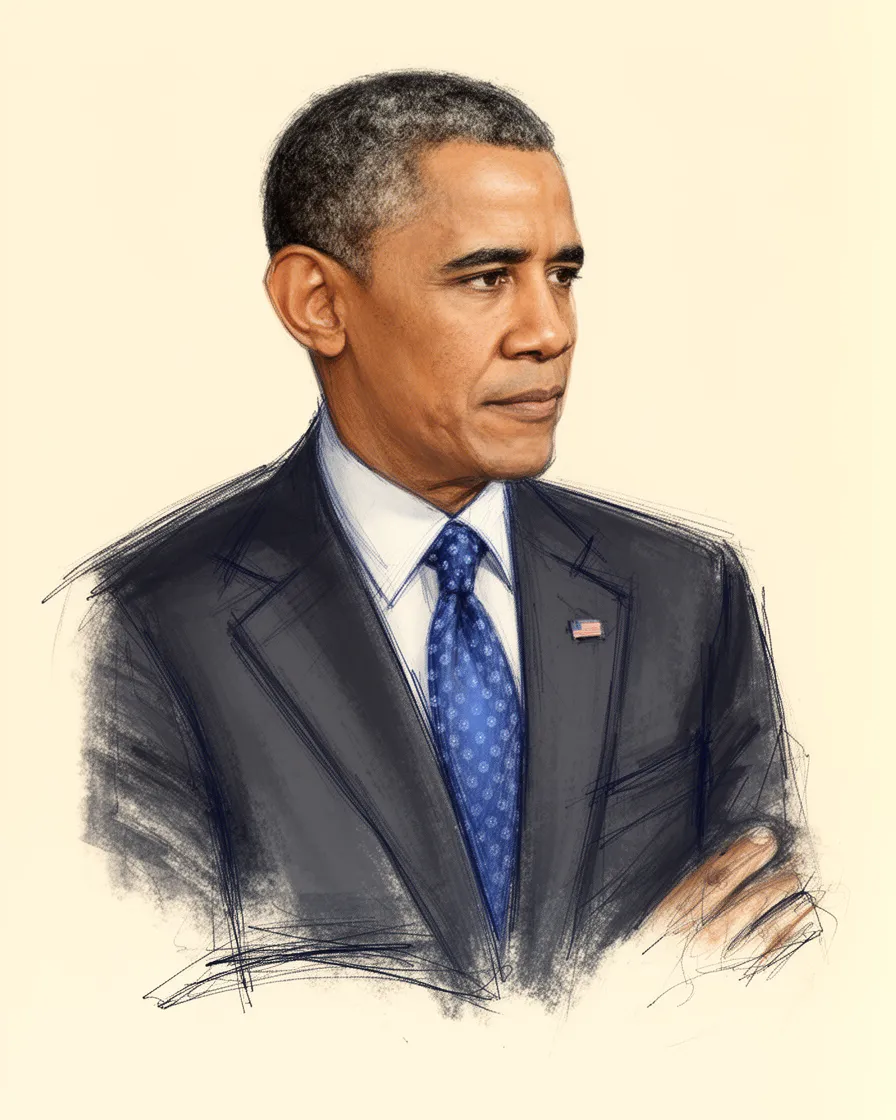
Barack Obama on Immigration (2014)
Barack Obama's stance on immigration in 2014 was defined by his decision to bypass Congress and use executive authority to address what he termed a "broken immigration system." In his November 20, 2014, address, he unveiled the Immigration Accountability Executive Action, designed to shield up to 5 million undocumented immigrants from deportation.
His position hinged on the idea that comprehensive reform from Congress was necessary but had stalled, compelling him to use his executive discretion. Obama explicitly pushed back against critics who labeled the move amnesty, arguing that the true "amnesty" was leaving the broken system as-is while millions lived in the shadows.
Key components of the 2014 action involved expanding the existing Deferred Action for Childhood Arrivals (DACA) program and introducing the Deferred Action for Parents of U.S. Citizens and Lawful Permanent Residents (DAPA) program. He framed these actions as prioritizing enforcement on threats—"Felons, not families. Criminals, not children."
Context
In 2014, Barack Obama acted unilaterally on immigration because comprehensive immigration reform legislation had stalled in the House of Representatives following the Senate's passage of a bipartisan bill in 2013. This context of legislative failure was the primary justification Obama provided for utilizing executive power on the issue.
His actions, though significant, were framed as temporary relief measures, not a permanent fix like a pathway to citizenship, which he maintained only Congress could establish. This approach was designed to respond to humanitarian concerns while maintaining the stance that true legislative change was necessary.
Actions Taken
- Executive Order/ActionAnnounced the Immigration Accountability Executive Action, which included the expansion of DACA and the creation of the DAPA program to provide temporary deportation relief for millions of undocumented immigrants.
- Enforcement Policy ChangeDirected immigration enforcement priorities to focus more sharply on national security threats, individuals with criminal convictions, and recent unlawful entrants.
- Border/EnforcementAnnounced steps to strengthen border security and reduce cooperation between federal immigration authorities and local law enforcement agencies.
Key Quotes
We are and always will be a nation of immigrants. We were strangers once, too.
I know some of the critics of this action call it amnesty. well it's not amnesty is the immigration system we have today millions of people who live here without paying their taxes or playing by the rules. while politicians use the issue to scare people and whip up votes at election. time that's the real amnesty leaving this broken system the way it is.
Felons, not families. Criminals, not children. Gang members, not a mom who's working hard to provide for her kids.
Criticism
Claimed that the DACA and DAPA programs constituted an unfair form of amnesty.
Challenged the legality of the Executive Actions, leading to a major lawsuit that ultimately blocked implementation in the Supreme Court.
Sources5
Obama's 'Immigration Accountability Executive Action' | NNIRR
* This is not an exhaustive list of sources.