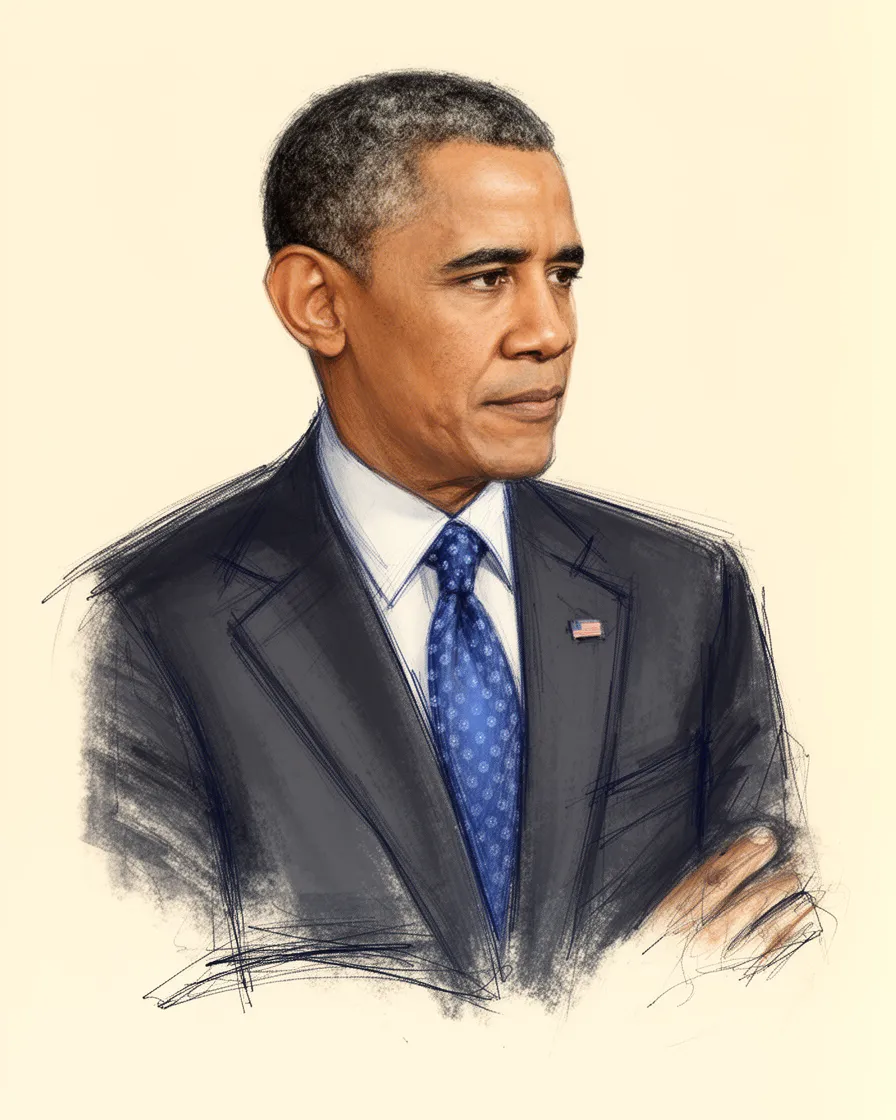
Barack Obama on Israel-Palestine Conflict
Barack Obama entered office in 2009 with a stated goal to "actively and aggressively seek a lasting peace between Israel and the Palestinians," signaling a potentially more balanced approach than his predecessors. His administration consistently supported the two-state solution, envisioning it based on the 1967 borders with agreed-upon land swaps.
However, the pursuit of this goal was complicated by ongoing Israeli policies and regional dynamics, leading to friction. During his presidency, the U.S. vetoed a UN Security Council resolution condemning Israeli settlements in 2011, though the administration later abstained on a similar resolution in 2016. [cite: 4, 5, Document]
Even after leaving office, Obama continued to weigh in, notably supporting Israel's right to defend itself following the October 2023 attacks, while simultaneously warning against ignoring Palestinian suffering and the human costs of military action in Gaza. Critics often noted that his administration's efforts ultimately failed to advance the two-state solution significantly.
Context
Barack Obama's involvement in the Israel-Palestine Conflict was significant due to his role as U.S. President, as the U.S. historically plays a central mediating role. His administration maintained that Israel is the most important ally of the US in the Middle East.
Before the presidency, as an Illinois state senator, Obama was known for being forthright in criticizing U.S. policy and calling for an evenhanded approach to the conflict, influenced by his engagement with diverse constituents and liberal Jewish advisors in Chicago.
Actions Taken
- DiplomacyAppointed former Senate Majority Leader George Mitchell as special envoy for Middle East peace on his second full day in office.
- SpeechDelivered a speech at Cairo University calling for "A New Beginning" in relations between the Islamic world and the United States and promoting Middle East peace.
- Diplomatic ActionThe U.S. vetoed a Security Council resolution condemning Israeli settlements.
- Diplomatic ActionThe United States abstained from UN Security Council Resolution 2334, which condemned Israeli settlement building in occupied Palestinian territories, effectively allowing it to pass.
Key Quotes
For more than sixty years they've endured the pain of dislocation.
It means guarding against dehumanising language towards the people of Gaza, or downplaying Palestinian suffering - whether in Gaza or the West Bank - as irrelevant or illegitimate.
Ultimately, it is the Israelis and the Palestinians -- not us –- who must reach agreement on the issues that divide them: on borders and on security, on refugees and Jerusalem.”
Criticism
Strongly criticized the Obama administration's abstention on UN Resolution 2334 and had previously advocated for the US Congress to oppose the Iran Nuclear Deal, calling it 'dangerous' and 'bad'.
Stated that Obama was on his way to being the first U.S. president in over four decades to break no new political ground in resolving the Israeli-Palestinian conflict, potentially leading to the death of the two-state solution.
Sources4
Former US President Barack Obama has weighed in on Israel's war on Gaza...
* This is not an exhaustive list of sources.