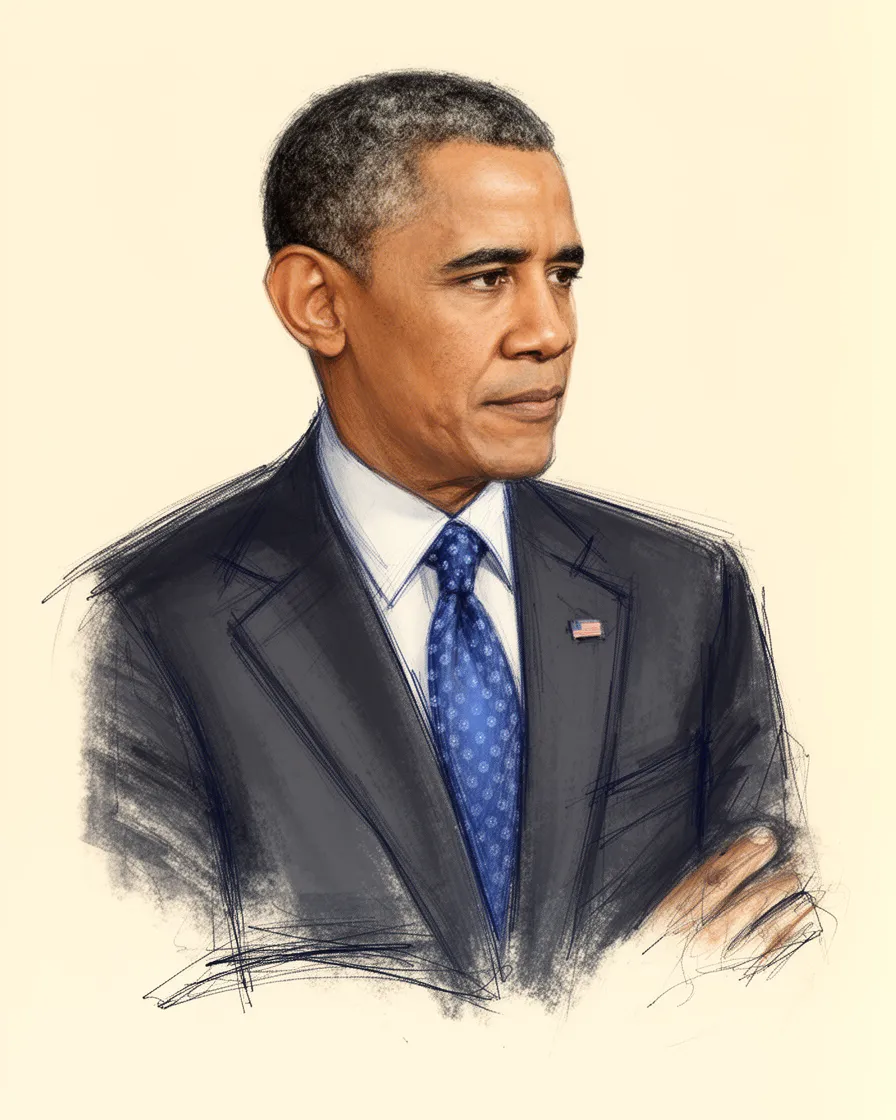
Barack Obama on Racism
Barack Obama has consistently addressed the topic of racism throughout his public life, recognizing it as a complex and persistent issue in the United States. Early in his career, particularly as a community organizer and Illinois Senator, he focused on policy solutions like requiring police to record the race of drivers they detained to combat racial profiling.
During his presidency, many observers debated whether his election signaled a "post-racial America," but Obama soon found himself navigating intense racial tensions, often responding to high-profile incidents involving African-Americans and law enforcement. While he was initially reluctant to speak frequently on race, he began to openly discuss the disadvantages faced by minority groups by 2014.
His approach involved seeking to build trust between law enforcement and civil rights activists, though this effort yielded mixed results, drawing criticism from both sides. Obama's overall position is characterized by a belief in American ideals while acknowledging the nation's ongoing failure to fully deliver on racial equality.
Context
Barack Obama's unique position as the first African American president made his views on racism subject to intense scrutiny and expectation. His background, blending a white mother from Kansas and a Kenyan father, shaped his early writing and exploration of racial identity.
His early career as a community organizer on Chicago's South Side and his work registering voters for Project Vote informed his understanding of systemic issues related to race and community empowerment.
Timeline
- As a candidate for the Illinois state senate, Obama's record showed support for legislation aimed at addressing racial profiling.
- As chairman of the Illinois Senate's Health and Human Services Committee, he sponsored legislation requiring police to record the race of detained drivers.
- Upon launching his presidential bid, his very identity and personal story often centered the conversation around race in America.
- Following his election, there was widespread public contemplation over the possibility of a "post-racial America."
- Following the George Zimmerman acquittal, Obama gave a speech noting that Trayvon Martin "could have been me 35 years ago," directly addressing racial profiling and justice concerns.
- After incidents like the shooting of Michael Brown in Ferguson, Obama began to speak more openly about the disadvantages faced by minority groups.
Actions Taken
- LegislationSponsored and led bipartisan passage of legislation requiring police to record the race of drivers they detained while in the Illinois Senate.
- Executive Action/InitiativeSought to build trust between law enforcement officials and civil rights activists during his presidency following incidents like the Michael Brown shooting.
- Policy ImplementationImplemented what was considered stronger policy action on behalf of African-Americans than any president since the Nixon era, according to one study.
Key Quotes
That my father looked nothing like the people around me—that he was black as pitch, my mother white as milk—barely registered in my mind.
Trayvon Martin could have been me 35 years ago.
we're still locked in this notion that if you appeal to white folks then there must be something wrong.
Criticism
Criticized Obama's expressions of empathy for the police following incidents that resulted in African-American deaths, feeling it undermined the movement's focus.
Criticized Obama's condemnation of racial bias after police action led to the death of African-American men.
Sources3
* This is not an exhaustive list of sources.