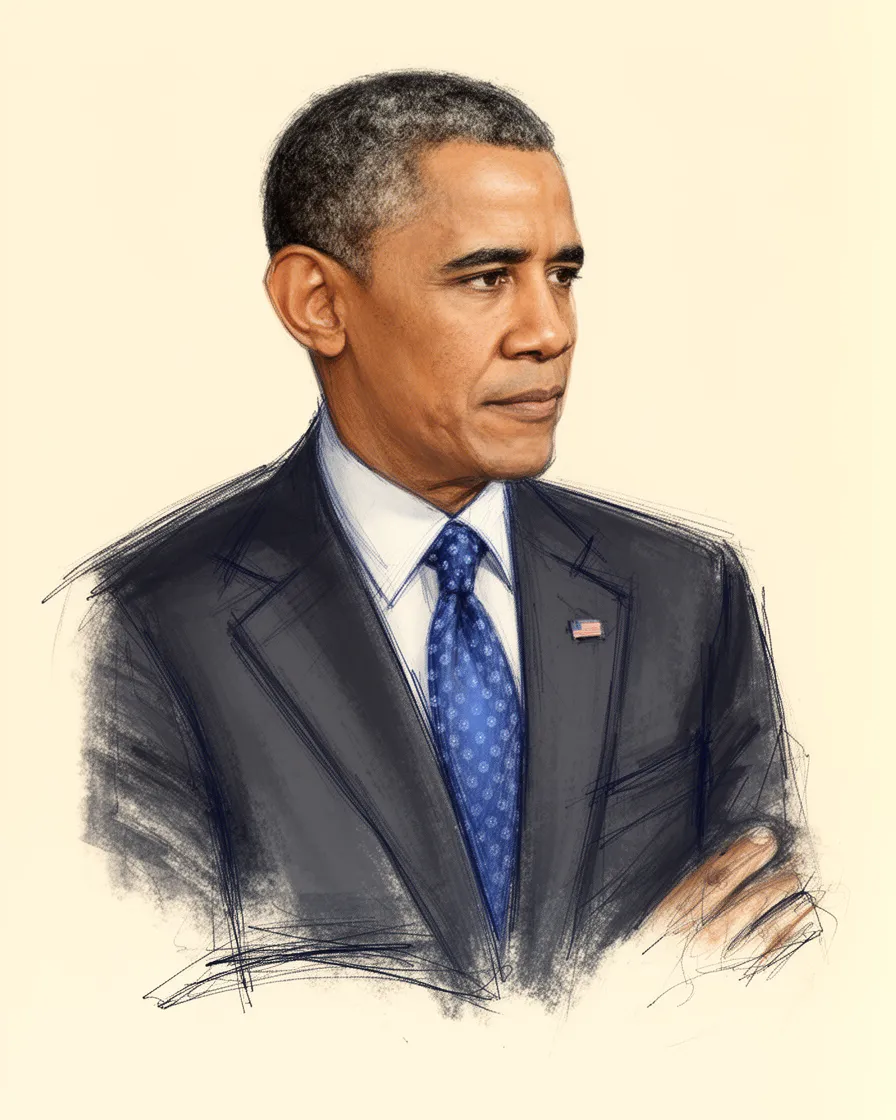
Barack Obama on Ukraine
Barack Obama views Russia's actions in Ukraine as a blatant violation of international law and a dangerous challenge to the global order based on freedom and self-determination. Following the full-scale invasion, Obama publicly condemned Russia's attack and called on all people of conscience to offer support to the Ukrainian people.
During his presidency, Obama sanctioned Russia following its 2014 annexation of Crimea and interference in U.S. elections, while emphasizing that Ukraine, as a non-NATO country, was inherently vulnerable to Russian military domination. Since leaving office, he has expressed admiration for Ukrainian courage and has supported the international community's response, including sanctions.
Obama maintains that the conflict is a “wakeup call” to democracies worldwide that forces of authoritarianism must be confronted. He believes the ultimate future of Ukraine must be decided by its own people, aligning his stance with the principle of sovereignty over might.
Timeline
- As President, Obama condemned Russia's military intervention in Crimea, calling it a violation of international law and announcing new sanctions against Russian officials and entities.
-
-
- In a post-presidency statement, Obama loudly and clearly condemned Russia's 'brazen attack' on Ukraine as a violation of international law and decency, supporting President Biden's sanctions.
- Described the war as a 'wakeup call to Europe and to the west and to democracies around the world' that forces of 'might makes right' must be confronted.
Actions Taken
- SanctionsInitiated sanctions against Russia following its 2014 invasion in Ukraine and again after Russian interference in the 2016 U.S. elections.
- Official StatementCondemned Russia's decision to send troops into Crimea as a clear violation of Ukrainian constitutions and international law.
- Policy ActionAnnounced measures to increase the cost on Russia, including imposing sanctions on specific individuals responsible and on Russian entities in the arms sector.
- Policy StatementExpressed unwavering support for Ukraine and its right to determine its own destiny, while noting the U.S. would not involve military options.
- Official StatementCalled for condemnation of Russia's actions and support for President Biden's efforts, in coordination with allies, to impose hard-hitting sanctions on Russia.
Key Quotes
My Statement on Ukraine - Barack Obama – Medium: (2022-02-24) People of conscience around the world need to loudly and clearly condemn Russia's actions and offer support for the Ukrainian people. And every American, regardless of party, should support President Biden's efforts, in coordination with our closest allies, to impose hard-hitting sanctions on Russia — sanctions that impose a real price on Russia's autocratic elites.
This is not a homegrown, indigenous uprising in eastern Ukraine... Putin has repeatedly passed by potential off-ramps to resolve this diplomatically.
The fact is that Ukraine, which is a non-nato country, is going to be vulnerable to military domination by Russia no matter what we do.
I think it was a wakeup call to Europe. and I think it was a wakeup call to the west and to democracies around the world. that um the old ways of thinking might makes right big countries can do what they want to small countries that uh you know uh people cannot independently determine uh their futures uh that that those forces have to be confronted.
Criticism
Cited Russia's invasion of Crimea and intervention in Syria as proof that the world no longer feared American resolve following Obama's 'red line' stance.
Stated that Obama had 'allowed Putin to jump back on the world stage and test the resolve of the West,' suggesting a legacy of failure regarding Russia.
Comparison
Obama's approach during his presidency, which focused on sanctions and international coalition-building, contrasted with the view that Russia saw his handling of Syria as a sign of limited resolve, especially regarding his 'red line' over chemical weapons.
His 2016 assessment suggested Ukraine was a core Russian interest where the U.S. could not deter Russia without being willing to go to war, framing his policy as 'realistic' rather than 'fatalistic' regarding Ukraine's non-NATO vulnerability.
Sources5
My Statement on Ukraine
* This is not an exhaustive list of sources.