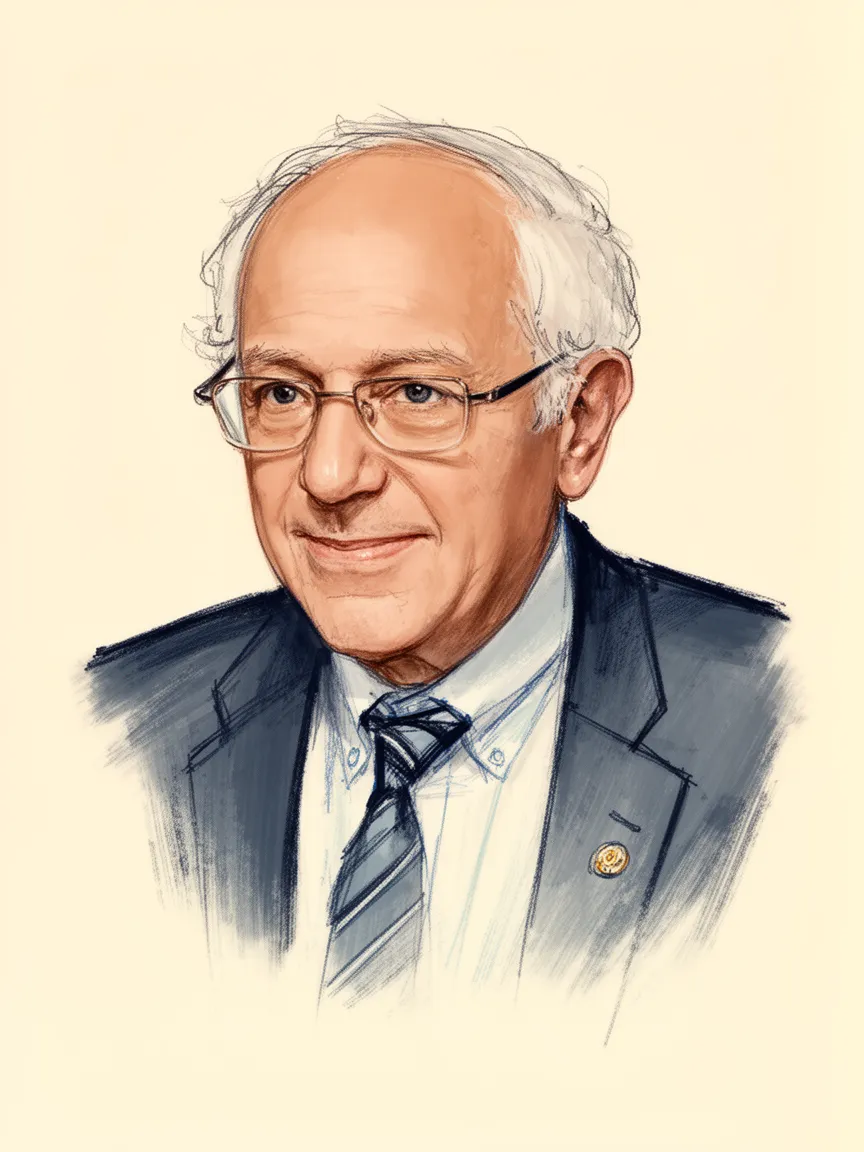
Bernie Sanders on Capitalism
Bernie Sanders identifies as a democratic socialist and directs his primary critique toward what he terms 'uber-capitalism' and the resultant oligarchy in the United States. He strongly blames this current economic system for numerous social problems, including declining life expectancy and rising diseases of despair.
Sanders clarifies that his vision of democratic socialism does not involve the government seizing ownership of small, local businesses like grocery stores. Instead, he seeks to empower the working and middle classes, ensuring they receive a decent standard of living commensurate with the wealth they help produce.
His proposed solutions focus on restructuring the relationship between labor and capital, advocating for policies that strengthen unions, promote worker cooperatives, and implement a progressive tax system. He favors private companies that invest domestically and create jobs over those that exploit cheap foreign labor for profit maximization.
Context
Senator Bernie Sanders is considered a leader of the modern American progressive movement, and his critique of Capitalism is central to his political identity and appeal. His self-identification as a democratic socialist directly positions him against conventional, unregulated Capitalism.
His political career, including his mayoral tenure in Burlington, was characterized by battling against what he saw as corporate influence, such as opposing a developer's plan to convert industrial waterfront property into high-end real estate under the slogan "Burlington is not for sale."
Actions Taken
- Voting RecordVoted against and advocated against rolling back the Glass-Steagall legislation, which separated investment and commercial banking, expressing concern about the influence of large financial institutions.
- LegislationIntroduced legislation to withdraw Permanent Normal Trade Relations (PNTR) status from China, citing it as an 'absolute failure' due to lost American manufacturing jobs.
- Voting RecordVoted against the Troubled Asset Relief Program (TARP), a bailout for banks during the financial crisis, despite later ensuring an amendment prevented it from displacing U.S. workers.
- Legislative ActionFilibustered against extending the Bush-era tax rates, arguing the legislation unduly favored the wealthiest Americans and contributed to the decline of the middle class.
- LegislationPartnered to introduce the Stop BEZOS Act, which would force large corporations to cover the cost of public assistance like food stamps used by their low-wage employees.
- LegislationProposed a measure to the United States Innovation and Competition Act to block funded companies from outsourcing jobs or forbidding unionization.
Key Quotes
I don't believe that the men and women who defended American democracy fought to create a situation where billionaires own the political process.
I do believe in private companies that thrive and invest and grow in America, companies that create jobs here, rather than companies that are shutting down in America and increasing their profits by exploiting low-wage labor abroad.
The American people are being lied to again today. We cannot allow history to repeat itself.
Comparison
Commentators often contrast Sanders's platform with the prevailing Democratic Party ideology:
- Neoliberalism: Sanders is an explicit opponent of neoliberalism, contrasting with a more centrist Democratic approach he believes favors corporate interests.
- Nordic Model: His policies are frequently linked to the Nordic model of social democracy, focusing on high tax-funded social benefits rather than the American model of private enterprise dominance.
- Ownership: While early writings hinted at public ownership of major industries, his current platform focuses more on worker control through cooperatives and unions within a market framework, distinguishing him from revolutionary socialists advocating for full social ownership of the means of production.
Sources4
Defining what "democratic socialism" means to him, Sanders said...
* This is not an exhaustive list of sources.