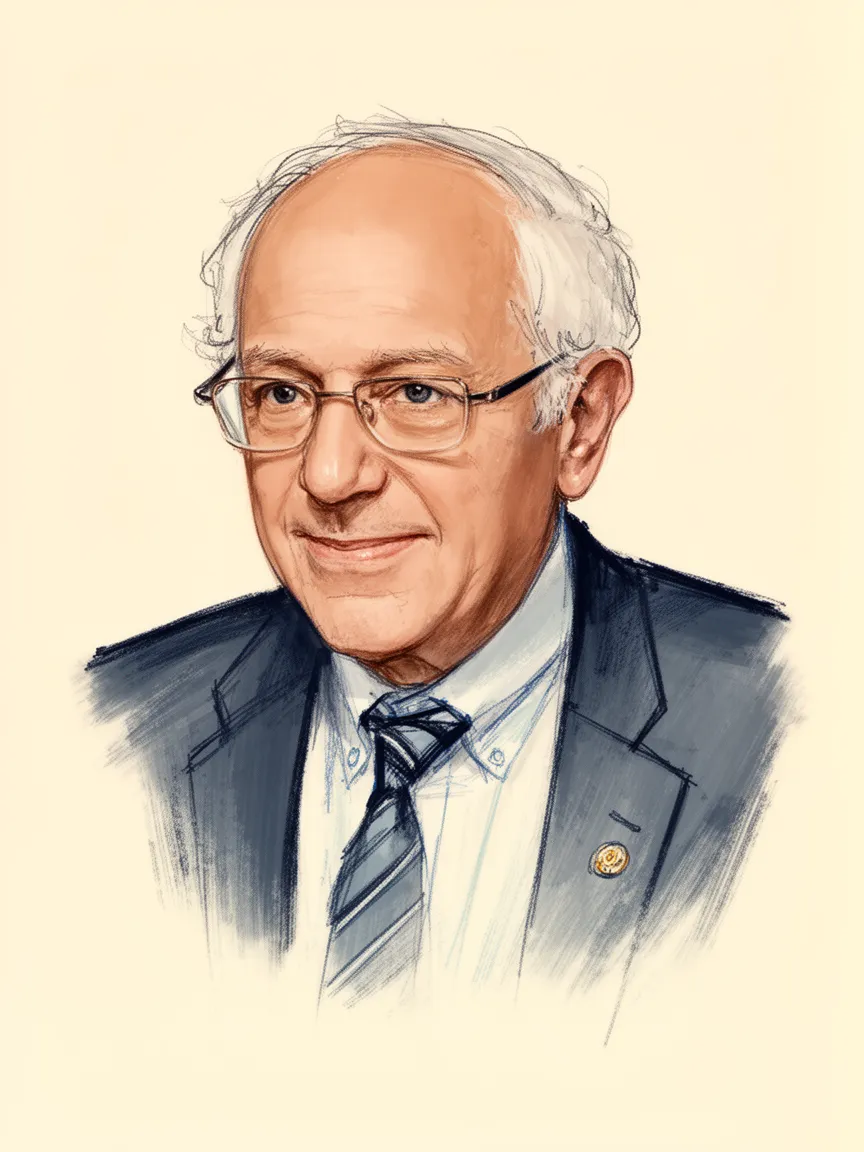
Bernie Sanders on China
Bernie Sanders views China primarily as a significant economic competitor whose trade practices have harmed American workers, leading him to consistently oppose past trade normalization efforts. While he strongly criticizes China's authoritarianism, human rights abuses, and global ambitions, Sanders cautions against framing the entire relationship as a zero-sum military confrontation, which he deems strategically counterproductive.
Sanders advocates for confronting China's unfair trade practices in collaboration with international allies, demanding strong labor, human rights, and environmental enforcement in trade agreements. Simultaneously, he stresses the importance of finding common ground with Beijing on global issues like climate change, believing that American trade can also promote freedom and a higher standard of living within China.
His historical opposition to agreements like PNTR stemmed from the belief that they benefited multinational corporations at the expense of U.S. manufacturing jobs and Chinese workers' wages. Bernie Sanders continues to argue that Washington's current consensus is overly hawkish, just as the previous consensus favoring unfettered trade was wrong.
Context
Bernie Sanders's position on China is deeply rooted in his critique of neoliberal trade policy, which he argues prioritizes multinational corporate profits over American worker wages and environmental protection. His voting record demonstrates a decades-long opposition to trade agreements that granted China preferential access to U.S. markets without sufficient labor or environmental safeguards.
As a Senator, Sanders frames the relationship as one requiring tough economic pressure combined with targeted cooperation, distinguishing his approach from those advocating for a broad, zero-sum Cold War-style confrontation.
Actions Taken
- LegislationIntroduced legislation to withdraw the Permanent Normal Trade Relations (PNTR) status that the U.S. had extended to China in 2000.
- Voting RecordVoted against granting China “Most Favored Nation” status in the House.
- Voting RecordVoted against Permanent Normal Trade Relations (PNTR) with China in the Senate.
- ArticleSigned an article in Foreign Affairs arguing against a zero-sum global confrontation with China.
Key Quotes
‘Organizing our foreign policy around a zero-sum global confrontation with China, however, will fail to produce better Chinese behavior and be politically dangerous and strategically counterproductive.’
“I want to see the people in China live in a democratic society with a higher standard of living. I want to see that, but I don’t think that has to take place at the expense of the American worker. I don’t think decent-paying jobs in this country have got to be lost as companies shut down here and move to China. I want to see the Chinese people do as well, but I do not want to see the collapse of the American middle class take place, and I will fight against that as hard as I can.”
“Since the China trade deal I voted against, America has lost over three million manufacturing jobs. It's wrong to pretend that China isn't one of our major economic competitors.”
Criticism
He views the current consensus as being 'far too hawkish' on China, just as the prior consensus was 'far too optimistic' about the benefits of unfettered trade.