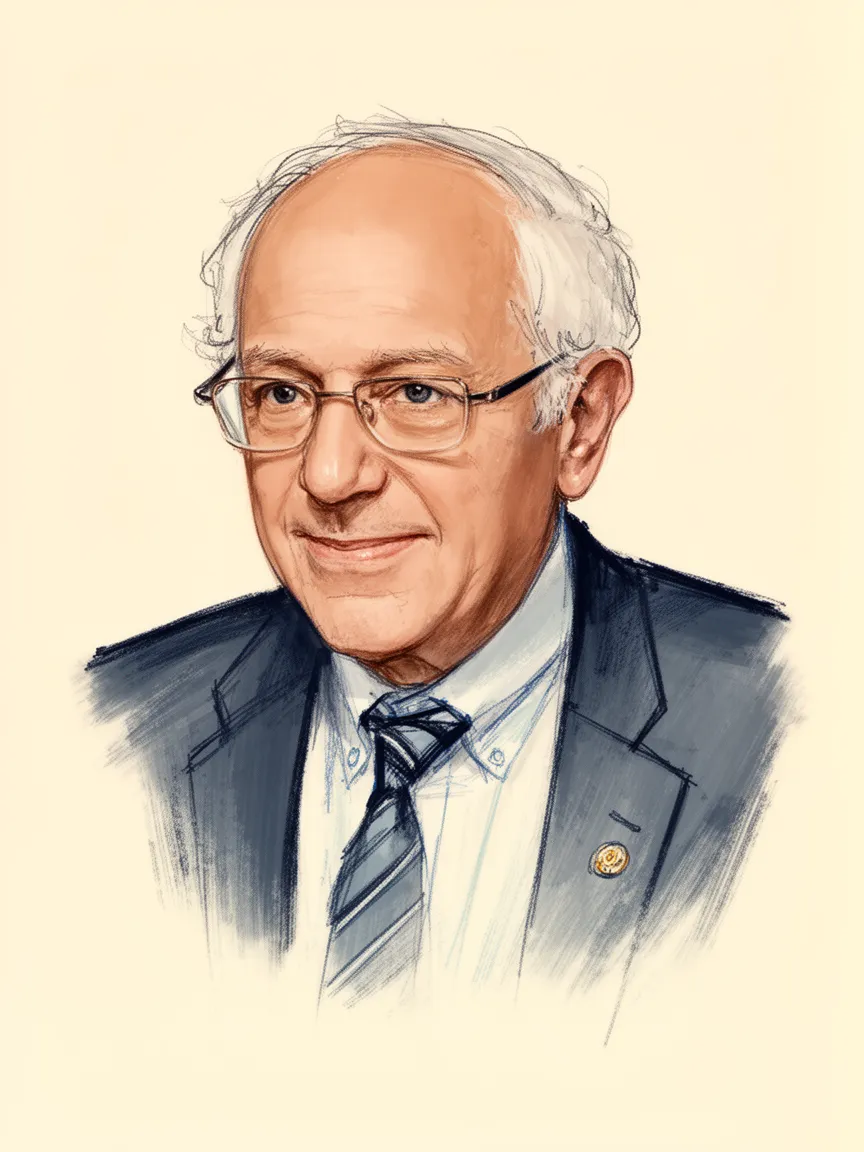
Bernie Sanders on Democratic Socialism
Bernie Sanders identifies as a democratic socialist and advocates for policies rooted in social democracy, often referencing the Nordic model. He defines his socialism as a belief that the working class deserves a decent standard of living and that private companies should thrive while creating domestic jobs. Sanders explicitly rejects state ownership of all means of production, stating, "I don't believe government should take over the grocery store down the street or own the means of production". His political platform centers on progressive policies like universal healthcare, tuition-free tertiary education, and strengthening labor rights, positioning him as a strong critic of neoliberal capitalism. Some analysts characterize his politics as "class struggle social democracy," blending social democratic demands with a goal of raising class consciousness.
Context
Bernie Sanders's ideological position as a democratic socialist is central to his political identity, contrasting him with mainstream Democratic Party politics. He has maintained this label since his early political career, running on socialist-oriented tickets before caucusing with Democrats. His progressive platform has influenced a leftward shift within the Democratic Party following his presidential campaigns.
Actions Taken
- LegislationIntroduced the Workplace Democracy Act to expand labor rights, ban certain anti-union tactics, and make unionizing easier.
- Policy ProposalProposed legislation that would mandate worker ownership (20% of stock) and worker election of board members (45% of directors) for large corporations.
- Political CoalitionCo-founded the Congressional Progressive Caucus in the House of Representatives, representing a left-wing grouping within Congress.
Key Quotes
I don't believe government should take over the grocery store down the street or own the means of production, but I do believe that the middle class and the working families who produce the wealth of America deserve a decent standard of living and that their incomes should go up, not down.
Democracy means public ownership of the major means of production, it means decentralization, it means involving people in their work. Rather than having bosses and workers it means having democratic control over the factories and shops to as great a degree as you can.
Comparison
- Vs. Classic Socialism: Sanders explicitly states he does not believe the government should nationalize all private businesses like grocery stores.
- Vs. Post-War Social Democracy: Bhaskar Sunkara argues Sanders's demands aim to sharpen class confrontation rather than merely dampening class conflict via tripartite agreements.