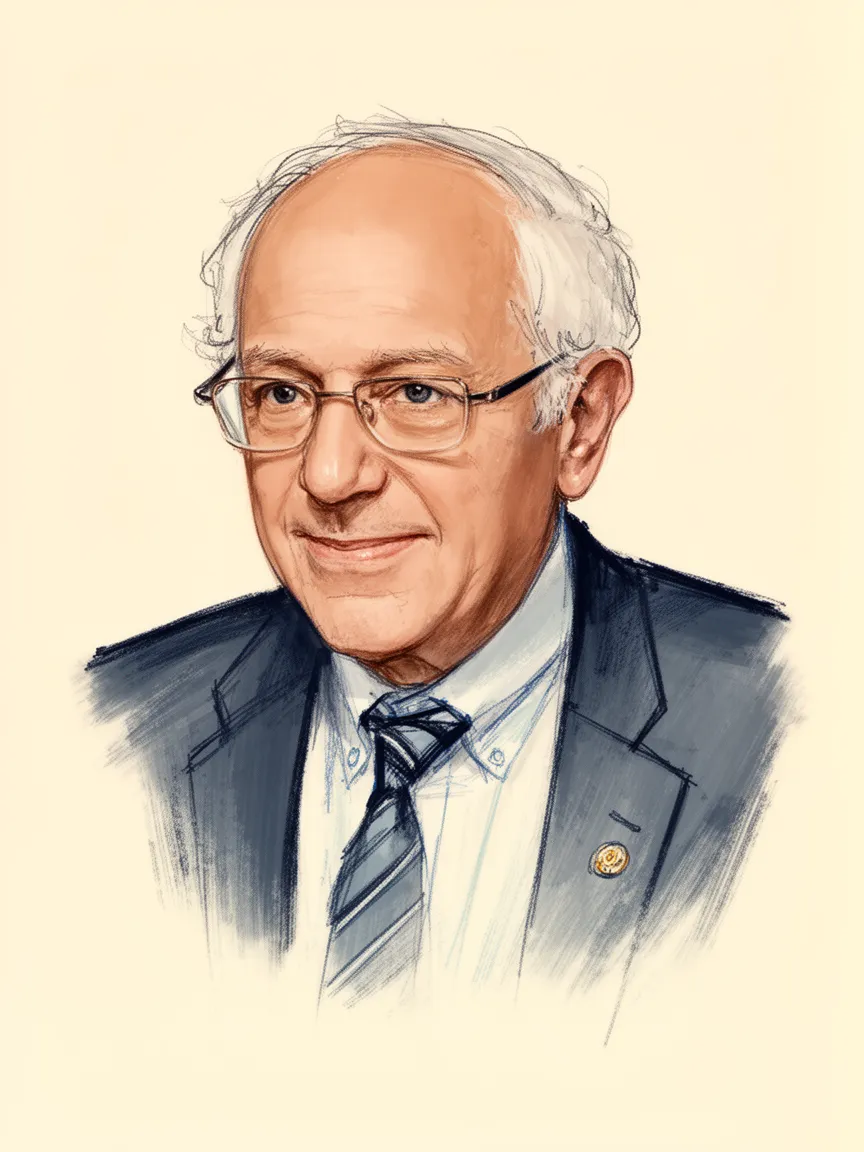
Bernie Sanders on Minimum Wage
Bernie Sanders is a vocal and consistent champion for raising the federal minimum wage, viewing the current rate as morally indefensible and economically insufficient for a dignified life. He asserts that in the richest country in the world, no one working 40 hours a week should live in poverty, calling the existing federal minimum wage a "starvation wage." Sanders links the minimum wage increase to broader economic health, arguing that putting money into the pockets of workers who will spend it locally acts as a strong economic stimulant for Main Street America.
Context
Bernie Sanders's advocacy for a higher minimum wage is central to his broader economic platform as a self-described democratic socialist and progressive populist. His focus on this issue is directly tied to his critique of what he terms "uber-capitalism" and its impact on the working class. As a legislator across House and Senate terms, his consistent sponsorship and support of related bills demonstrate a long-standing commitment to improving the standard of living for low-wage earners.
Timeline
- Introduced the Living Wage Act to raise the minimum wage from $4.25 to $5.50 per hour, arguing the existing wage was a 'starvation wage.'
- Pushed for a minimum wage increase to $10.10 per hour via a budget amendment, noting the erosion of purchasing power.
- Proposed an amendment to set the federal minimum wage at $15 per hour, supported by a large group of economists.
- Co-sponsored the Raise the Wage Act, which aimed to raise the federal minimum wage to $15/hour by 2024.
- Continued pushing for a living wage, highlighting that the federal minimum wage had lost significant purchasing power since 2009.
- Advocated for raising the federal minimum wage to at least $17 an hour over five years.
Actions Taken
- LegislationIntroduced the Living Wage Act (HR 692) to raise the federal minimum wage from $4.25 to $5.50 per hour, noting that the current rate left workers below the poverty level.
- LegislationProposed and argued for a budget amendment to raise the federal minimum wage to $10.10 per hour.
- LegislationProposed an amendment to make the federal minimum wage $15 per hour by 2020, aligning with recommendations from 200 professional economists.
- LegislationIntroduced the Raise the Wage Act in the Senate, which proposed gradually increasing the minimum wage to $15/hour by 2024 and phasing out subminimum wages for tipped workers, youth, and workers with disabilities.
- LegislationIntroduced legislation to raise the minimum wage again, this time aiming for at least $17 an hour over five years.
- LegislationAdvocated for a $15 an hour minimum wage for federal contract workers in a bill introduced in April 2017.
Key Quotes
“In the year 2025, in the richest country in the history of world, nobody should be forced to work for starvation wages,”
“It is not a radical idea to say a job should lift you out of poverty, not keep you in it. The current $7.25 an hour federal minimum wage is a starvation wage. It must be increased to a living wage of $15 an hour.”
“We cannot desert them.”
Sources5
Bernie Sanders on Minimum Wage
* This is not an exhaustive list of sources.