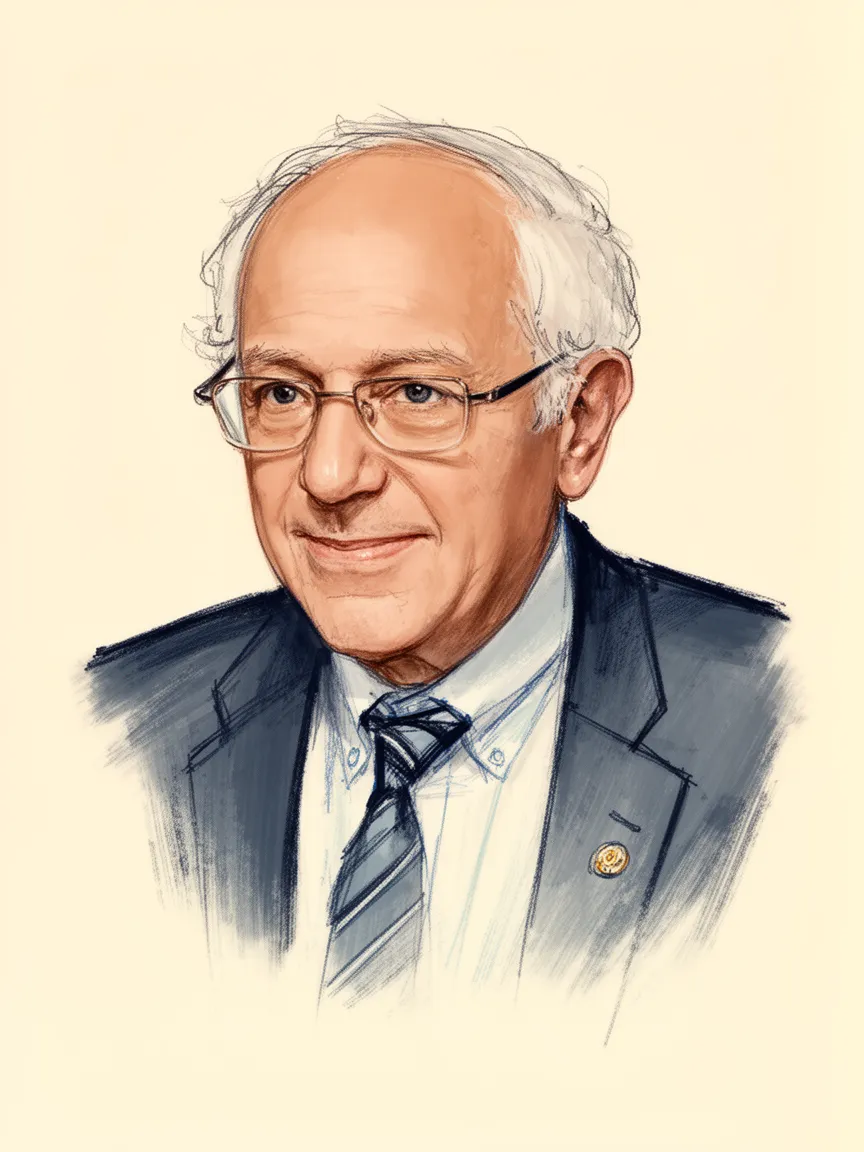
Bernie Sanders on War
Bernie Sanders holds a consistently anti-interventionist stance on war, advocating for a foreign policy centered on diplomacy and international cooperation rather than military action. He supports substantially reducing military spending as a core component of reshaping U.S. global engagement.
Historically, Sanders opposed major military conflicts, voting against authorizations for force in both the first Gulf War and the Iraq War, and he has been a vocal critic of the broader War on Terror policies, especially mass surveillance.
His current policy emphasis centers on making military force a last resort, while reallocating funds toward domestic and international priorities like climate change and human rights promotion abroad.
Context
Bernie Sanders's views on war are central to his broader critique of U.S. foreign policy and military-industrial complex spending. As a member of Congress and a presidential candidate, he has used his platform to challenge military budgets and specific engagements, framing aggressive military action as often counterproductive and wasteful.
His perspective is rooted in his early antiwar activism during the Vietnam era and his consistent criticism of what he views as the outsized influence of defense contractors on Washington politics.
Timeline
- Sanders was active in several peace and antiwar movements while in college and applied for conscientious objector status during the Vietnam War.
- Voted against the resolution authorizing the use of military force against Iraq during the first Gulf War.
- Voted against authorizing force for the 2003 invasion of Iraq, opposing the Bush administration's unilateral decision.
- Sponsored a resolution to end U.S. support for the Saudi-led military intervention in Yemen after bipartisan support grew following the Khashoggi assassination.
- Introduced multiple resolutions to block arms transfers to Israel amid the Gaza war, shifting from calling for a pause to demanding a ceasefire and withholding aid.
Actions Taken
- Voting RecordVoted against the resolution authorizing the use of military force against Iraq.
- Voting RecordVoted against the resolution authorizing the use of military force against Iraq.
- Voting RecordOpposed the 2003 invasion of Iraq.
- Voting RecordVoted for the 2001 Authorization for Use of Military Force Against Terrorists, which justified post-9/11 actions.
- LegislationSponsored a bill, with bipartisan support, to invoke the War Powers Resolution to end U.S. support for the Saudi-led military intervention in Yemen.
- LegislationIntroduced multiple Joint Resolutions of Disapproval to block arms sales to Israel during the Gaza war.
Key Quotes
We gotta be tough, not stupid in the war against ISIL.
It's easier to get into a war than out of one.
Military intervention by the United States must always be a last resort.
I criticized the January 2020 drone assassination of Iranian general Qasem Soleimani, calling it a dangerous escalation of tensions that could lead to an expensive war.
Sources4
Foreign policy
Ending America's Endless War.
* This is not an exhaustive list of sources.