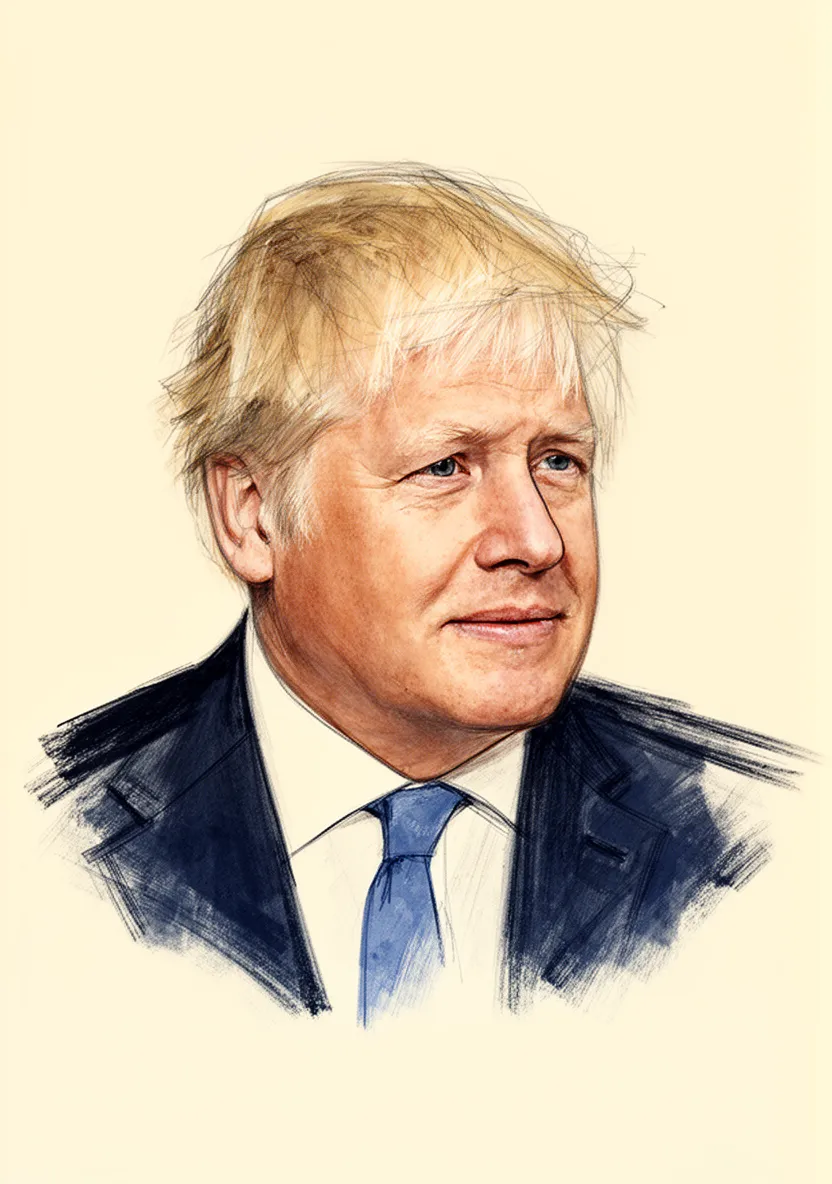
Boris Johnson on Brexit
Boris Johnson evolved from an initially lukewarm supporter of the European Union to become one of the most prominent and dedicated advocates for the UK's departure, culminating in him securing a mandate to "Get Brexit Done."
As Prime Minister, his primary focus was delivering on the 2016 referendum result by negotiating a revised withdrawal agreement that removed the controversial Irish backstop and then securing a decisive electoral victory on this platform.
Although he campaigned in 2016, Johnson's leadership in government was defined by overcoming parliamentary deadlock, which he achieved by renegotiating the deal and then winning a general election with the promise of finalising the UK's exit from the EU.
Context
Boris Johnson's long-standing association with Euroscepticism, particularly during his time as a Brussels correspondent for The Daily Telegraph, established his credentials with the right wing of the Conservative Party. His journalism often contained highly critical, sometimes factually disputed, reports about the EU, which arguably fuelled public anti-EU sentiment.
His role as a prominent figure in the 2016 referendum campaign marked a critical pivot point, moving him from a noted Eurosceptic journalist to the leading political face of the 'Leave' movement. This experience was foundational to his later political ascent and his subsequent premiership, where Brexit became his overriding objective.
Timeline
- Began working as a journalist reporting on the European Commission in Brussels.
- Stated he was not an 'ultra-Eurosceptic' and, in some ways, was 'a bit of a fan of the European Union.'
- As Mayor of London, he began to advocate for a referendum on Britain's EU membership.
- Endorsed the 'Out' campaign for the 2016 European Union membership referendum, backing Vote Leave.
- Resigned as Foreign Secretary in protest at Theresa May's approach to Brexit and the Chequers Agreement.
- Launched his campaign to become Conservative Party leader, promising to leave the EU on 31 October 2019, with or without a deal.
- Agreed a revised Brexit withdrawal agreement with the EU, replacing the backstop with the Northern Ireland Protocol, after a general election was called.
Actions Taken
- CampaigningEndorsed the 'Out' campaign for the 2016 EU membership referendum.
- Political ProtestResigned as Foreign Secretary after disagreeing with Theresa May's proposed Brexit strategy, specifically the Chequers Agreement.
- Governmental ManeuverAs Prime Minister, he prorogued Parliament in September 2019 to limit time to block a no-deal Brexit, though this was later ruled unlawful by the Supreme Court.
- NegotiationSecured a revised withdrawal agreement with the EU, introducing the Northern Ireland Protocol to replace the contentious backstop.
- Electoral MandateWon the December 2019 general election on a platform committed to 'Get Brexit Done', securing a large majority.
- ImplementationFormally withdrew the UK from the European Union and entered trade negotiations, leading to the EU–UK Trade and Cooperation Agreement.
Key Quotes
We have wrapped a suicide vest around the British constitution – and handed the detonator to Michel Barnier.
23 June could be Britain’s independence day.
It is not too late to save Brexit.
we must leave the EU on 31 October.
Criticism
Described Johnson as 'one of the greatest exponents of fake journalism' for his reporting on the EU while in Brussels.
Stated that Johnson 'cannot provide the leadership or build the team for the task ahead' shortly before Johnson launched his bid to succeed Theresa May.
Heavily criticised his September 2018 column likening May's deal to handing a 'suicide vest' detonator to Michel Barnier, with some suggesting it marked the political end for Johnson.
Sources3
- Alexander Boris de Pfeffel Johnson (born 19 June 1964)
- Johnson on Brexit
- Boris Johnson's views on the EU and Brexit
* This is not an exhaustive list of sources.