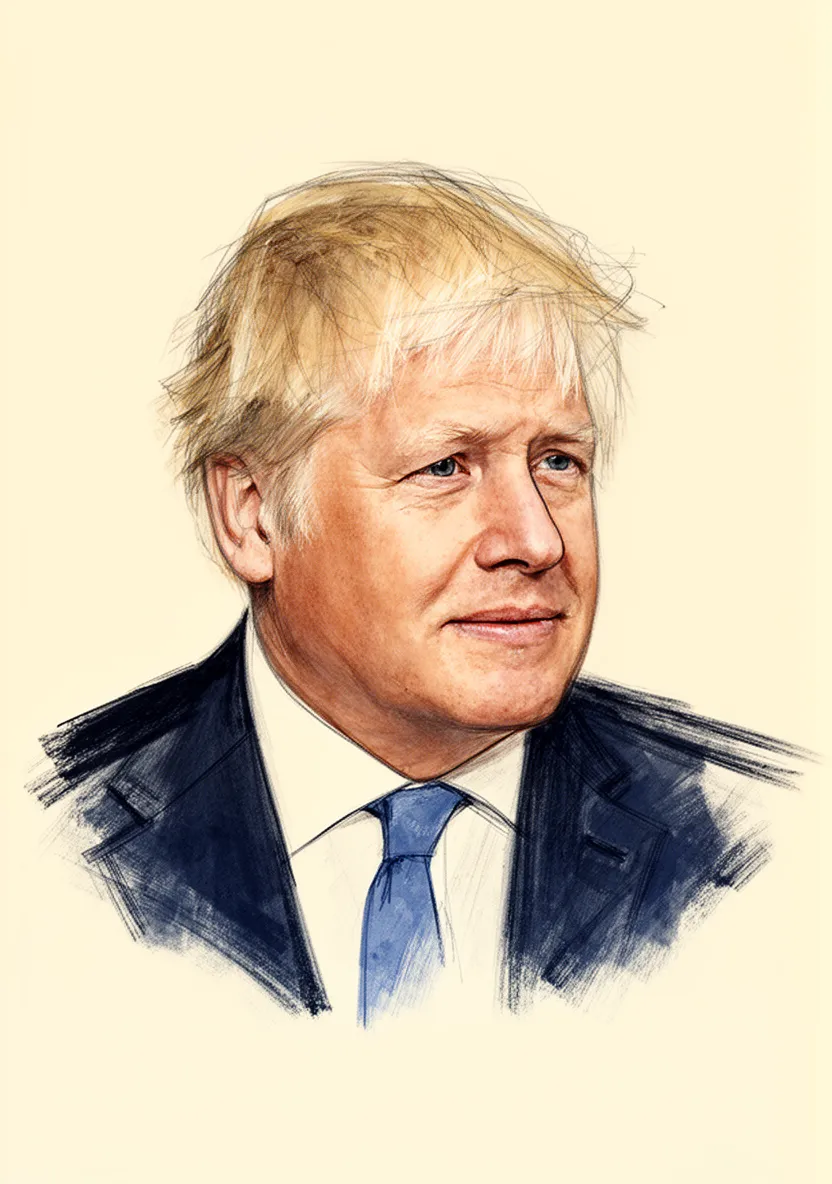
Boris Johnson on Climate Change
Boris Johnson's views on Climate Change evolved significantly from his early career to his time as Prime Minister. While he once expressed sceptical opinions in newspaper columns, his tenure in office saw him champion a forward-looking environmental agenda.
During his premiership, Johnson launched a 10-point plan for a 'green industrial revolution' aimed at cutting UK emissions and promoting renewable energy. This plan included commitments such as ending the sale of new petrol and diesel cars and vans by 2030 and quadrupling offshore wind power capacity.
Johnson also played a key role in international climate efforts by hosting the COP26 summit in Glasgow, where he called for greater mitigation efforts globally. His government committed to ambitious domestic targets, such as cutting carbon emissions by 78% by 2035, demonstrating a strong, action-oriented focus on climate change mitigation while in office.
Context
As Prime Minister, Boris Johnson inherited a commitment from the previous Conservative government to legislate for net-zero greenhouse gas emissions by 2050. His administration was therefore positioned to take significant, high-profile actions on climate change to demonstrate global leadership, particularly in the run-up to the UK hosting COP26.
His earlier career as a journalist saw him write columns with climate-sceptical leanings, but this stance appeared to change dramatically upon entering high political office. This evolution is often noted as part of his broader political flexibility.
Timeline
- As a journalist, Johnson developed a reputation for scepticism regarding European integration, which sometimes extended to questioning environmental concerns.
- While living in Islington, under the influence of his then-wife and the local milieu, he reportedly moved in a more liberal direction on issues including climate change.
- As Mayor of London, Johnson initiated some local environmental actions, such as tree-planting programs.
- Johnson announced a comprehensive 10-point plan for a 'green industrial revolution' upon becoming Prime Minister, setting ambitious decarbonisation goals.
- The Johnson government announced plans to cut carbon emissions by 78% by 2035 and Johnson hosted the COP26 climate conference.
- He announced plans for eight new nuclear reactors and an expansion in wind energy, aiming for up to 95% of UK electricity from low-carbon sources by 2030.
Actions Taken
- Policy AnnouncementAnnounced a 10-point plan for a 'green industrial revolution', including ending the sale of new petrol/diesel cars and vans by 2030.
- International PledgeCommitted the UK to joining the Global Methane Pledge to cut methane emissions by 30% by 2030.
- International LeadershipHosted the 2021 United Nations Climate Change Conference (COP26) in Glasgow.
- Energy PolicyAnnounced plans for eight more nuclear reactors and expansion in wind energy, aiming for up to 95% low-carbon electricity by 2030.
Criticism
Criticised Johnson's comments on introducing 'enforceable limits' for other countries as unsubstantive ahead of COP26.
Criticised his government for cutting taxes on domestic air travel, given the high environmental impact of aviation.
Sources2
* This is not an exhaustive list of sources.