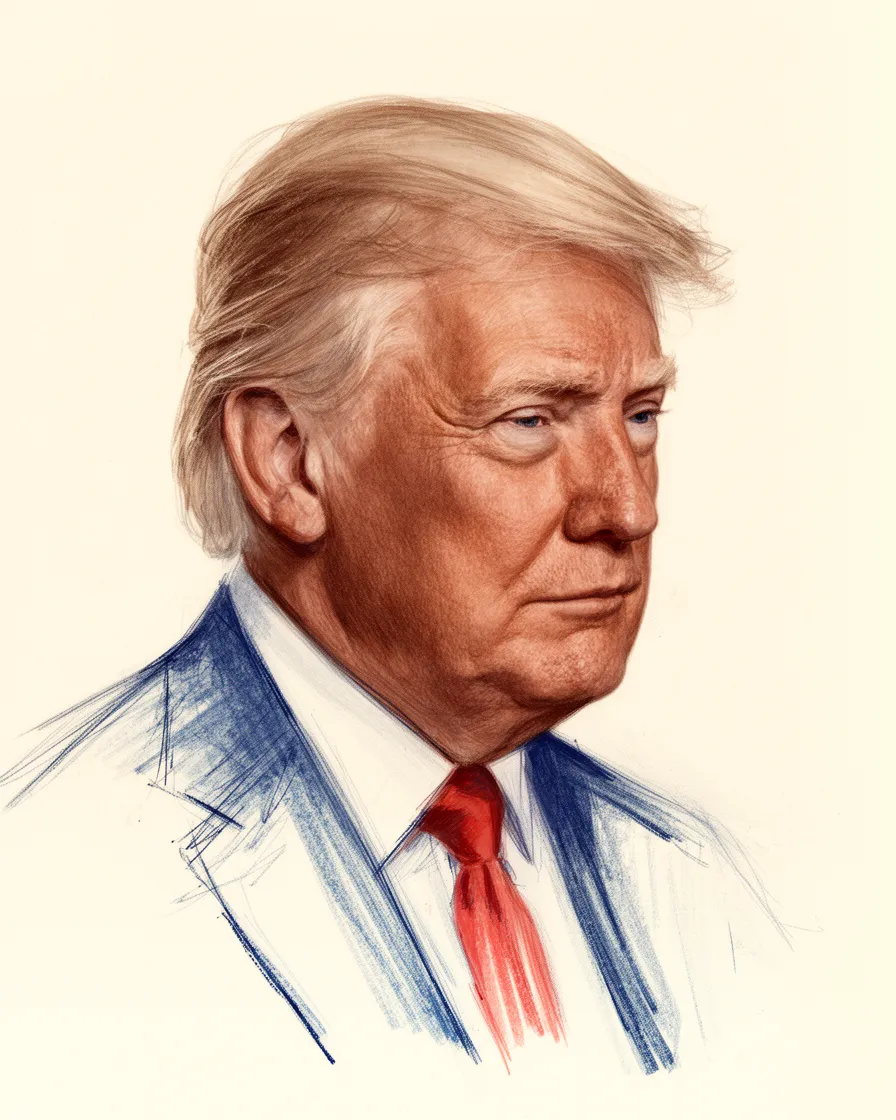
Donald Trump on Afghanistan Policy
Donald Trump's position on Afghanistan Policy has been consistently characterized by a strong desire to end the U.S. military presence in the country, a key theme from his 2016 campaign onward.
During his first term, President Trump shifted strategy from a time-based to a conditions-based approach but remained intent on troop reduction. This culminated in the United States–Taliban deal in February 2020, which outlined a path for the complete withdrawal of NATO forces by May 2021.
Trump has expressed confidence that he could have ended the war much faster than the subsequent administration, though he claimed he refrained from a purely military solution to prevent mass casualties. He continues to critique the execution of the final withdrawal, pointing to lost American lives and equipment as evidence of failure under the Biden administration.
Context
Donald Trump's tenure as the 45th President of the United States (2017–2021) was defined in part by his foreign policy goal of ending what he often called America's "endless wars," with the Afghanistan War being the longest.
His policy actions, including troop drawdowns and negotiating directly with the Taliban, signaled a significant departure from previous administrations' goals of nation-building and stabilization in favor of immediate disengagement.
Timeline
- President Trump unveiled his administration's strategy for Afghanistan and South Asia, defining victory as attacking enemies, crushing al Qaeda, and preventing the Taliban from taking over.
- Trump directed the Pentagon to withdraw nearly half of the roughly 14,000 U.S. troops in Afghanistan, a move opposed by some senior advisers like then-Defense Secretary Jim Mattis.
- The Trump administration and the Taliban signed the United States–Taliban deal in Doha, Qatar, which provided for the withdrawal of all NATO forces by May 2021, contingent on the Taliban's counter-terrorism commitments.
- Acting Secretary of Defense Christopher C. Miller announced further troop reductions to 2,500 by January 2021, fulfilling Trump's hope for the incoming administration to complete the draw down.
- During a debate, Trump stated the withdrawal under his administration's deal would have been executed faster than President Biden's plan, and crucially, would not have resulted in U.S. casualties or the abandonment of military equipment.
Key Quotes
I could win that war in a week, I just don't want to kill 10 million people. Afghanistan would be wiped off the face of the earth.
America will work with the Afghan government as long as we see determination and progress. However, our commitment is not unlimited, and our support is not a blank check.
We were getting out and we would have been out faster than them, but we wouldn't have lost the soldiers we wouldn't have left many Americans behind and we wouldn't have left $85 billion worth of brand new beautiful military equipment behind. They blew it.
Criticism
Stated that Trump ran on ending endless wars but increased troops in Afghanistan by approximately 70 percent at one point, failing to deliver on that promise.
Warned that leaving Afghanistan too soon or in an uncoordinated effort could present unintended consequences, risking the country becoming a platform for international terrorists.
Warned that a rapid withdrawal of U.S. forces from Afghanistan would 'hurt our allies and delight the people who wish us harm.'
Comparison
The Trump administration's approach marked a shift when compared to its predecessors and successor:
- Compared to Predecessor (Obama Era): While President Obama had previously scaled down forces, Trump's policy prioritized a concrete, negotiated end-date with the Taliban, largely excluding the sitting Afghan government from the core agreement.
- Compared to Successor (Biden Era): Both Trump and President Biden were eager to withdraw, but Trump frequently claimed his administration's deal would have prevented the chaotic final withdrawal, loss of life, and forfeiture of military equipment that occurred after Biden took over the final execution.
Sources6
Trump says he could end Afghanistan war in 10 days, but he doesn't "want to kill 10 million people"
Remarks by President Trump on the Strategy in Afghanistan and South Asia
WATCH: Trump says he would've pulled U.S. out of Afghanistan 'faster' than Biden
Trump orders major military withdrawal from Afghanistan as Mattis departs
2020–2021 U.S. troop withdrawal from Afghanistan - Wikipedia
Timeline of U.S. Withdrawal from Afghanistan - FactCheck.org
* This is not an exhaustive list of sources.