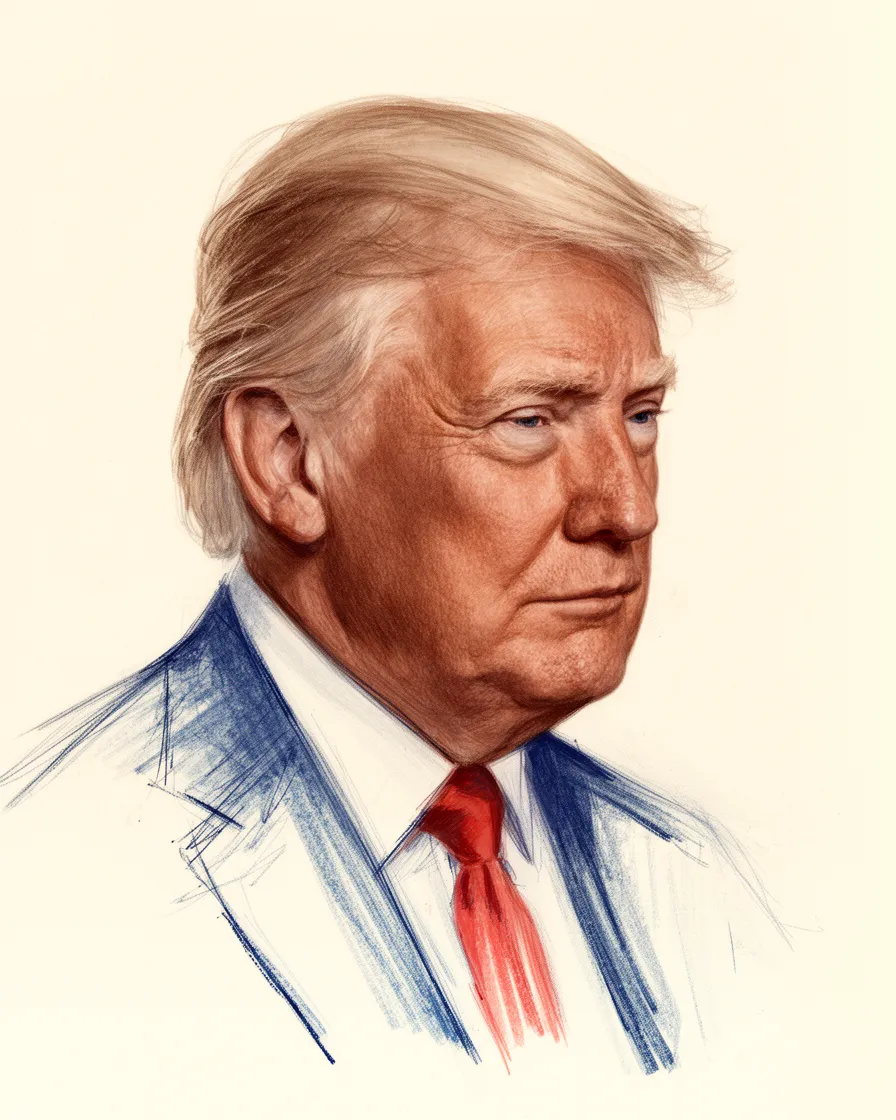
Donald Trump on Economic Policy
Donald Trump's economic policy is fundamentally rooted in economic nationalism, characterized by a strong emphasis on protectionist trade measures and substantial tax cuts. During his first presidency, he signed the Tax Cuts and Jobs Act of 2017, which lowered corporate and individual tax rates, while simultaneously increasing federal spending, leading to higher budget deficits and national debt. In his second term, Trump has promised to extend these tax cuts and pursue further deregulation, while drastically increasing tariffs, with proposals for a universal baseline tariff of 10% and up to 60% on Chinese goods, aiming to substitute tariff revenue for income taxes.
Context
Donald Trump's views on economic policy stem from his background as a real estate developer and his self-styled image as a successful businessman. His political platform has consistently prioritized trade protectionism and significant tax reform, contrasting with more traditional Republican free-market orthodoxy, especially in his second term where he embraced elements of state capitalism.
Timeline
- Signed the Tax Cuts and Jobs Act and began a push for massive deregulation, claiming a policy priority of promoting individual freedom and economic growth.
- Responded to the COVID-19 recession by signing the massive CARES Act stimulus bill.
- Campained on an economic nationalist system featuring higher tariffs (universal 10% baseline, 60%+ on China) and extending his first-term tax cuts.
- Implemented steep, nearly universal tariffs, drastically increasing the effective US tariff rate and escalating the trade war with China, Canada, and Mexico.
Actions Taken
- Tax LegislationSigned the Tax Cuts and Jobs Act of 2017, reducing corporate tax rates from 35% to 21% and cutting personal income taxes.
- Trade PolicyImplemented trade protectionism via tariffs, primarily on imports from China, starting a trade war.
- Economic StimulusSigned the CARES Act, a bipartisan economic stimulus bill worth $2.2 trillion in response to the COVID-19 pandemic.
- Trade PolicyEnacted a series of steep protectionist tariffs affecting nearly all imported goods, raising the effective tariff rate to an estimated 27% by April 2025.
- Tax LegislationSigned the One Big Beautiful Bill Act, which made the 2017 tax cuts permanent and added further deductions, projected to increase the budget deficit by $3.4 trillion by 2034.
- Governmental ReformOrdered the review and reclassification of many career civil service positions to at-will status, leading to mass terminations of federal employees.
Criticism
Projected that extending the tax cuts via the 'One Big Beautiful Bill Act' would increase the budget deficit by $4.5 trillion over ten years (under earlier projections) or $3.4 trillion by 2034 (under the Act).
Criticized the campaign agenda for potentially leading to an increase in inflation and adding around US$15 trillion to the national debt.
Argued that his policies in the second term undercut incomes for all but the wealthiest, slow job growth, and make life less affordable by weakening worker leverage.
Stated that US tariffs are fees paid by US importers of foreign goods, contradicting the argument that foreign countries pay them, and noted that previous tariffs led to stock market volatility.
Sources6
Economic policy of the first Trump administration - Wikipedia
* This is not an exhaustive list of sources.