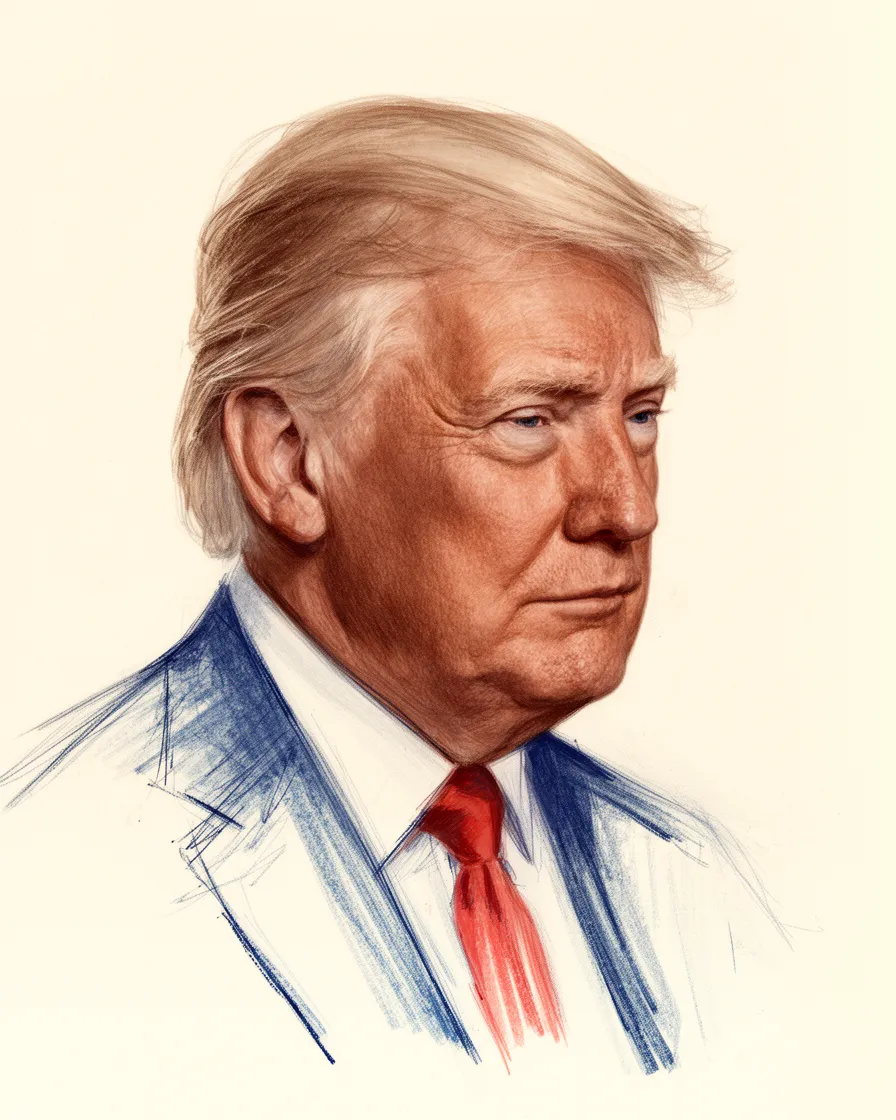
Donald Trump on Immigration Stance
Donald Trump's immigration stance centers on aggressively curbing unauthorized immigration and significantly restricting legal immigration pathways. He has made promises, particularly during his 2024 campaign and since beginning his second term in 2025, to carry out the "largest domestic deportation operation in American history." This approach is driven by his characterization of illegal immigration as an "invasion" of the United States, indicating a strong, uncompromising opposition to current unauthorized immigration levels.
During his first presidency, Trump escalated enforcement, deployed troops to the border, and drastically reduced refugee admissions. In his second term, he has immediately implemented a raft of executive orders aimed at achieving maximal restriction, including attempting to end birthright citizenship and blocking asylum seekers. His administration's actions have been described as a dramatic rollback of previous policies to achieve a net-negative migration rate.
His policies frequently draw criticism from civil liberties groups who argue his approach flouts the rule of law, human dignity, and fundamental constitutional principles. Key policy pillars include completing the border wall, ending policies like "catch and release," and prioritizing the deportation of undocumented immigrants, often using executive authority to bypass traditional legal processes.
Context
Donald Trump's Immigration Stance is a defining element of his political brand, often framed around themes of national sovereignty, border security, and opposition to illegal immigration. His executive authority as President has been the primary tool used to enact significant changes to both border enforcement and legal immigration systems.
His rhetoric, especially during the 2024 campaign, included using dehumanizing language against immigrants, which critics argue fuels xenophobia and potential violence. His actions and stated goals suggest an intent to reshape the demographic composition of the country by severely limiting future lawful immigration alongside mass removals.
Timeline
- During his 2016 presidential campaign, Donald Trump pledged to build a wall on the Mexico-U.S. border and vowed that Mexico would pay for it.
- Signed an executive order implementing a travel ban on citizens from several Muslim-majority countries and indefinitely banning Syrians.
- His refusal to fund the border wall led to the longest federal government shutdown; later, he declared a national emergency to divert funds for the wall.
- Enforced a family separation policy at the border, separating over 4,400 children from migrant parents before public pressure led to a mandate to detain families together.
- On the campaign trail for his second term, Trump used increasingly harsh anti-immigrant rhetoric, focusing on large-scale deportation.
- Immediately upon taking office, he signed multiple executive orders to enact hardline policies like ending birthright citizenship and blocking asylum.
Actions Taken
- Legislation/Executive ActionSigned the Laken Riley Act on his first day in office, mandating the detention of immigrants charged with or convicted of certain crimes.
- Executive OrdersDeclared a national emergency at the border, blocking asylum seekers, ending "catch and release," and ordering construction to resume on the border wall.
- Designation/EnforcementDesignated certain international cartels, including Tren de Aragua and major drug cartels, as Foreign Terrorist Organizations.
- Refugee PolicySuspended almost all refugee admissions for 2026, planning a record low cap of 7,500, while prioritizing Afrikaners from South Africa.
- Executive Order/Constitutional ChallengeAttempted to revoke citizenship from some U.S.-born children of immigrants via executive order, challenging birthright citizenship.
- Policy ReinstatementResumed the Remain in Mexico policy and shut down the CBP One app, which was used to schedule safe asylum appointments.
Criticism
The ACLU warns that a second Trump administration will claim a mandate to decide immigration policy based on xenophobia and racism, flouting principles of fairness and the rule of law.
The AFSC notes that actions like pausing all asylum decisions and attempting to revoke citizenship from U.S.-born children of immigrants are being challenged as blatantly unconstitutional.
These groups report a climate of fear making people question whether to accept farm jobs or take children to school due to the rhetoric and policy actions.
Sources5
Trump on Immigration
* This is not an exhaustive list of sources.