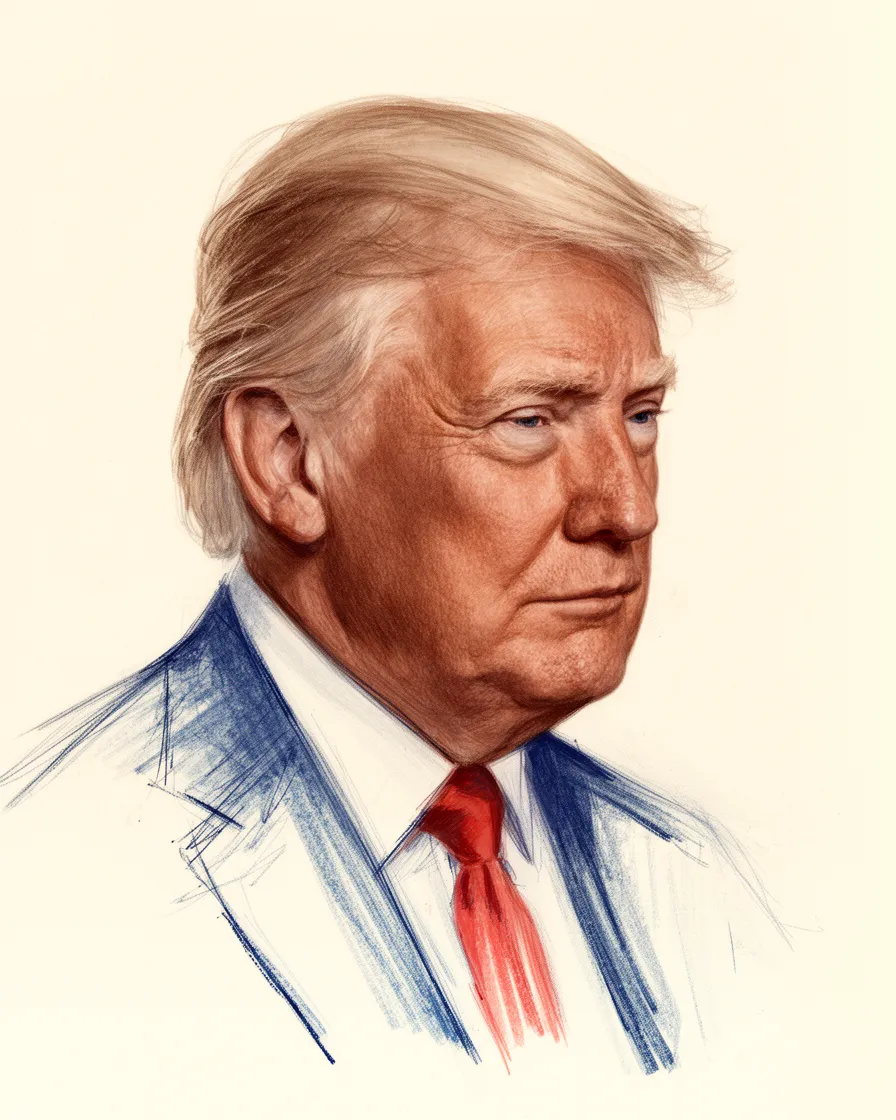
Donald Trump on Supreme Court
Donald Trump's perspective on the Supreme Court has evolved from one of strategic influence through appointments to one of direct conflict over the scope of his executive authority.
During his first term, Trump made good on a campaign pledge by appointing three justices—Neil Gorsuch, Brett Kavanaugh, and Amy Coney Barrett—which politically shifted the Court significantly to the right. He later took credit when the Court overturned Roe v. Wade, an outcome he had promised if he appointed anti-abortion justices.
In his second term, Trump has publicly disparaged courts and judges who rule against his administration, often questioning the judiciary's constitutional authority. This friction is evident in his administration's clashes with judicial rulings concerning extensive deregulation, the dismissal of federal judges, and his assertion of a near-total presidential immunity from prosecution for official acts, which the Court has partially affirmed.
Context
Donald Trump's relationship with the Supreme Court is central to his political agenda, particularly because the judiciary serves as the final check on presidential power.
Throughout his career and especially as president, Trump emphasized appointing judges who adhere to a conservative judicial philosophy, often seeking those who would adhere to originalist or textualist interpretations of the Constitution. This focus was not just ideological but also pragmatic, aimed at securing rulings favorable to his stated policy goals, such as on abortion and executive authority.
Actions Taken
- Judicial AppointmentAppointed three Supreme Court justices: Neil Gorsuch, Brett Kavanaugh, and Amy Coney Barrett, politically shifting the Court to the right.
- Supreme Court Ruling SupportThe Supreme Court upheld the travel ban against citizens from several Muslim-majority countries after a revised version was issued.
- Legal ActionAppealed to the U.S. Supreme Court to request a stay of the 2020 election interference trial while seeking an en banc hearing from the D.C. Circuit Court.
- Supreme Court RulingThe Supreme Court ruled that presidents have absolute immunity for acts in their core constitutional purview, at least presumptive immunity for other official acts, and no immunity for unofficial acts.
- Response to Judicial ReviewThe administration expressed alarm and stated it would be a "complete mess" if the Supreme Court struck down his sweeping global trade tariffs.
- Criticism of JudiciaryCalled for the impeachment of federal judges who ruled against his administration's policies in his second term.
Key Quotes
It would be a complete mess, and almost impossible for our Country to pay.”
WE'RE SCREWED
Criticism
His attacks on courts and judges he disagreed with, often in personal terms, drew rebukes concerned about the effect on judicial independence and public confidence.
His second-term administration defied courts and judges in roughly one third of all cases against him, actions described as unprecedented.
Sources5
Trump warns of 'complete mess' if supreme court rejects tariffs
Trump v. United States
Thank the Supreme Court for Trump's Latest Attack on the Federal Reserve
Europe hits back at Trump tariffs; Supreme Court ruling expected
Trump Has This 'Backup Plan' If Supreme Court Strikes Down His Tariffs, Adviser Says
* This is not an exhaustive list of sources.