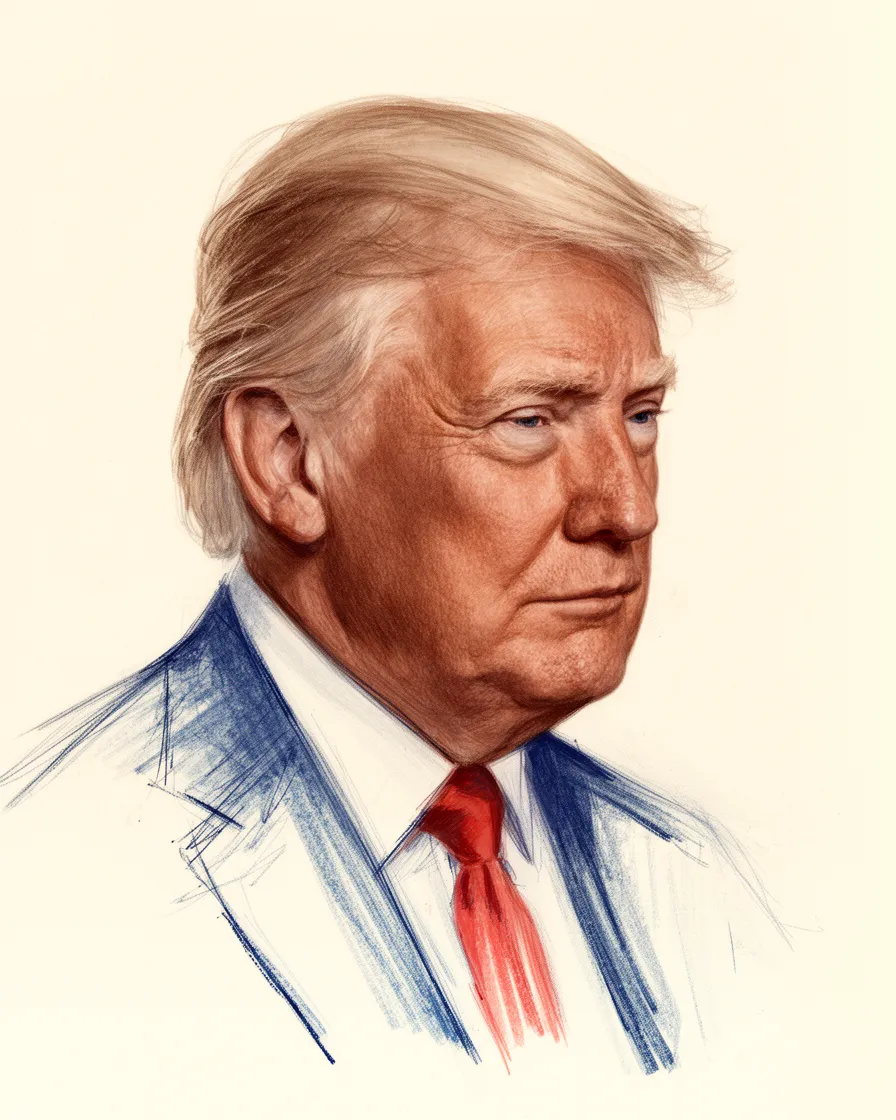
Donald Trump on Tax Policy
Donald Trump's overarching view on Tax Policy has consistently favored significant tax cuts, aiming to stimulate the economy through lower rates for businesses and individuals.
During his first term, he signed the Tax Cuts and Jobs Act (TCJA) in 2017, which permanently reduced the corporate income tax rate to 21% and temporarily lowered individual tax rates, though the latter were set to expire at the end of 2025.
In his second term, Trump signed the One Big Beautiful Bill Act into law on July 4, 2025, which made the temporary individual tax rates from the TCJA permanent and added further deductions, largely benefiting the highest income brackets. This administration also proposes funding tax cuts by implementing high tariffs.
Context
Donald Trump's focus on tax policy stems from his background as a businessman who seeks to reduce the tax burden on corporations and investors to encourage domestic investment. His policy priorities aim to simplify the tax code while prioritizing cuts.
His administration's signature legislation, the TCJA, had a significant impact on corporate behavior, reportedly incentivizing increased stock buybacks and corporate investment following the permanent corporate tax rate reduction. This approach remains central to his economic platform in his second term.
Actions Taken
- LegislationSigned the Tax Cuts and Jobs Act (TCJA) into law, which included a permanent reduction of the peak marginal corporate income tax rate to 21%.
- LegislationSigned the One Big Beautiful Bill Act into law, which permanently extended the individual tax rates established under the TCJA.
- ProposalProposed replacing the federal income tax with revenue generated from broad import tariffs, citing a potential to cut income taxes for those making under $200,000.
- Legislation DetailThe One Big Beautiful Bill Act increased the cap on the state and local tax deduction (SALT) to $40,000 for many taxpayers, while removing tax credits for renewable energy sources.
Criticism
The Trump megabill heavily favors the richest taxpayers, providing the top 1% with $1.02 trillion in tax cuts over a decade, which is comparable to cuts to the Medicaid healthcare program.
The One Big Beautiful Bill Act is projected to increase the budget deficit by $3.4 trillion by 2034, while imposing costs on the lowest income bracket.