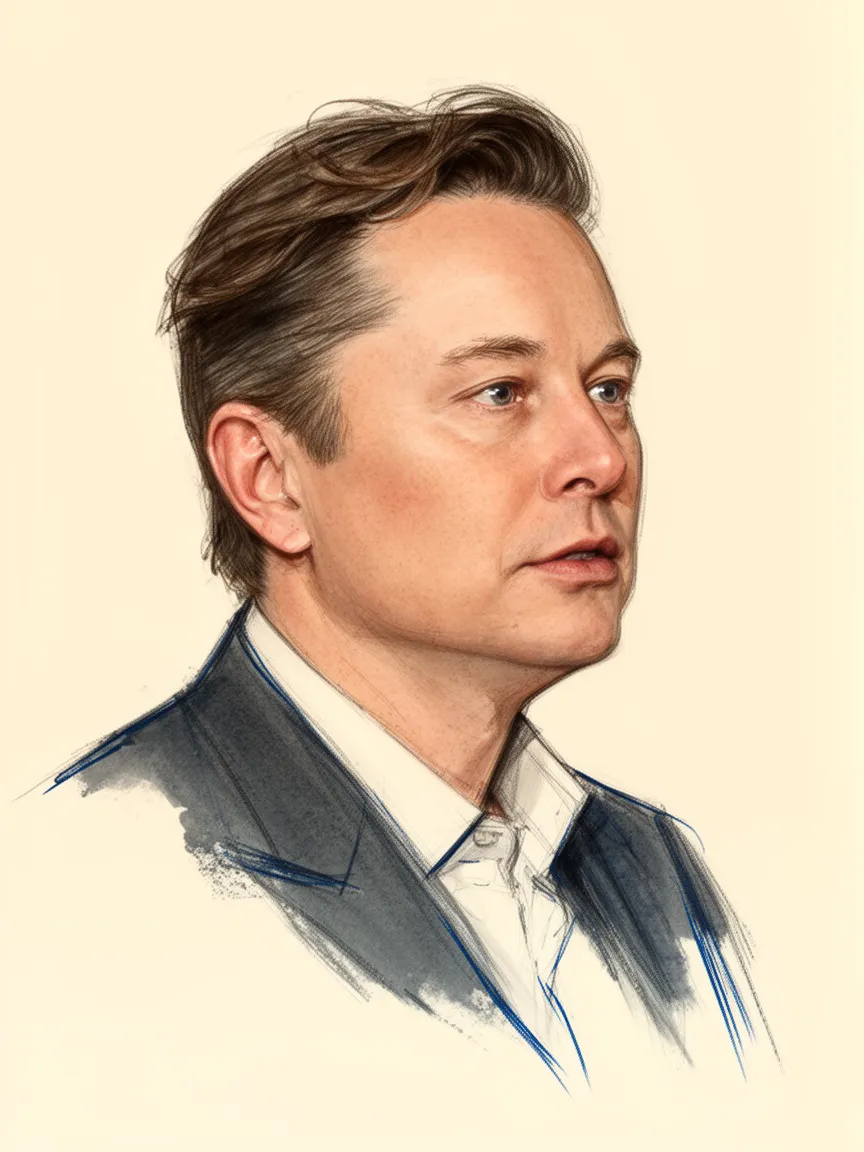
Elon Musk on Future of AI
Elon Musk has a strongly held, yet complex, perspective on the Future of AI, balancing the potential for unprecedented societal abundance with the threat of existential catastrophe. He has been vocal about the dangers of creating something smarter than humanity, emphasizing that the AI alignment problem—ensuring AI internalizes human ethics—is the single most important task facing the species.
Historically, Musk was a co-founder of OpenAI but departed due to ideological disagreements, eventually founding xAI in July 2023 to pursue a path focused on transparency and truth-seeking. He is highly confident in AI's potential to usher in an era where work is optional and material needs are met, potentially by 2030, but he insists that proactive regulation is necessary to manage the technology's inherent risks.
Through xAI, Musk aims to create an AI capable of understanding the universe, differentiating it from current models that merely mimic internet data. His vision includes an AI that can help solve fundamental scientific and mathematical mysteries, provided its development is guided by safety and alignment principles, otherwise posing a risk greater than nuclear warheads.
Context
Elon Musk's interest in the Future of AI is deeply tied to his background in creating high-level, complex systems at Tesla and SpaceX, as well as his prior involvement with OpenAI. His views are shaped by concerns about building systems whose ultimate goals may diverge from human well-being, a concept he terms the AI alignment problem.
His foundation, the Musk Foundation, has also had an interest in 'safe artificial intelligence' as part of its stated purpose. Furthermore, his company Neuralink seeks to integrate the human brain with AI, implying a belief that human augmentation might be necessary to keep pace with artificial evolution.
Timeline
- Co-founded OpenAI as a non-profit dedicated to ensuring AI benefits humanity.
- Left OpenAI due to what he saw as a deviation from the non-profit, safety-first mission.
- Warned that a digital Superintelligence poses an existential risk potentially far greater than nuclear warheads.
- Launched xAI to create a 'maximum truth-seeking AI' and challenge the direction of rival models.
- Predicted that by 2030, AI will exceed the intelligence of all humans combined, leading to a post-scarcity, optional-work future.
Actions Taken
- Organisation FoundingCo-founded OpenAI with the initial intent of developing safe and beneficial Artificial General Intelligence (AGI).
- DepartureDeparted the OpenAI board due to ideological clashes, including the shift to a for-profit model.
- Organisation FoundingLaunched xAI, an artificial intelligence company, with the stated mission to 'understand the true nature of the universe' and compete with existing AI offerings.
- AdvocacySigned a letter calling for a halt to advanced AI training until the technology could be properly regulated, citing existential risk.
- AdvocacySupported a California bill (Senate Bill 1047) to mandate safety testing for large-scale AI models.
Key Quotes
I think it will actually be that people don't have to work at all... Maybe only, I don't know, 10 - I'd say less than 20 years. My prediction is that in less than 20 years working will be optional, working at all will be optional, like a hobby pretty much.
I'm confident by 2030 AI will exceed the intelligence of all humans combined.
The goal of xAI is to understand the true nature of the universe.
Mark my words AI is far more dangerous than nukes.
Criticism
His prediction that people shouldn't stop saving for retirement due to AI is dangerous and misleading speculation.
Musk's support for mandatory safety testing legislation like SB 1047 is vague and risks adding unnecessary regulatory burden that dampens open-source model development.
Comparison
Musk's current stance often contrasts with his previous position at OpenAI and other industry leaders.
- OpenAI: Musk left OpenAI partly because it shifted towards a for-profit, closed-source model, which he criticized as prioritizing business interests over transparency and honesty.
- Industry Approach: While many focus on near-term commercial applications, Musk's stated xAI mission is to address fundamental, philosophical questions about the universe.
Sources5
xAI Explained: How Elon Musk is Revolutionizing AI
* This is not an exhaustive list of sources.