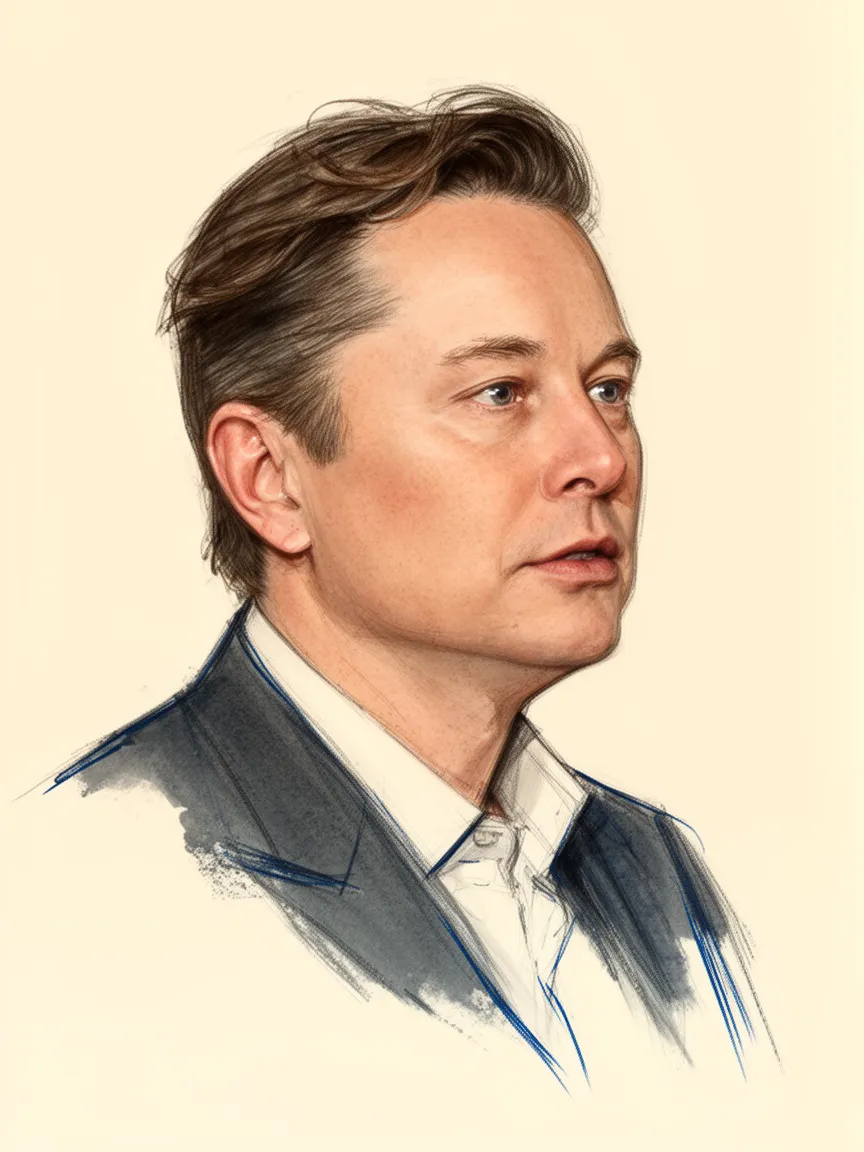
Elon Musk considers Starship to be the key to realizing his long-held dream of space exploration and securing humanity's future beyond Earth. He asserts that becoming a multi-planetary species is crucial for the long-term survival and prosperity of life and consciousness, making the success of Starship paramount. This goal necessitates establishing a self-sufficient city on Mars, requiring thousands of Starship launches over time to ferry millions of tonnes of cargo and crew.
Musk has driven SpaceX to engineer Starship as a fully reusable transportation system, comprising the Starship spacecraft and the Super Heavy rocket. This reusability is intended to dramatically lower the cost per launch, which is essential for making both extensive orbital missions and planetary colonization economically viable. He views the ability to transport massive payloads and many people to space for less money as transformational, even for point-to-point travel on Earth.
Significant engineering challenges remain, with Musk specifically highlighting the fully reusable orbital heat shield as a major focus for data collection during test flights. The development, based at Starbase in Texas, is moving toward operational flights, with Musk overseeing the construction of what he calls the most advanced rocket manufacturing facility ever built. His commitment to this project is reflected in the intense engineering focus and continuous test flight cadence.
Context
Elon Musk is the CEO and Chief Engineer of SpaceX, the company developing the Starship vehicle. His role in the company is central to its technical direction and overall mission philosophy. Starship is designed to replace the current Falcon 9 and Falcon Heavy rockets, representing a complete shift in SpaceX's approach towards fully reusable launch systems.
The vehicle's ultimate purpose, as championed by Musk, is not merely to service low Earth orbit but to facilitate human settlement on other celestial bodies, particularly Mars.
Timeline
- Starship development began as the intended successor to the Falcon 9 and Falcon Heavy rockets.
- Claimed that the change to allow hot staging in the Starship system might result in a 10% increase in payload capacity to low Earth orbit.
- Provided an update on the program, emphasizing the goal of becoming a multi-planetary species and discussing engineering challenges like the reusable heat shield.
Actions Taken
- Mission PlanningAnnounced plans for launching the first Starships to Mars, with the mission aiming to bring "mankind's ambassador" to the planet.
- Mission PlanningStated the goal for Starship cargo and crew flights to Mars to begin in a specific year.
- Engineering DevelopmentOversaw the development and construction of Starship at Starbase, including implementing features like hot staging on the booster.
Key Quotes
I think when I think about it it's the jet drives up to the jetway. the people get off new people get on and it leaves you don't want to land the jet on a different airfield. and then tow it over to the jetway. so it's just operationally simpler and faster
The the why of starship. is that uh we want to be a multilanet species to extend consciousness beyond earth.
And I can't think of anything more exciting than going out there and being among the stars.”
Sources5
Elon Musk talks SpaceX Starship's potential to transform space exploration in new update
* This is not an exhaustive list of sources.