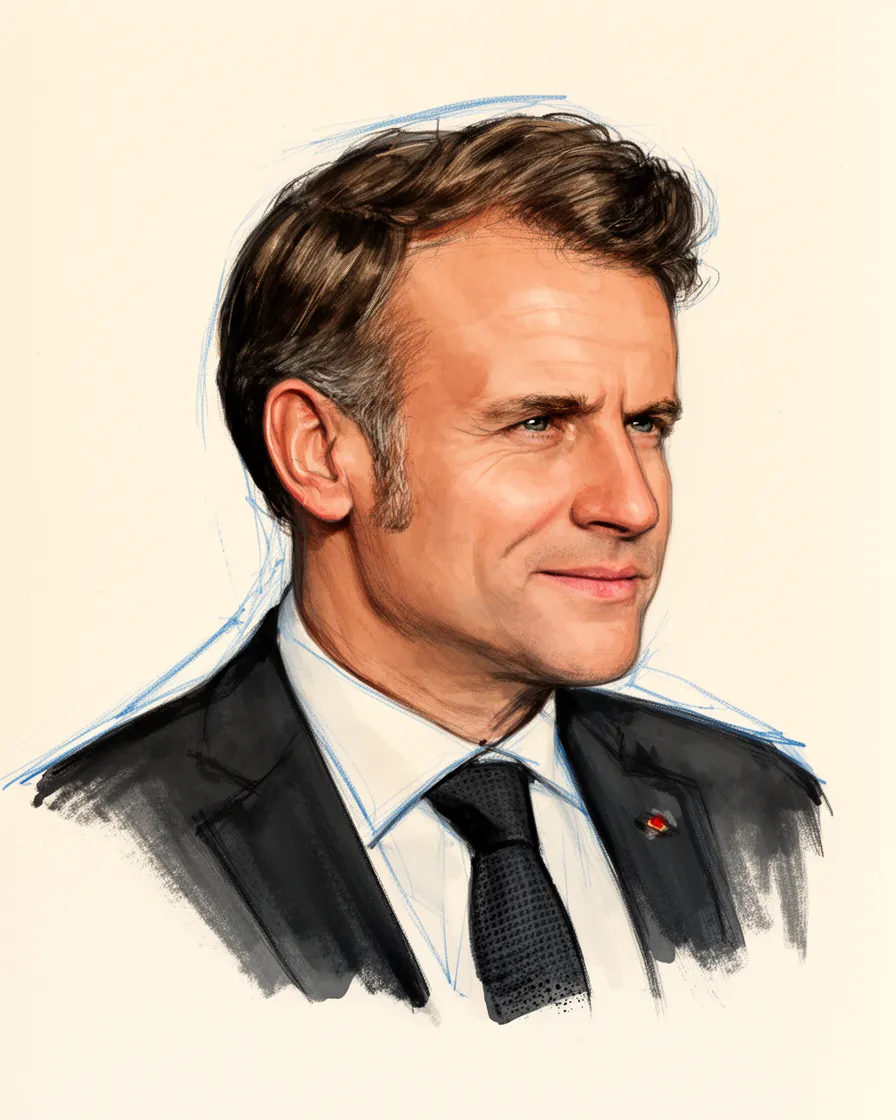
Emmanuel Macron on BRICS Bloc
Emmanuel Macron has expressed a nuanced view on the BRICS bloc, framing it within the broader context of global governance and the representation of the Global South. He generally stresses the need for reformed multilateral institutions, but his statements suggest caution regarding BRICS' role as a direct counterweight to Western-led bodies like the G7.
Following the group's expansion, Macron has been vocal about the need for the BRICS to clarify their identity and avoid becoming an exclusive anti-Western or anti-G7 bloc. His position emphasizes that a genuine multi-polar world requires dialogue and cooperation across different groupings, rather than outright opposition or strict division.
Furthermore, Emmanuel Macron has indicated that while France respects the sovereignty of nations choosing to engage with BRICS, Paris prioritizes strengthening existing European and transatlantic frameworks for economic and security coordination. This suggests that while he acknowledges the geopolitical weight of BRICS members, France's primary focus remains within established Western alliances.
Context
Emmanuel Macron, as President of France, views international groupings through the lens of European strategic autonomy and the structure of global governance. His foreign policy often seeks to balance relations with major powers like the US and China while championing a stronger, more independent European Union.
The BRICS bloc—Brazil, Russia, India, China, South Africa, and new members—is relevant to Macron because it represents a significant portion of the non-aligned or 'Global South' world. His engagement with the group, or lack thereof, signals France's position on the shifting balance of economic and geopolitical power away from the traditional Western-dominated structures.
Timeline
- Following the BRICS Summit in Johannesburg, where expansion was announced, Emmanuel Macron voiced skepticism, framing the group as needing to clarify if its goal was to challenge the West or merely represent the Global South.
- President Macron suggested that the recent widening of the BRICS club, particularly its expansion, may not be the most effective way to ensure the Global South has a seat at the table, as other forums exist.
Key Quotes
What is the objective of BRICS? Is it to build a new bloc that challenges the West, or is it to make sure the Global South has a voice?
It's important to remain clear-headed: this is not a bloc that is against the West. It is a bloc that wants the Global South to have a voice.
I do not think that a widening of the BRICS club... will help it to develop, as the BRICS is not the only voice of the Global South. The **G7** is not the only voice of the West, and we need to keep discussing with everyone.
Comparison
- Relationship to G7: Emmanuel Macron contrasts the BRICS bloc with the G7, implying that while the G7 is a major Western voice, the BRICS aims to be the 'voice of the Global South,' suggesting a functional division rather than a desire for the BRICS to fully replace Western-led forums.
- View on Expansion: His comments after the 2023 summit suggest a reserved stance on the group's widening, viewing it perhaps as a potentially unwieldy expansion rather than a strengthening consolidation.
Sources2
Macron sets out his vision for European sovereignty after BRICS summit
Macron says recent BRICS expansion won't help Global South find its voice
* This is not an exhaustive list of sources.