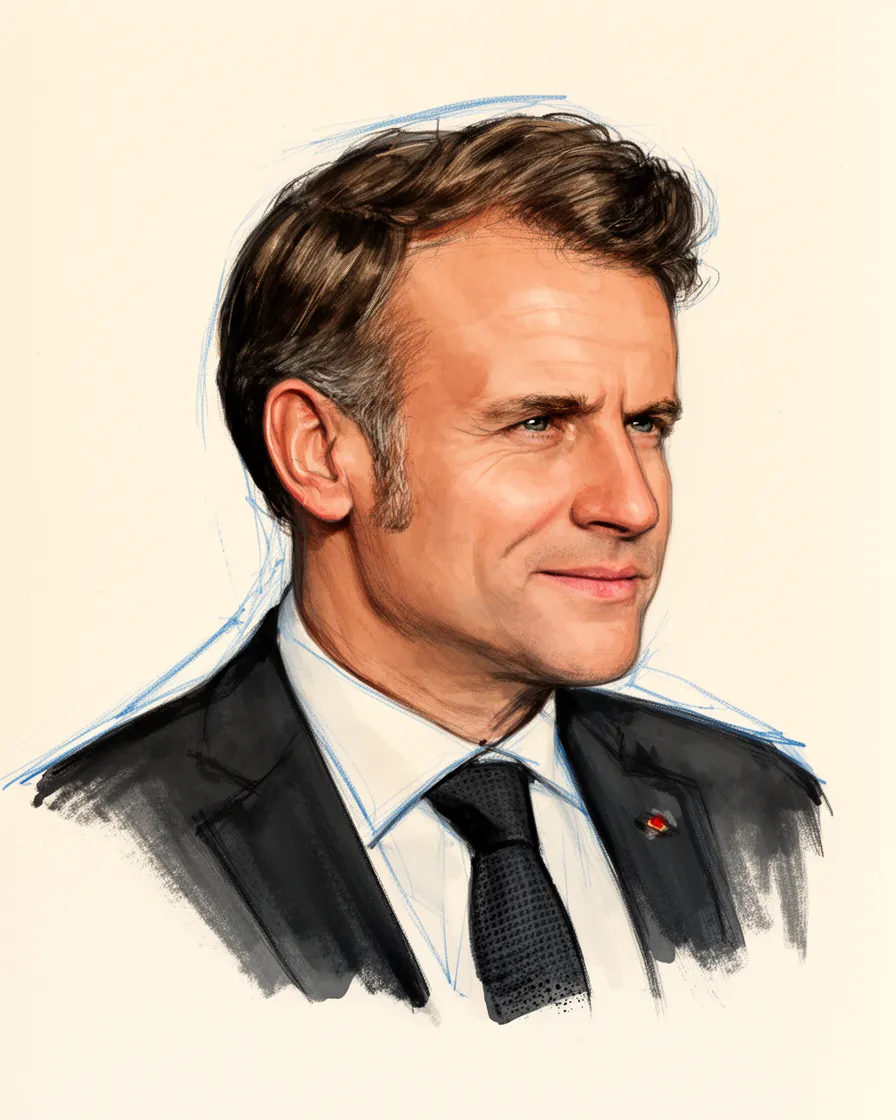
Emmanuel Macron on Joe Biden
Emmanuel Macron considers US President Joe Biden a key counterpart for advancing shared goals on the international stage, particularly regarding European security and the response to Russian aggression. Following a period of strained relations under the previous US administration, Macron has emphasized rebuilding the transatlantic relationship under Biden's leadership.
Macron has consistently promoted the concept of European strategic autonomy, seeking a stronger, more self-reliant Europe that is a capable partner to the United States rather than merely dependent upon it. This nuanced approach has required careful diplomacy, especially concerning defense and trade matters, even with a friendly administration in Washington.
The relationship saw a notable dip due to the AUKUS security pact in 2021, which angered France, but subsequent high-level engagements have worked to smooth over these differences. Macron and Biden have since prioritized cooperation on issues like the war in Ukraine and energy security.
Context
Emmanuel Macron, as President of France, is deeply invested in maintaining and strengthening the Franco-American alliance, which is a cornerstone of French foreign policy. His relationship with Joe Biden is viewed through the lens of ensuring European sovereignty while coordinating on major geopolitical threats.
Macron's approach is characterized by advocating for strategic autonomy—a concept that suggests Europe must be capable of acting independently when necessary, even with strong allies like the US. This pursuit of autonomy sometimes leads to friction with Washington, as seen during the AUKUS crisis, but the overall sentiment remains one of partnership, especially in the face of shared adversaries.
Timeline
- French-U.S. relations became tense due to the AUKUS security pact, leading France to recall its ambassadors from the US and Australia.
- Macron and President Biden agreed to reduce tensions after a call, with the White House acknowledging the need for better ally consultation.
- Macron visited Ukraine alongside German Chancellor Olaf Scholz and Italian PM Mario Draghi, expressing "European Unity" for Ukraine.
- Macron criticized the US and other suppliers for high natural gas prices in Europe, noting the disparity in pricing compared to the US domestic market.
- Macron hosted Biden in Paris, where the two leaders reaffirmed strong ties and commitment to supporting Ukraine, signaling a close strategic alignment.
Actions Taken
- Diplomatic protestFrance recalled its ambassador from the US for consultations following the announcement of the AUKUS security pact, which superseded a major French submarine deal with Australia.
- Bilateral de EscalationFollowing a call from President Biden, Macron and Biden agreed to reduce bilateral tensions, acknowledging the crisis could have been averted with prior consultation between allies.
- State visit/summitMacron hosted President Biden for a meeting focused on strengthening cooperation and addressing the shared challenge of Russian aggression.
Key Quotes
We agreed on the need to strengthen our cooperation, to continue to support the Ukrainian people, and to work together on strategic autonomy and global challenges.
The crisis we are experiencing today in Europe is a political crisis. [...] A country like Italy has not at all the same migratory pressure as last year. The crisis we are experiencing today in Europe is a political crisis.
Sources4
Macron and Biden reaffirm strong ties, commitment to Ukraine during Paris visit
* This is not an exhaustive list of sources.