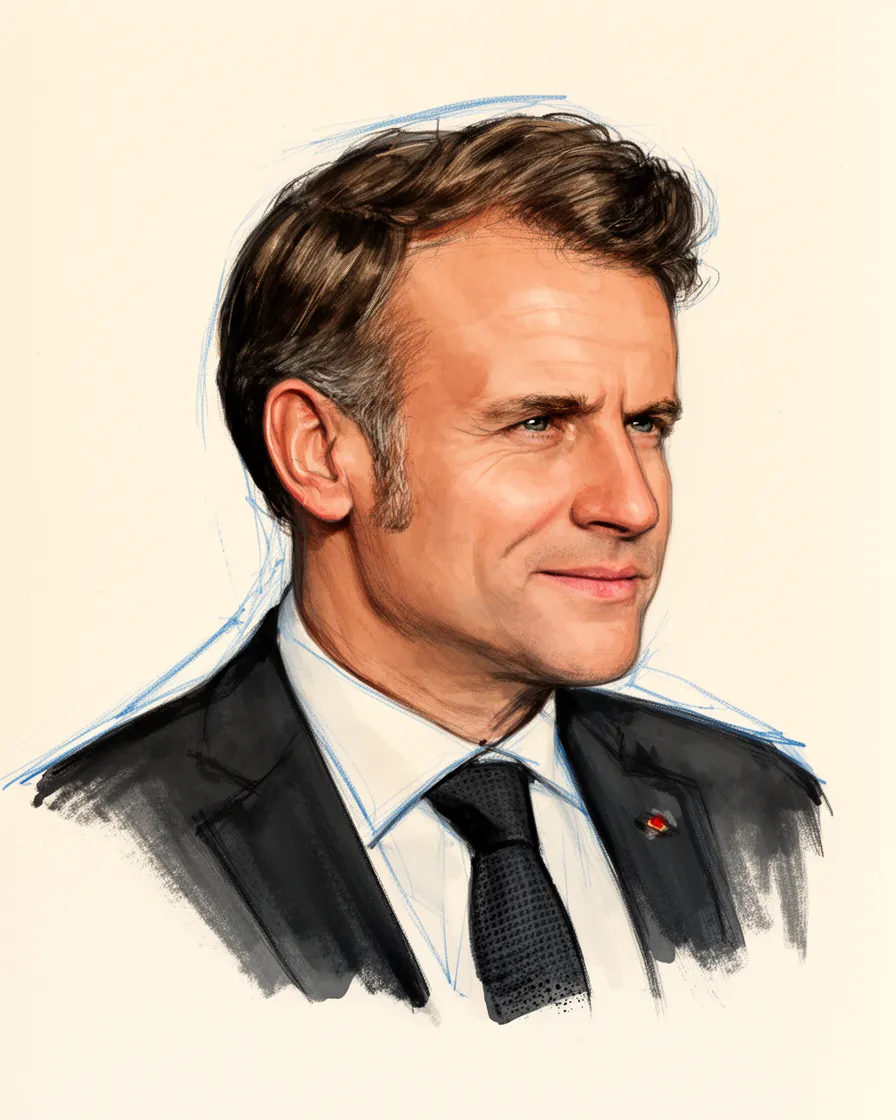
Emmanuel Macron on Russia Relations
Emmanuel Macron's position on Russia Relations has historically centered on the principle of maintaining dialogue and seeking strategic autonomy for Europe, even when dealing with the Kremlin.
Before the 2022 full-scale invasion of Ukraine, Macron frequently emphasized the need for cooperation with Russia on global issues like counter-terrorism and advocated for Russia's inclusion in a broader European security architecture, stating that Russia fully belongs within a Europe of values.
Following the 2022 invasion, his stance became more confrontational regarding Russia's aggression, condemning it as imperialism and colonialism, while still calling for European leaders to maintain lines of communication open with President Vladimir Putin for a potential future peace negotiation.
Timeline
- Macron met with President Vladimir Putin at the Palace of Versailles shortly after becoming President.
- At the Munich Security Conference, Macron articulated a vision for European strength that included establishing a dialogue with Russia.
- Macron visited Ukraine and stated that nations remaining neutral in the conflict made a 'historic mistake' and were complicit in new imperialism.
- Macron called on European leaders to maintain dialogue with President Putin during his re-election campaign, nearly two months after the invasion began.
- Macron stated in Bratislava that negotiating with Putin might need to take priority over pursuing war crimes tribunals.
- Macron characterized Russia's actions in Ukraine as 'imperialism and colonialism' but added that the time for fair peace negotiations might come.
- Macron characterized Russia as an 'existential threat' to Europe and convened a meeting to coordinate European responses.
Actions Taken
- Diplomatic EngagementMet with Vladimir Putin to engage on various international topics and warn against chemical weapons use in Syria.
- Military ActionSupported French participation in airstrikes against Syrian government sites following the Douma chemical attack, coordinated with the US and UK.
- High Level DialogueHosted Vladimir Putin at Fort de Brégançon before the G7 summit, using the occasion to press for dialogue.
- Support for UkraineVisited Ukraine alongside German and Italian leaders to express 'European Unity' following the invasion.
- Military SupportGave Ukraine permission to use French SCALP EG missiles against military sites on Russian soil, limited to neutralizing launch/attack sites.
Criticism
Accused Russian state media outlets RT and Sputnik News of being the 'first source of false information' targeting Macron during the 2017 election campaign.
Accused Macron of being too accommodating toward Russia, especially before 2022, due to his repeated insistence on dialogue.
Comparison
Macron's approach to Russia has often contrasted with that of some European and US counterparts, particularly through his emphasis on dialogue.
- Pre-2022: His efforts contrasted with more hawkish stances, as seen by his emphasis on 'strategic autonomy' and dialogue, even as tensions grew.
- Post-2022: While fully aligning with EU sanctions and military support for Ukraine, his continued willingness to speak with Vladimir Putin has differentiated him from some leaders calling for complete isolation.
Sources5
- During the prelude to the 2022 Russian invasion of Ukraine, Macron spoke face-to-face and on the phone to Russian President Vladimir Putin. During Macron's campaign for the re-election, nearly two months after the Russian invasion began, Macron called on European leaders to maintain dialogue with Putin.
- On 16 June 2022, Macron visited Ukraine alongside German Chancellor Olaf Scholz and Italy's Prime Minister Mario Draghi. He met with Ukraine's President Volodymyr Zelenskyy and expressed "European Unity" for Ukraine. He said that the nations that remained neutral in the Russo-Ukrainian War made a historic mistake and were complicit in the new imperialism.
- At the 56th Munich Security Conference in February, Macron presented his 10-year vision policy to strengthen the European Union. [...] He added that reliance on NATO and especially the US and the UK was not good for Europe, and a dialogue must be established with Russia.
- Prior to the 45th G7 summit in Biarritz, France, Macron hosted Vladimir Putin at the Fort de Brégançon, stating that "Russia fully belongs within a Europe of values."
- On 29 May 2017, Macron met with Vladimir Putin at the Palace of Versailles. The meeting sparked controversy when Macron denounced Russia Today and Sputnik, accusing the news agencies of being "organs of influence and propaganda, of lying propaganda".
* This is not an exhaustive list of sources.