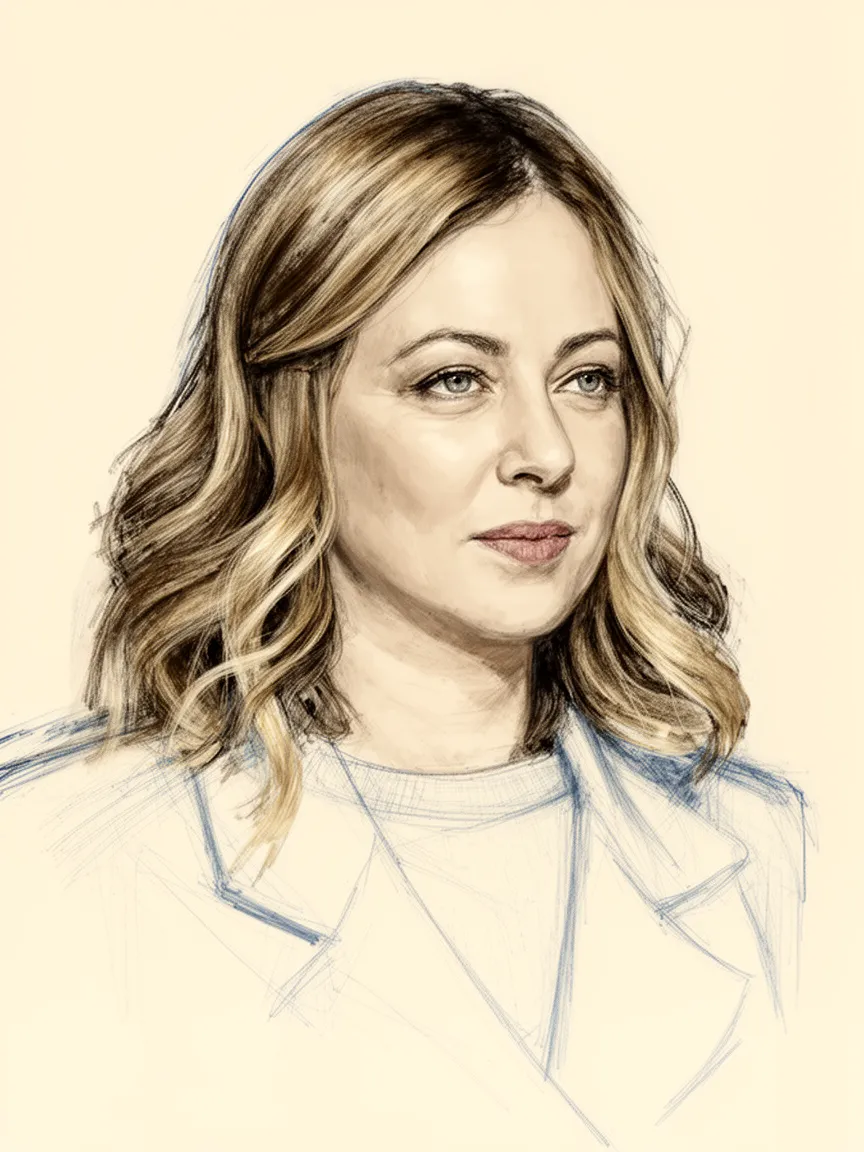
Giorgia Meloni on Terrorism and Security
Giorgia Meloni strongly emphasizes national security and has implemented stricter measures since her government took office in October 2022. Her approach integrates counter-terrorism efforts with broader law and order policies, often leading to new legislation aimed at increasing state control.
These security measures have included legislative packages covering terrorism, protests, and illegal occupations. Meloni's administration has also focused on expanding the powers of the secret services as part of its security framework.
Meloni's positions on security are deeply connected to her hardline stance against illegal immigration, which she frames as a key element of national security risk management.
Context
As Prime Minister of Italy, Giorgia Meloni holds executive authority over national security, including the oversight of intelligence agencies (like DIS, AISE, AISI) and the Ministry of the Interior, which manages domestic security and counter-terrorism operations.
Her platform as leader of Brothers of Italy (FdI) is built on national conservatism and a strong emphasis on national identity, which translates into a demand for robust state action against perceived internal and external threats, including terrorism.
Timeline
- Meloni expressed concern about threats, including citing her book co-authored with an anti-Islamisation figure, linking mass migration to 'ethnic substitution' and discussing organized crime.
- Shortly after taking office, the government moved to implement stricter policies and introduced a decree to heavily penalize illegal gatherings, signaling an immediate focus on internal order.
- The government proposed legislation to expand the operational scope and powers of Italian secret services, explicitly including participation in or direction of groups related to terrorism or subversion.
Actions Taken
- LegislationThe Chamber of Deputies approved the "Safety Bill" which covered subjects including terrorism, scams, protection of law enforcement, and banning cannabis in any form.
- Legislation ProposalThe 'Safety Bill' proposed expanding the powers of the secret services, allowing them to participate in or direct terrorist or subversive groups, and mandated collaboration with universities.
- DecreeThe Meloni government approved a decree providing for a penalty of up to six years of imprisonment for illegal parties and rallies, officially presented as targeting illegal rave parties.
- Decree LawA later decree-law, almost entirely following the rejected 'Safety Bill', was approved in April to speed up the process, which included provisions related to security.
Criticism
The initial decree against illegal gatherings was heavily criticized for being applicable to any gathering deemed dangerous by authorities, risking the undermining of the right to peaceful protest.
The subsequent 'Safety Bill' was labelled "liberticidal" due to measures like the 'anti-Salis rule' on illegal occupation and the 'anti-Gandhi rule' potentially restricting peaceful protests.
The proposal to expand the powers of secret services to direct subversive groups was harshly criticized due to historical precedents of illicit activities during Italy's 'Years of Lead'.