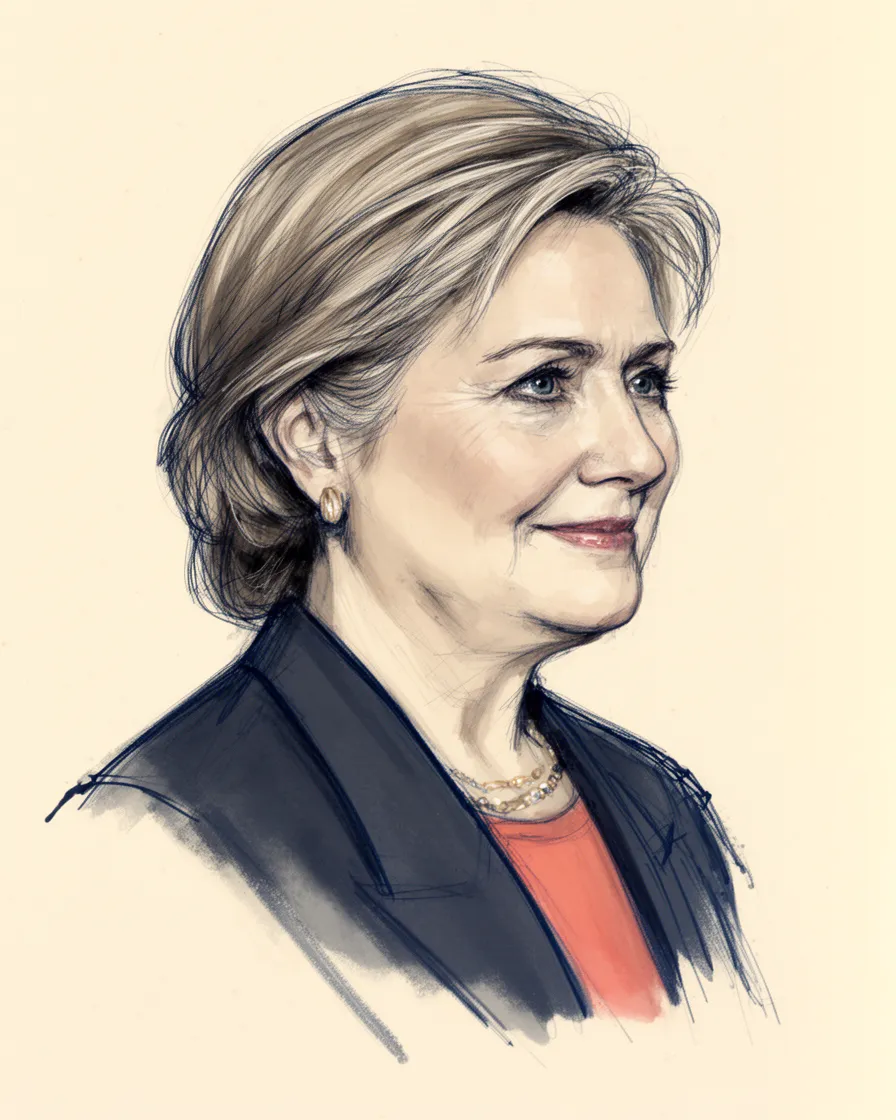
Hillary Clinton on Citizens United
Hillary Clinton has consistently expressed strong opposition to the Supreme Court's Citizens United v. FEC decision, frequently characterizing it as a ruling that "unleashed hundreds of millions of dollars in corporate and special-interest money into U.S. elections."
As a presidential candidate, Clinton announced an aggressive plan aimed at reversing the decision's effects, which included proposing a constitutional amendment to overturn Citizens United within her first 30 days as president.
Beyond a constitutional challenge, her strategy involved appointing Supreme Court justices who shared her view that the decision hurt democracy and fighting for other campaign finance reforms, such as enhanced disclosure requirements and small-donor matching systems.
Clinton asserted that she knew firsthand the negative impact of the ruling, referencing the Hillary: The Movie case, which was a corporate-funded film critical of her candidacy that the government initially blocked from airing.
Her broader goal was to curb the outsized influence of big money in politics and restore the electoral system to the control of everyday voters rather than billionaires and special interests.
Context
The Citizens United ruling is particularly relevant to Hillary Clinton due to the origin of the case itself, Citizens United v. FEC. This case was brought by a conservative non-profit group that had produced a documentary highly critical of Clinton's 2008 presidential campaign, titled Hillary: The Movie.
Clinton and her supporters have argued that the ruling essentially gave corporations and special interests the right to spend unlimited, often undisclosed, money to influence elections, thereby drowning out the voices of ordinary citizens.
This personal connection to the underlying litigation helps explain her sustained and vocal focus on the decision as a central pillar of her campaign finance reform agenda.
Timeline
- The Supreme Court issued the Citizens United v. FEC decision, allowing unlimited independent political spending by corporations and unions.
- Hillary Clinton identified overturning Citizens United as a key part of her campaign platform, making it a litmus test for her potential Supreme Court nominees.
- Clinton committed, via video address, to proposing a constitutional amendment to overturn Citizens United within the first 30 days of her presidency.
Actions Taken
- Policy proposalProposed that if elected president, she would propose a constitutional amendment within her first 30 days to overturn Citizens United.
- Judicial appointment policyPledged to appoint Supreme Court justices explicitly willing to overrule Citizens United as a litmus test for nominees.
- Executive action policyStated commitment to signing an Executive Order requiring federal government contractors to fully disclose all political spending to curb 'dark money'.
Key Quotes
In my first 30 days as President, I will propose a constitutional amendment to overturn Citizens United and give the American people – all of us – the chance to reclaim our democracy.
And it means overturning the disastrous Citizens United Supreme Court decision and putting our democracy back in the hands of the voters.
I will appoint Supreme Court justices who understand that this decision deeply hurt our democracy, and I will fight for other progressive reforms to our campaign finance system, including more robust disclosure requirements...
Sources5
Hillary Clinton's Big Announcement on Citizens United
* This is not an exhaustive list of sources.