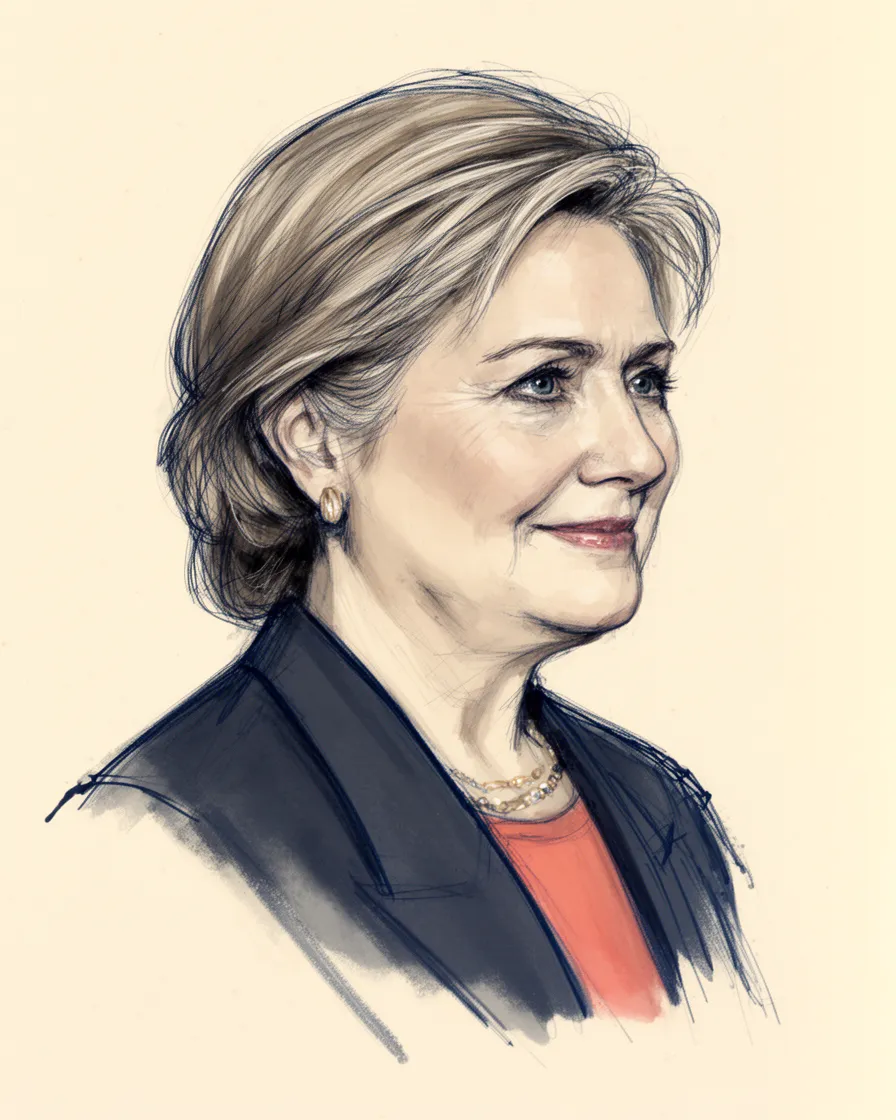
Hillary Clinton on Feminism
Hillary Clinton consistently positions herself as a champion for women's rights and opportunity, asserting that empowering women is crucial for national and global prosperity. She articulates this belief as a moral imperative for the current century, often contrasting it with historical struggles against slavery and totalitarianism.
Her approach, frequently labeled liberal feminism, concentrates on achieving parity within existing systems through specific policy goals. These include closing the pay gap, securing paid leave, ensuring affordable childcare, and defending reproductive health care access.
Conversely, some analyses suggest her feminism overlooks critical issues of race and class, leading to critiques that it represents a white, privileged, or imperial feminism. These critics argue that her policy record sometimes favors corporate structures or global military interests over truly dismantling systemic oppression faced by the most marginalized women.
Context
Hillary Clinton's relevance to feminism stems from her long career in public life, which includes serving as First Lady, Senator, Secretary of State, and the first female presidential nominee of a major U.S. party in 2016. This trajectory makes her a polarizing figure within feminist discourse.
She views the fight for women's rights as inseparable from broader human rights, a stance she powerfully articulated on the global stage. This framing establishes her history of advocacy across multiple high-level governmental roles.
Actions Taken
- International AdvocacyLed the U.S. delegation to the U.N. Fourth World Conference on Women in Beijing, famously declaring, "women's rights are human rights."
- Domestic Policy AdvocacyAdvocated for the Family and Medical Leave Act, worked to increase funding for child care, and helped start the National Campaign to End Teen and Unplanned Pregnancy as First Lady.
- Legislative ActionChampioned access to emergency contraception and voted to strengthen a woman's right to make her own health decisions while serving as Senator from New York.
- Policy PlatformPledged to work to close the pay gap, promote pay transparency, and pass the Paycheck Fairness Act, which she introduced as Senator.
Key Quotes
Human rights are wom- en's rights, and women's rights are human rights.
If I were an advisor to her campaign, my advice to Hillary would be simple: Read some Black feminist/intersectional theory! ... Propose policies that will dismantle systems of oppression rather than reform them.
the 21st century is about ending. the pervasive discrimination and degradation of women. and fulfilling their full rights.
Criticism
Her feminism is often termed imperial feminism because it prioritizes U.S. democratic values globally and may diminish the particularity of women's needs elsewhere.
Her rhetoric is criticized for not explicitly evoking intersectionality, focusing on liberal reforms rather than dismantling interlocking systems like capitalism and racial domination.
Enthusiasm for Clinton reflects a crisis of U.S. liberal feminism that has embraced corporate capitalism and empire, with her policies as a policymaker being devastating to some women and LGBT persons.
Despite positioning herself as a feminist icon, the organization she leads has faced accusations of harassment against female employees, and her association with figures like Harvey Weinstein is scrutinized.
Sources6
Hillary Clinton's Imperial Feminism
* This is not an exhaustive list of sources.