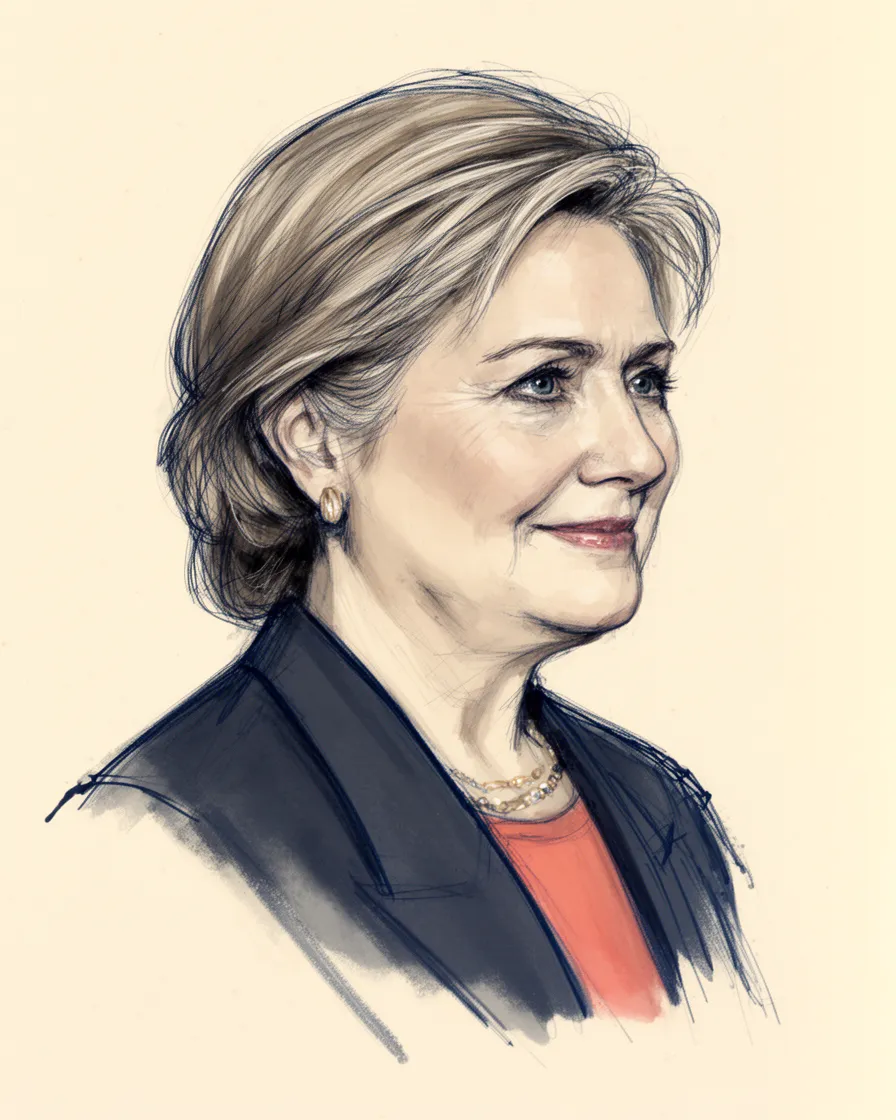
Hillary Clinton on Foreign Policy
Hillary Clinton views foreign policy through a lens of American leadership and sustained global engagement, emphasizing a pragmatic but tough approach to national security matters. She strongly believes in utilizing "smart power", which is a calculated mix of hard and soft power tools, meaning diplomacy, economic sanctions, military force, and development aid are all considered essential tools.
As Secretary of State, and in her subsequent commentary, Clinton has placed high priority on maintaining and strengthening treaty alliances in regions like Europe and Asia, viewing these relationships as integral to American interests and global stability. Her stated vision involves being a willing partner and leader on global challenges such as nuclear proliferation, terrorism, and advocating for human rights and women's rights worldwide.
Her perspective often contrasts with isolationist views, positioning the U.S. as an active shaper of the international order through coalition building and strategic intervention when necessary. This includes clearly dealing with adversaries, such as demanding China be a responsible stakeholder, while simultaneously prioritizing diplomacy alongside deterrence, especially regarding issues like Iran's nuclear program.
Context
Hillary Clinton’s foreign policy views are deeply informed by her time as a U.S. Senator serving on the Armed Services Committee, and more significantly, as Secretary of State from 2009 to 2013. Her tenure as the nation's chief diplomat involved extensive global travel and the direct implementation of President Obama's foreign policy agenda.
Her role as Secretary of State meant she was responsible for executing the administration's strategy while advising the President, leading to a practical emphasis on effectiveness and avoiding public disagreement with the White House. This experience shaped her philosophy to be characterized by steadiness and pragmatism in managing complex international relationships.
Actions Taken
- Policy FrameworkChampioned the "smart power" approach, advocating for the use of diplomatic, economic, military, political, legal, and cultural tools, with diplomacy as the vanguard.
- Military Intervention SupportSupported the U.S. intervention in Libya and advocated for a troop surge in Afghanistan during her time as Secretary of State.
- Regional DiplomacyPrioritized the U.S.-Latin America relationship, emphasizing mutual respect, economic growth, and cooperation on shared challenges like energy.
- Diplomacy/DeterrenceCalled for vigorous diplomacy with Iran while simultaneously warning of severe consequences should Iran attack Israel.
Key Quotes
We must use what has been called ‘smart power’, the full range of tools at our disposal - diplomatic, economic, military, political, legal and cultural - picking the right tool or combination of tools for each situation.
Secretary Clinton intends in this general election campaign to put forward a strong, principled vision of American leadership in the world, one that is based on deep and enduring relationships with our allies, clear and firm dealings with our competitors and adversaries...
If you don't have diplomacy before, during and after a crisis, it doesn't matter how powerful you are, you can't win or you can't force an end to the conflict.”
Criticism
Argued that American foreign policy under Clinton as Secretary of State was marked by setbacks, citing U.S. intervention in Libya and Egypt as undermining friends and catering to enemies, leading to instability.
Critics suggested that protracted negotiations with Iran under her watch allowed the country to advance its nuclear facilities, making it potentially too difficult for Israel to stop them militarily.
Sources8
Hillary Clinton's Foreign Policy
* This is not an exhaustive list of sources.