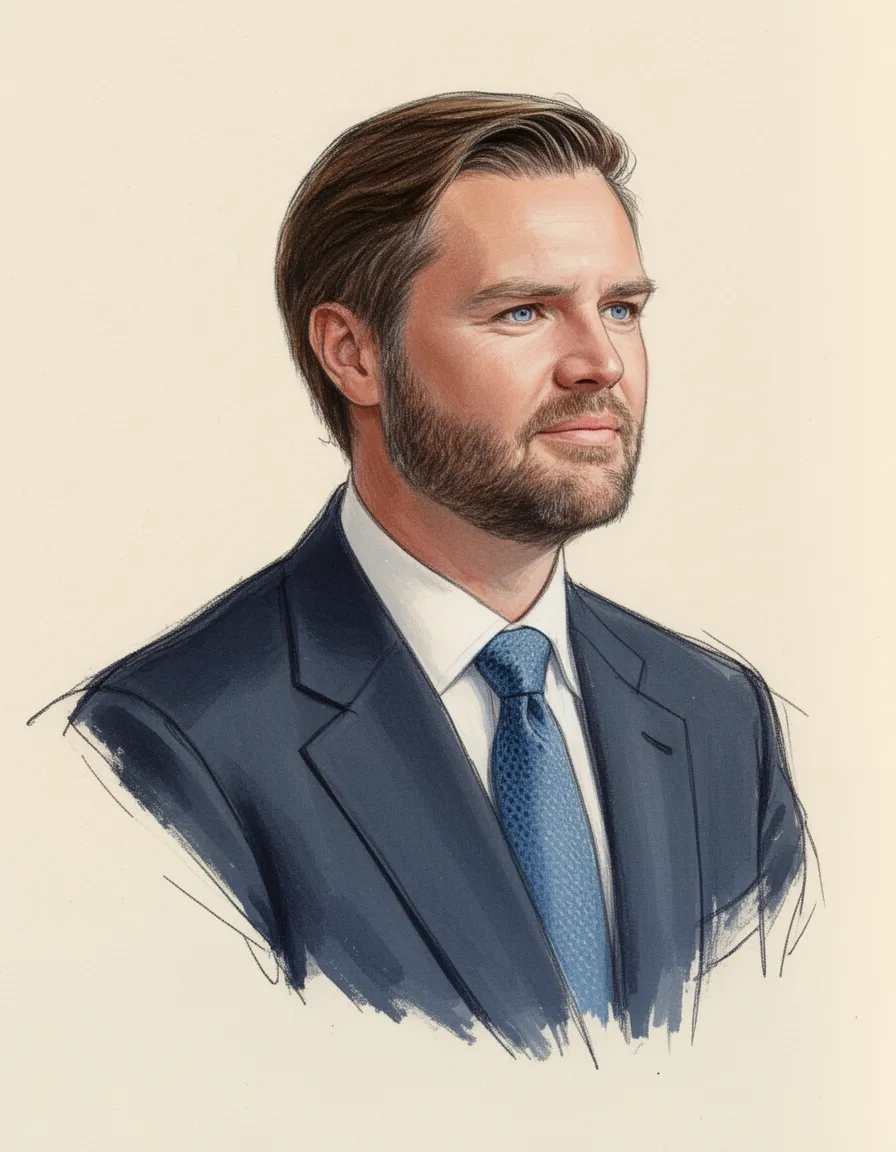
Vice President JD Vance views China as the biggest threat to the United States, aligning with a China hawk stance centered on economic nationalism. His position heavily favors imposing significant tariffs and restrictions on China to revive domestic manufacturing and counter its influence.
He advocates for a primary focus on confronting China, suggesting that current conflicts, like the war in Ukraine, are distractions from this main geopolitical challenge. Vance has taken legislative action against Chinese access to U.S. markets and higher education, reflecting a commitment to decoupling key sectors.
During his time in the Senate and as Vice President, Vance has articulated a view that the US economic relationship with China is fundamentally exploitative, leading to controversial remarks that drew condemnation from Beijing. His stance is deeply rooted in the America First economic vision shared with President Trump.
Context
JD Vance's focus on China is central to his national conservative and right-wing populist worldview, which prioritizes American economic sovereignty and national security above globalist integration. His background as a venture capitalist and author who became a vocal Trump supporter provides the framework for his aggressive economic nationalism toward Beijing.
As a sitting Senator and then Vice President, Vance has consistently advocated for policies that decouple the US economy from China and directly challenge the CCP's global economic rise. This stance informs his broader foreign policy preference for less intervention overseas, arguing that such focus is necessary to prioritize the China challenge.
Timeline
- JD Vance voted against raising the debt ceiling, stating that the resulting spending cuts would lead to "a reduced military in the face of a rising threat from China."
- He advocated for the US to apply across-the-board tariffs on imports, framing them as a penalty against using slave labor in China to boost American production.
- Shortly after being named Trump's running mate, Vance called China “the biggest threat” to the United States in an interview.
- As VP nominee, Vance stated that the goal of economic policy was to stop the Chinese Communist Party from building its middle class on the backs of American citizens.
- During a visit to Greenland, Vance warned of China's encroachment and expanding ambitions in the Arctic region.
- In an interview defending tariffs, Vance stated the US borrows money from "Chinese peasants to buy the things those Chinese peasants manufacture," prompting a sharp rebuke from Beijing.
Actions Taken
- LegislationIntroduced legislation aimed at restricting Chinese access to U.S. financial markets.
- LegislationIntroduced legislation to safeguard U.S. higher education from Chinese influence.
- Voting RecordVoted against the Fiscal Responsibility Act of 2023, citing the need to maintain military strength against the "rising threat from China."
Key Quotes
That's the biggest threat to our country and we are completely distracted from it.
We borrow money from **Chinese peasants** to buy the things those **Chinese peasants** manufacture.
Together we will protect the wages of American workers and stop the **Chinese Communist Party** from building their middle class on the backs of American citizens.
Criticism
Called Vance's remarks about 'Chinese peasants' 'both astonishing and lamentable' and described them as 'ignorant and disrespectful.'
The comments about 'Chinese peasants' became the top trending topic on Weibo and sparked significant backlash online.
Sources5
VP nominee Vance calls China 'biggest threat to our country'
JD Vance Blasted 'Chinese Peasants' in a Fox News Interview. Now China's Hitting Him with Brutal Comebacks
Beijing attacks JD Vance's 'Chinese peasants' remark in tariffs interview
China calls JD Vance "ignorant and impolite" over his "peasants" comments
JD Vance talk tough on China, blasts Biden's policies - YouTube
* This is not an exhaustive list of sources.