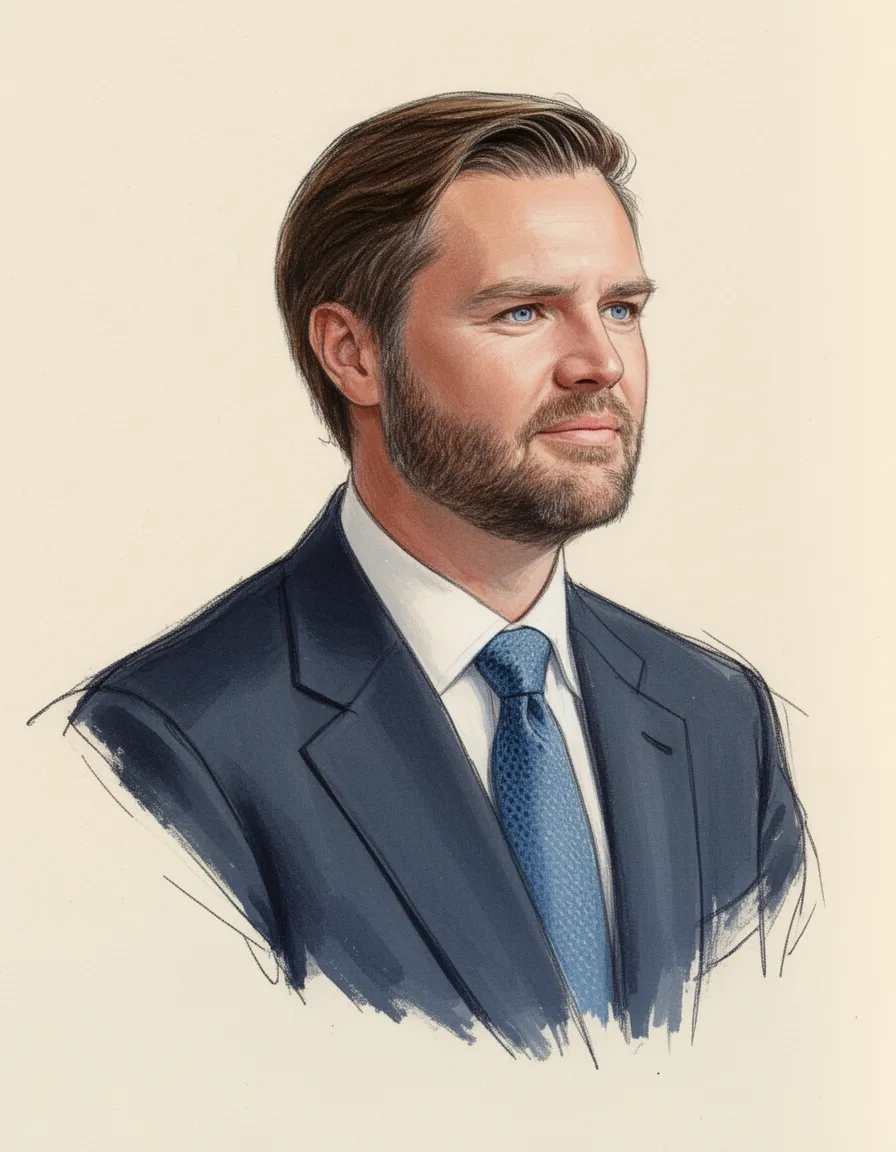
JD Vance on Free Speech
JD Vance expresses strong opposition to censorship by Big Tech companies, arguing they possess too much power and can restrict American constitutional rights, particularly in the digital public square. His focus has been on challenging perceived ideological bias within these platforms, even as he himself faces criticism for his own rhetoric.
As Vice President, Vance has stated that the Trump administration will ensure American AI systems are free from ideological bias and will not be used for authoritarian censorship. He has also used international forums to criticize European allies, including the United Kingdom, for what he views as a retreat from free speech principles, citing specific laws and instances of alleged suppression.
However, Vance's own record and rhetoric have drawn counter-criticism. While vocal about external censorship, he has been accused of sidestepping scrutiny of the current administration's potential impact on free expression, and his own past comments suggest a desire to use government influence to shape content.
Context
As a prominent national conservative and Vice President, JD Vance's stance on free speech is a key part of his platform, often framing the issue through the lens of perceived collusion between Big Tech and government agencies. This concern about centralized control over information is linked to his broader critique of established institutions.
His position is frequently discussed in the context of debates over content moderation, particularly following the 2020 election and regarding issues like COVID-19 information, where he argued that silencing certain viewpoints constitutes a threat to democracy.
Actions Taken
- Policy StatementVance stated that the Trump administration will ensure American AI systems are free from ideological bias and will never restrict citizens' right to free speech.
- Policy StatementVance vowed that the Trump administration will "do precisely the opposite" of the prior administration's actions, which he claimed involved bullying social media companies to censor "misinformation."
- International AdvocacyVance publicly criticized European leaders, including those in the United Kingdom, for what he described as a free speech retreat and the suppression of populist views, suggesting their laws infringe on liberties.
Key Quotes
They can either respect America's constitutional rights, they can stop engaging in **censorship**, and if they don't, you can be absolutely sure that Donald Trump's leadership is not going to look too kindly on them.
We believe fundamentally that **big tech does have too much power**... possessing a 'monopoly over **free speech**' that ought to be broken up.
The threat that I worry the most about vis-à-vis Europe is not Russia it's not China. it's not any other external actor. and what I worry about is the **threat from within**... and across Europe **free speech** I fear is in retreat.
We feel very strongly that AI must remain **free from ideological bias** and that American AI will not be co-opted into a tool for authoritarian **censorship**.
Criticism
Scholz offered an apparent rebuke to Vance's remarks in Munich, defending Germany's democracy and its regulations on hate speech, stating that German free speech laws do not allow attacks against others that are against legislation.
The CEO argued that Vance's administration is not correcting the course on free speech issues, suggesting that free speech in the U.S. is worse now than under the prior administration, calling the commitment hollow.
Alleged that JD Vance has 'changed [his] opinion on literally every imaginable issue that affects everyday Americans' in pursuit of 'political power and wealth,' suggesting his current views may not be sincere.
Sources5
JD Vance says Big Tech has "too much power"
JD VANCE'S HISTORIC Full SPEECH at MUNICH: SLAMS European LEADERS on FREE SPEECH
Vance Tells World Leaders AI Must Be 'Free From Ideological Bias,' American Tech Won't Be Censorship Tool
JD Vance spars with British prime minister over free speech censorship during Oval Office meeting
* This is not an exhaustive list of sources.