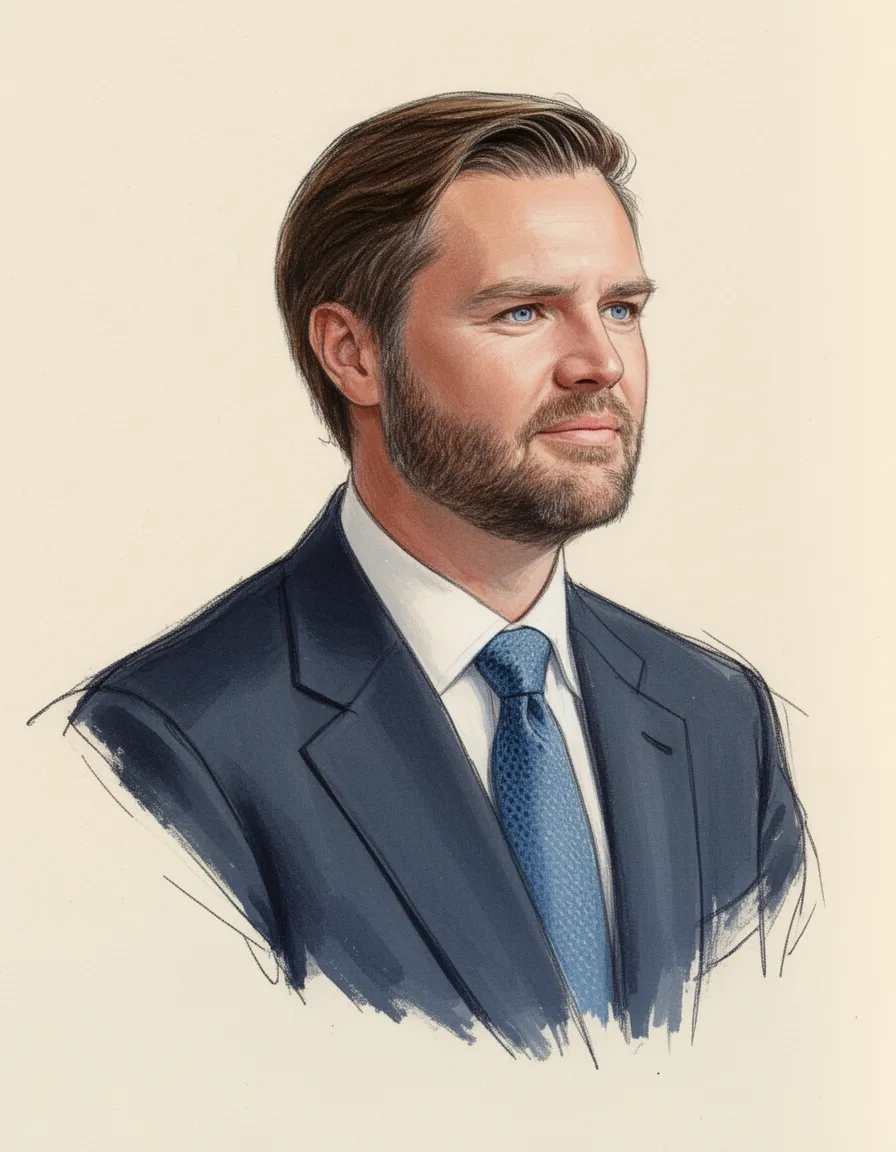
JD Vance, as Vice President, has taken a firm stance against the continuation of U.S. military and financial support for Ukraine in its war against Russia. He asserts that the United States is essentially finished with funding the war effort and demands that European nations assume a more substantial role in financing the conflict, as it is occurring in their immediate region.
His position centers on the belief that a complete restoration of Ukraine's pre-2014 borders is unrealistic, requiring both American and Ukrainian leadership to accept the need for a negotiated settlement. Vance has publicly stated his belief that President Trump must be the one to compel both Vladimir Putin and Volodymyr Zelenskyy to the negotiating table to achieve a swift end to the fighting.
Furthermore, Vance connects this shift in focus to broader American foreign policy priorities, arguing that the U.S. must pivot its strategic attention away from Eastern Europe and toward East Asia. This reorientation is justified by constraints in U.S. munitions production, which he contends makes it unrealistic to sustain aid for Ukraine while simultaneously managing potential contingencies elsewhere.
Timeline
- JD Vance published an opinion piece advocating for Ukraine to adopt a defensive posture and accept that retaking all 1991 territory is unrealistic, stressing the need for negotiations.
- During a televised White House meeting with President Zelenskyy, Vance emphasized diplomacy as the path to peace, leading to a hostile exchange.
- Vance declared that the U.S. is finished funding the war and stated President Trump would compel both sides to meet, criticizing Europe for not shouldering more of the burden.
- Vance identified the failure to secure a peace agreement in the Russia-Ukraine conflict as his biggest disappointment in office, despite earlier confidence in a swift resolution.
Actions Taken
-
- Advocated for President Trump to force direct talks between Putin and Zelenskyy to secure a peace proposal, a key outcome for the administration.
- In a White House meeting, told President Zelenskyy that the path to peace involved engaging in diplomacy, in response to Zelenskyy's skepticism about negotiating with Putin.
- Argued that Ukraine should adopt a defensive, rather than offensive, strategy to allow negotiations to commence, calling Zelenskyy's goal of returning to 1991 boundaries "fantastical."
Key Quotes
"The path to peace and the path to prosperity is maybe engaging in diplomacy ... That's what President Trump is doing."
"What we said to the Europeans is simply: this is in your neck of the woods, this is in your back door. You guys have gotta step up and take a bigger role in this thing... I think the president, and I certainly think that America, we're done with the funding of the Ukraine war business."
"By committing to a defensive strategy, Ukraine can preserve its precious military manpower, stop the bleeding and provide time for negotiations to commence. But this would require both the American and Ukrainian leadership to accept that Mr. Zelenskyy's stated goal for the war —a return to 1991 boundaries— is fantastical."
Criticism
During a White House meeting, Zelenskyy questioned Vance's call for diplomacy, asking, "What kind of diplomacy, JD, you are speaking about?" and was later told by Vance that it was "disrespectful" to litigate the matter publicly.
Vance's cousin, who fought for Ukraine, criticized JD Vance and Trump of aiding Russia and expressed disappointment that JD did not seek his insight on the war.
Vance dismissed calls to allow Zelenskyy to attend a planned summit between Trump and Putin, insisting it would not be "productive at this point."
Sources5
What JD Vance has said about U.S. foreign policy amid the war in Ukraine
* This is not an exhaustive list of sources.