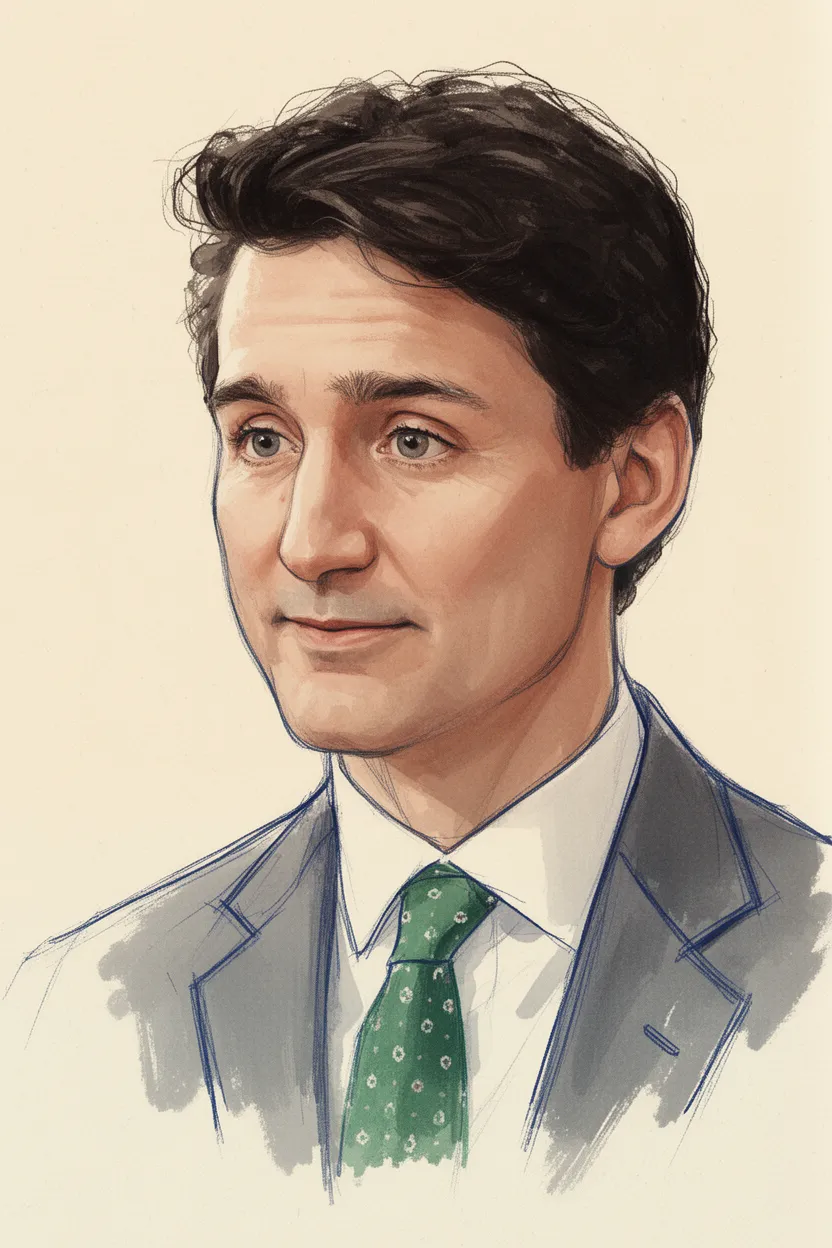
Justin Trudeau on Canada-China Relations
Justin Trudeau's government initially sought engagement with China following his election in 2015, aiming for a constructive, though complex, relationship.
However, this relationship deteriorated significantly following high-profile incidents, leading Trudeau's government to adopt a much tougher stance, particularly concerning foreign interference and human rights.
Trudeau's later tenure was defined by efforts to counter what he perceived as coercive diplomacy and actions by the People's Republic of China that threatened Canadian democratic institutions.
Timeline
- Trudeau's government takes office, initially pursuing engagement with China despite a desire for a relationship with 'like-minded' nations.
- The relationship drastically soured following the arrest of Meng Wanzhou at the behest of the United States, leading to the subsequent detention of Michael Spavor and Michael Kovrig by China.
- Trudeau appointed Dominic Barton as ambassador to China, as trade continued to reach historic highs despite political tensions.
- Spavor and Kovrig were released simultaneously with Meng Wanzhou, an event widely viewed as part of a complex diplomatic exchange involving the US and China.
- Media reports indicated China's attempts to interfere in the 2019 and 2021 Canadian federal elections, prompting increased scrutiny from the Trudeau government.
- The David Johnston report described China's interference as a danger to Canadian democracy, a sentiment accepted by the government.
- The Hogue Inquiry preliminary report confirmed that China engaged in foreign interference in both 2019 and 2021 elections, though it did not affect the ultimate outcomes.
Actions Taken
- Diplomatic incidentThe relationship between Canada and China deteriorated following the arrest of Meng Wanzhou in December 2018 at the request of the United States.
- Diplomatic responseChina arrested Michael Spavor and Michael Kovrig 12 days after the Meng Wanzhou arrest, an action Trudeau repeatedly labelled as arbitrary detention.
- Diplomatic appointmentAppointed Dominic Barton as ambassador to China in 2019, tasking him with navigating the high-stakes bilateral relationship.
- Inquiry commissionThe government commissioned David Johnston to investigate allegations of Chinese interference in Canadian elections, finding it a danger to democracy.
- Public inquiryCommissioned the Public Inquiry into Foreign Interference in Federal Electoral Processes and Democratic Institutions after Johnston resigned, which later confirmed Chinese interference.
- Foreign policy impact on domestic procurementAuthorized the potential admission of 500,000 immigrants per year by 2025, a policy context that was reportedly a factor in the CanSino Biologics COVID-19 vaccine deal falling through due to deteriorating relations with Beijing.
Criticism
Demanded a full public inquiry into election interference sooner, suggesting Trudeau was too slow or hesitant to confront Beijing's actions.
Resigned as ambassador to China amid reports of growing pressure from the Biden administration for Ottawa to adopt a tougher stance against Beijing.
Sources3
- Canada's relationship with China also deteriorated during Trudeau's time as prime minister.
- Trudeau appointed Liberal advisor, Dominic Barton (McKinsey & Company, Century Initiative) ambassador to China in 2019.
- The inquiry issued its preliminary report, finding that China engaged in foreign interference in both elections
* This is not an exhaustive list of sources.