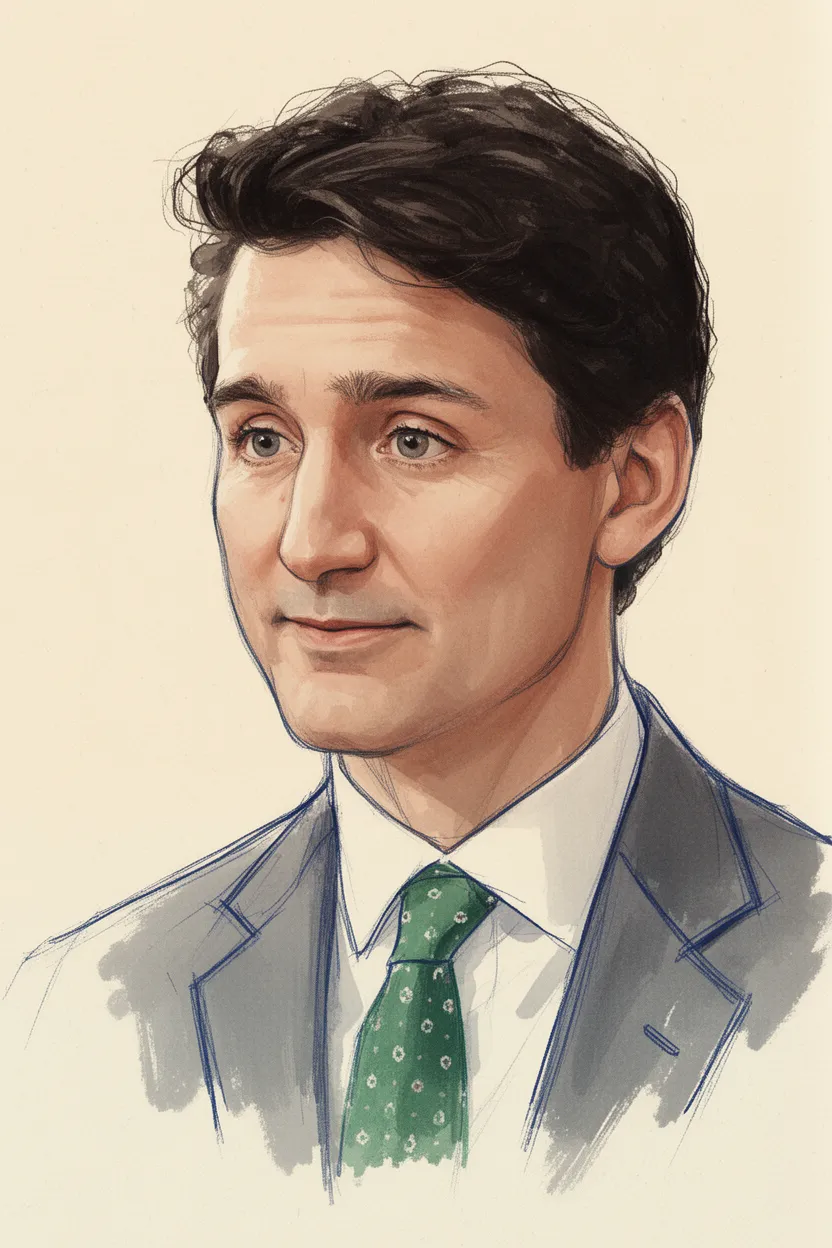
Justin Trudeau on Quebec Sovereignty
Justin Trudeau fundamentally opposes Quebec sovereignty and has positioned himself as a defender of Canadian unity, in line with his father's legacy. He has expressed a deep belief in Canada and asserted that Quebec can achieve its goals best as part of the federation, rather than through separation. Trudeau's opposition is based on the conviction that Canada's strength and Quebec's potential are best realized together.
Historically, Trudeau suggested that if he felt Canada had truly adopted the values of a right-wing government, he might contemplate the idea of Quebec becoming a country, but he quickly walked this back, reaffirming his commitment to the existing federation. He maintained that modern Quebecers are more globally oriented and that separation is not the 'big threat' it once seemed, though he clearly champions the federalist path.
Furthermore, Trudeau has been clear on the process should a referendum ever be attempted, strongly defending the Clarity Act. He has indicated that a simple '50 per cent plus one' vote would not be sufficient to break up the country, referencing Supreme Court of Canada guidance on the need for a 'clear majority' on a 'clear question.' This stance shows a firm line drawn on any unconstitutional attempt at secession.
Context
Justin Trudeau's position on Quebec sovereignty is deeply informed by his family's history, as his father, Pierre Elliott Trudeau, was a key political figure who vehemently opposed the sovereignty movement. This context frames Trudeau's own political identity and his consistent defence of Canadian federalism throughout his tenure.
His comments and actions are often viewed through the lens of the historical referendums, particularly the very close 1995 vote, which informs his strong position on the legal requirements for any future separation question.
Timeline
- An 18-year-old Justin Trudeau shared views on Quebec Sovereignty in a media appearance.
- As he was entering politics, Trudeau criticized Quebec nationalism, describing it as an 'old idea from the 19th century' and 'based on a smallness of thought.' He explicitly stated the idea of Quebec nationhood was 'against everything my father ever believed.'
- In interviews while running for the Liberal leadership, Trudeau stated that if he believed Canada was truly 'Stephen Harper's Canada' (referencing conservative social policies), he might 'think about wanting to make Quebec a country.' He clarified this by saying he loves Canada and believes Quebec can put it back on the right path.
- Following the UK's Brexit vote, Trudeau faced questions about separation conditions and strongly defended the Clarity Act. He asserted that a simple '50 per cent plus one' vote was insufficient for separation, citing Supreme Court justices who said one vote is not enough to break up the country.
Actions Taken
- RhetoricDefended Canadian federalism at a student event at Collège Jean-de-Brébeuf.
- Policy StatementStated that Quebec nationhood was 'against everything my father ever believed' when criticizing Quebec nationalism.
- Policy DefenseDefended the Clarity Act by stating that 'one vote is not enough to break up this country,' in response to questions about referendums.
Key Quotes
"I always say that if ever I believed Canada was really Stephen Harper's Canada — that we were heading against abortion, against gay marriage, that we were going backwards 10,000 different ways — maybe I would think about wanting to make Quebec a country."
"No, absolutely, if I no longer recognized in Canada my values… But I believe deeply in Canada and I know that Quebec in Canada can put it back on the right path."
"Nine Supreme Court justices said one vote is not enough to break up this country, and yet that is Mr Mulcair's position... He wants to be prime minister of this country, and he's choosing to side with the separatist movement in Quebec and not with the Supreme Court of Canada."
Comparison
- Father's Legacy: Justin Trudeau frequently invokes his father, Pierre Trudeau, who was famously a staunch opponent of Quebec sovereignty, positioning himself in that same federalist camp.
- View on Separatist Threat: He suggested that the separatist option is 'not the bogeyman it used to be' when compared to the political threat posed by the Stephen Harper government in 2012.
Sources4
Trudeau says sovereignty less of a bogeyman now
* This is not an exhaustive list of sources.