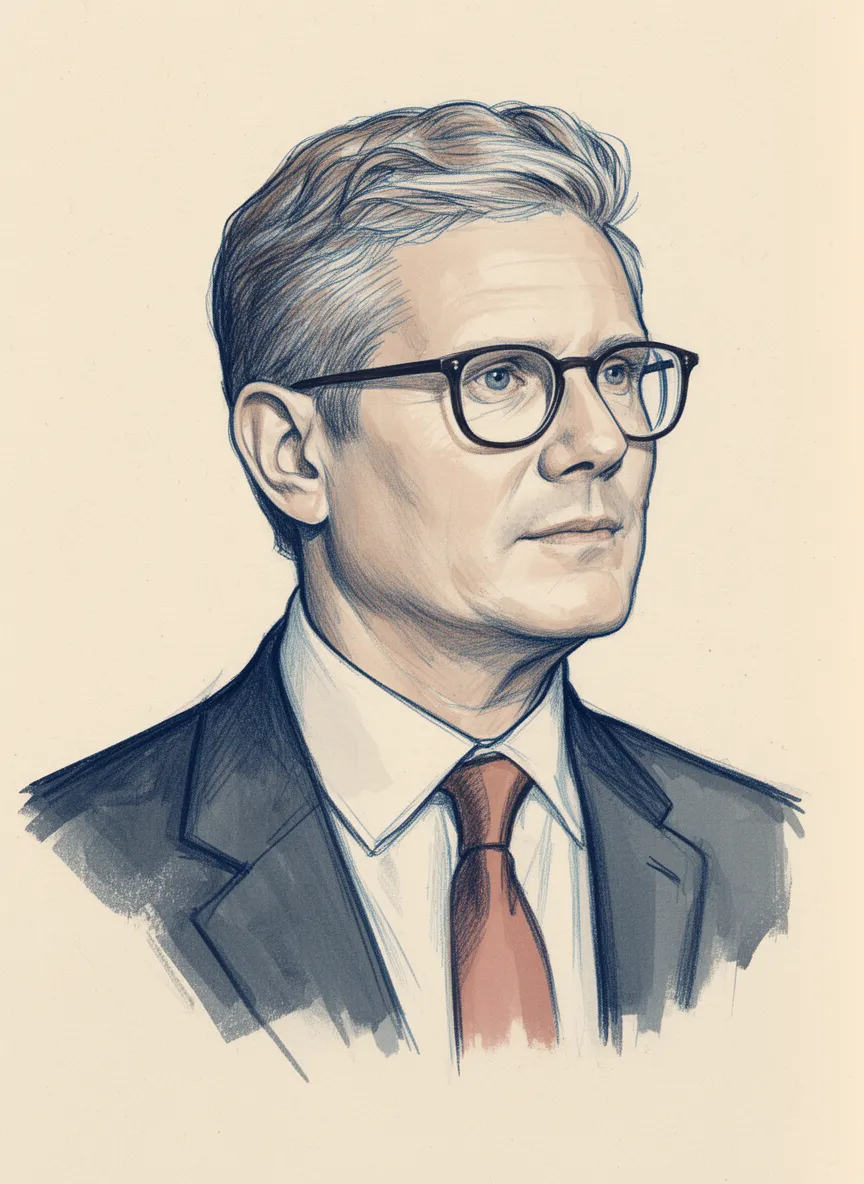
Keir Starmer on Brexit
Sir Keir Starmer was a prominent supporter of the UK remaining in the European Union during the 2016 European Union membership referendum, backing the Britain Stronger in Europe campaign.
Following the referendum result, Starmer, in his role as Shadow Secretary of State for Exiting the European Union, pushed for a public vote on the government's final Brexit deal, advocating for a proposed Second Referendum on Brexit.
As Labour leader and later Prime Minister, Starmer has accepted the reality of the UK's departure from the EU and pivoted policy toward pragmatically repairing the relationship. His premiership has involved seeking to 'reset' UK relations with the European Union and negotiating a new free trade agreement with the bloc.
Context
Keir Starmer's initial position on Brexit defined a significant period of his early political career after becoming an MP, particularly during his tenure as Shadow Brexit Secretary.
His evolution from advocating for a second referendum to accepting the outcome is central to understanding the repositioning of the Labour Party towards the political centre under his leadership, a move often compared to New Labour.
Timeline
- Supported the 'Remain' campaign in the EU membership referendum.
- Appointed Shadow Secretary of State for Exiting the European Union by Jeremy Corbyn.
- Distanced himself from the Labour platform that accepted the referendum result without a second vote, stating he was certain Labour would lose the election.
- Begins his premiership by seeking to 'reset' the UK's relationship with the EU.
Actions Taken
- Political CampaigningSupported the Britain Stronger in Europe campaign to keep the UK in the EU.
- Parliamentary AdvocacyAs Shadow Brexit Secretary, called for Labour plans to be made public and supported a proposed Second Referendum on Brexit.
- Foreign Policy NegotiationAs Prime Minister, began talks to revise a Germany-UK co-operation agreement covering areas like defence and technology, signifying an attempt to 'reset' relations with the EU.
- Trade NegotiationHis government negotiated a free trade agreement with the European Union.
Comparison
- Compared to Jeremy Corbyn: Starmer shifted Labour's stance from Corbyn's initial ambiguity on a second referendum to actively supporting one when he was Shadow Brexit Secretary, before later moving away from that demand as Leader of the Opposition.
- Compared to Post-Brexit Conservative Government: Starmer's premiership signals a distinct desire to move away from the adversarial relationship fostered by the previous government, aiming for a smoother working partnership with the EU.