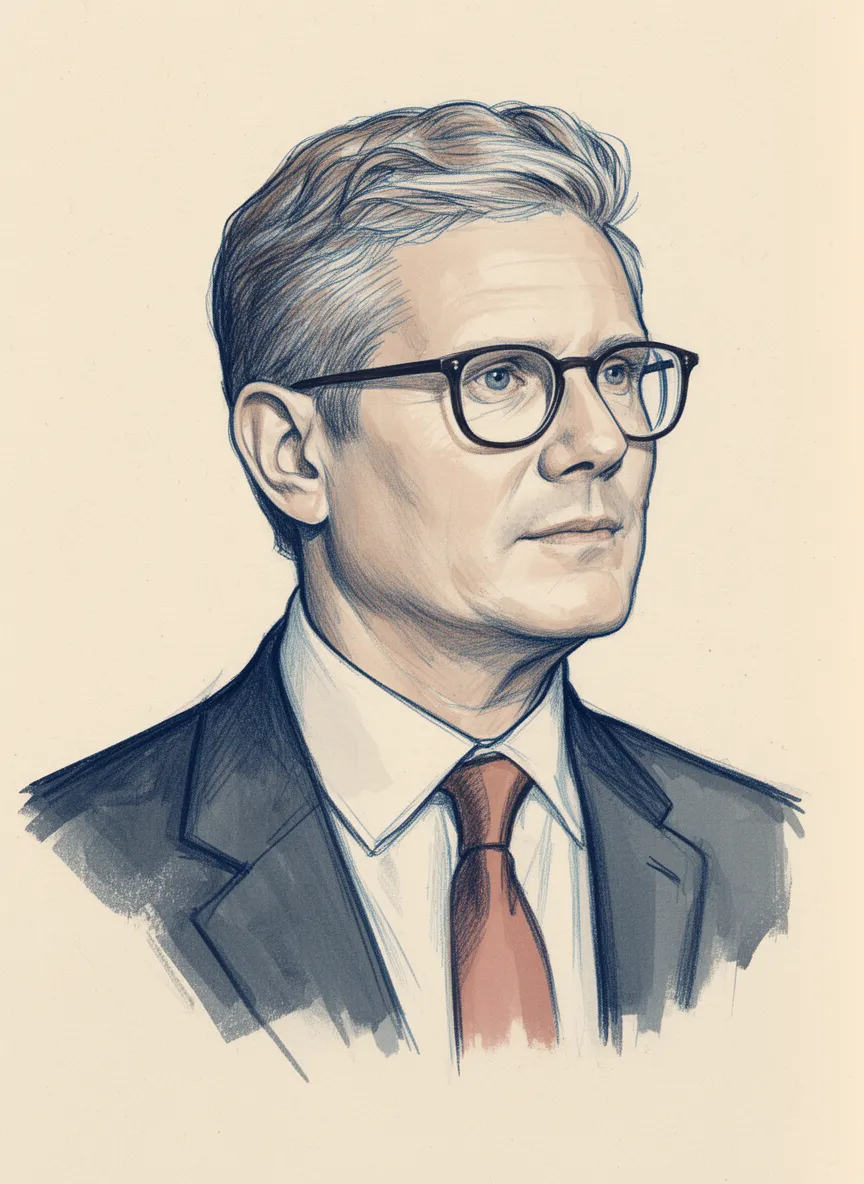
Keir Starmer on Free Speech
Keir Starmer's stance on free speech is shaped by his background as a lawyer specialising in human rights, which suggests a foundationally protective view of civil liberties. However, his tenure as Prime Minister has involved actions leading to accusations that he prioritises security and order over an absolutist interpretation of free expression.
This tension is visible in policies like the proscription of the protest group Palestine Action, which his government enacted in 2025. While Starmer defended this move as necessary due to vandalism targeting military aircraft, civil liberties groups condemned it as infringing on freedom of speech and assembly.
Furthermore, the policing response during the 2024 riots and subsequent protests has fuelled allegations of 'two-tier policing', suggesting a differential approach to lawful protest based on ideology. This complex landscape indicates that Sir Keir Starmer views free speech as a right that must be exercised within defined legal boundaries, boundaries which his government has shown willingness to redraw or enforce strictly when public order or security is deemed at risk.
Context
As a former Director of Public Prosecutions (DPP), Keir Starmer oversaw the legal system's application of laws that directly impact free speech, such as decisions on prosecuting protests and speech-related offences. His professional background is therefore directly relevant to how he approaches the tension between expression and public order now as Prime Minister.
His early career involved legal defence for controversial cases, including assisting in the McLibel case before the European Court of Human Rights, showing a historical commitment to defending speech rights in court. This contrasts with the later government actions that have attracted criticism for restricting the scope of protest.
Actions Taken
- LegislationThe government under Starmer made the protest group Palestine Action a 'proscribed organisation' under the Terrorism Act 2000 following vandalism at RAF Brize Norton.
- Law EnforcementFollowing the proscription, arrests were made at a subsequent protest for displaying items in support of the proscribed organisation, with Starmer stating the ban was not meant 'to stifle debate on Palestine'.
- Policy CreationAnnounced the establishment of a National Violent Disorder Programme following nationwide riots in 2024, aiming for greater cooperation between police forces when dealing with violent disorder.
Key Quotes
You will regret taking part in this, whether directly or those whipping up this action online and then running away themselves. I won't shy away from calling it what it is – far-right thuggery.
I won't shy away from calling it what it is – far-right thuggery.
Criticism
Condemned the proscription of Palestine Action as infringing on freedom of speech and assembly.
Criticised Starmer during the 2024 riots for not condemning all participants equally and suggesting a 'two-tier' policing system that failed to protect all communities.
Accused Starmer's government of implementing 'two-tier policing', suggesting bias in how protests and disorder, particularly left-wing versus right-wing demonstrations, are handled by law enforcement.
Sources2
Elon Musk slams Keir Starmer for not condemning all participants in riots
Amnesty International and Liberty condemn Palestine Action proscription as infringing on freedom of speech
* This is not an exhaustive list of sources.