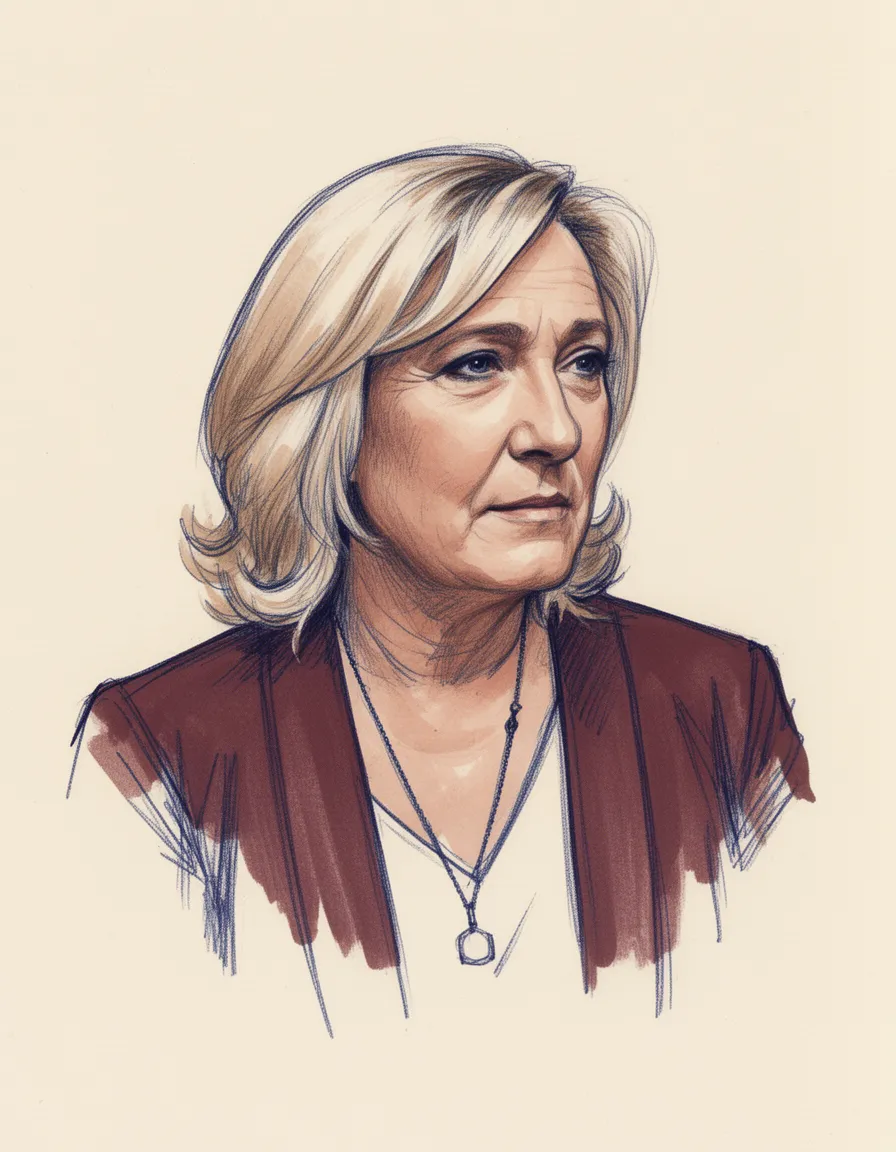
Marine Le Pen on Benjamin Netanyahu
Marine Le Pen has articulated a clear political stance in support of Israel, especially since the Hamas attack in October 2023, which she condemned as an unacceptable act of war against Israeli democracy. This position has been solidified by her taking part in pro-Israeli protests alongside her party president, Jordan Bardella, viewing Israel and France as sharing a common enemy in radical Islam. This pro-Israel stance represents a deliberate, long-running effort to "normalise" her National Rally (RN) party and distance it from the deeply antisemitic legacy of her father, Jean-Marie Le Pen.
Despite this broader solidarity with Israel, the documentation does not reveal direct, frequent comments from Marine Le Pen specifically praising or criticizing Benjamin Netanyahu in his capacity as Prime Minister. Her political alignment appears driven more by an anti-Islamist agenda, which finds common ground with some elements of the Israeli government under Netanyahu. Furthermore, in the past, an ally put forward by Le Pen as a potential Prime Minister equated Netanyahu's policies with those of Hamas during a previous conflict.
This strategic alignment is so notable that an Israeli minister from Netanyahu's government publicly hailed Le Pen's political success, suggesting that a Le Pen presidency would be "excellent for Israel" due to her stance against anti-Semitism and Islamism. This suggests a pragmatic political relationship between the National Rally's current foreign policy direction and the Israeli government's interests, despite the potentially critical history from her political circle.
Context
Marine Le Pen's stance on Israel and its leadership, including Benjamin Netanyahu, is significant due to the historical anti-Zionist and antisemitic positions held by her party's founder, Jean-Marie Le Pen. Le Pen has actively sought to rebrand the National Rally (RN) as a more mainstream political force to gain broader electoral legitimacy, partly by signaling support for Israel as a Western state against radical Islam.
Her current position frames the conflict as a fight against terrorism, aligning her ideology with that of Israel's current conservative government under Netanyahu. This shift is intended to reassure French Jewish communities, though many remain critical due to the party's history.
Timeline
- Marine Le Pen took over the National Front and began moving the party toward a more mainstream populist stance, moving away from the explicit anti-Semitism and historical anti-Israel positions of her predecessor.
- Le Pen expelled her father, Jean-Marie Le Pen, from the party after he made new controversial statements regarding the Holocaust, further solidifying the party's internal break from its antisemitic roots.
- When asked about moving the French embassy to Jerusalem during her presidential campaign, Le Pen avoided a firm commitment, suggesting Jerusalem should be under 'international protection' as a dual capital.
- Following the Hamas attack, Marine Le Pen explicitly voiced strong support for Israel and its right to self-defense, condemning the Hamas strikes as an 'unacceptable act of war' in a sharp political turn.
- Le Pen met officially with an Israeli government minister for the first time, indicating a concrete step in diplomatic engagement.
Actions Taken
- Official StatementExpressed strong support for Israel following the Hamas attack, stating 'The security of the Israeli people is non-negotiable.'
- Public DemonstrationParticipated in a pro-Israel protest in Paris in the weeks following the start of the Gaza war.
- Diplomatic EngagementHeld an official meeting with an Israeli government minister for the first time.
What Others Say
The Israeli Diaspora Affairs Minister from Netanyahu's government praised Le Pen's potential presidency as 'excellent for Israel' due to her stance against anti-Semitism.
The French President called Prime Minister Netanyahu to complain about Minister Chikli's endorsement of Le Pen, considering it unacceptable interference in French internal matters.
Le Pen's 2017 prime ministerial pick, Nicolas Dupont-Aignan, previously equated the 'hardline' policies of Benjamin Netanyahu with those of Hamas during the 2014 Gaza war.
Sources7
Marine Le Pen - Wikipedia
* This is not an exhaustive list of sources.