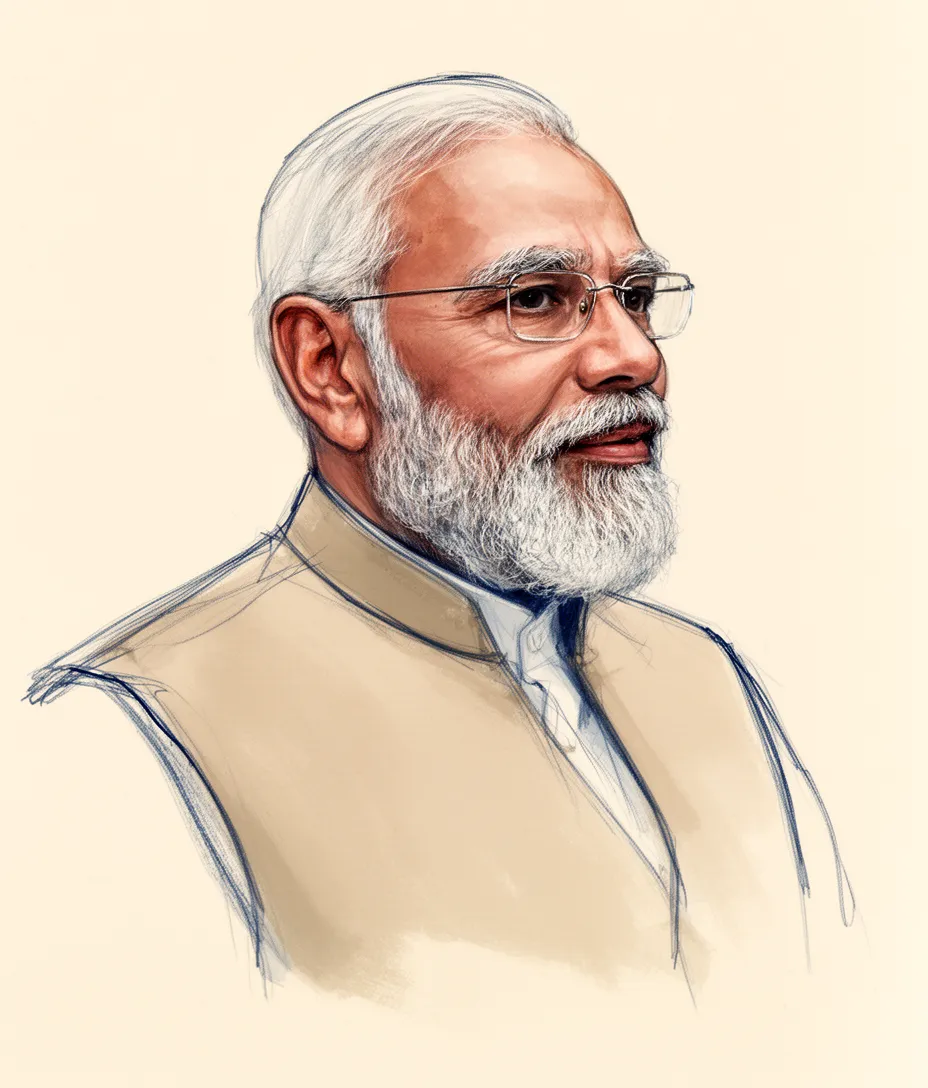
Narendra Modi on Article 370
Narendra Modi holds a firm and long-standing position in favour of abolishing Article 370 of the Indian Constitution, which conferred a special autonomous status upon the erstwhile state of Jammu and Kashmir.
His administration acted decisively on this objective immediately upon securing a second term in 2019, by revoking Article 370 and simultaneously abrogating the statehood of Jammu and Kashmir. This political action was implemented by reorganising the region into two separate Union Territories: Jammu and Kashmir, and Ladakh.
This policy of abrogation was presented as being consistent with the core ideology of the BJP and the RSS, which had long called for the removal of the constitutional provision. The region was placed under a security lockdown, and thousands of people, including political leaders, were detained following the decision.
Context
The position of Narendra Modi on Article 370 is significant because, as Prime Minister, he commanded the necessary parliamentary majority to enact a decision that the Bharatiya Janata Party (BJP) and its ideological parent, the RSS, had advocated for decades. The revocation fundamentally altered the constitutional relationship between the Union of India and Jammu and Kashmir.
Historically, Article 370 had been a central point of contention for right-wing Hindu nationalist politics, often viewed as an anomaly that hindered national integration. Modi's successful implementation solidified a key ideological promise of his political movement.
Actions Taken
- Constitutional change/LegislationThe administration repealed Article 370 of the Indian constitution, which granted autonomy to Jammu and Kashmir, and also abrogated its statehood. This was done shortly after Modi returned to power in 2019.
- Governance/Security measureFollowing the revocation, the region was placed under a strict lockdown, and internet services were suspended for an extended period.
- Reorganization of territoryThe region was reorganized into two separate Union Territories: Jammu and Kashmir, and Ladakh.
Key Quotes
Soon after Modi returned to power in 2019, he took three actions the RSS had long called for. ... The administration repealed Article 370 of the Indian constitution that granted autonomy to Jammu and Kashmir, and also abrogated its statehood, reorganising it into the union territories Jammu and Kashmir, and Ladakh.
Criticism
The Supreme Court of India did not hear constitutional challenges to the reorganisation or the Citizenship Amendment Act, which critics view as an example of the subversion of major institutions.
The region was placed under a lockdown, and internet services were suspended, with thousands detained following the decision.
Sources1
* This is not an exhaustive list of sources.