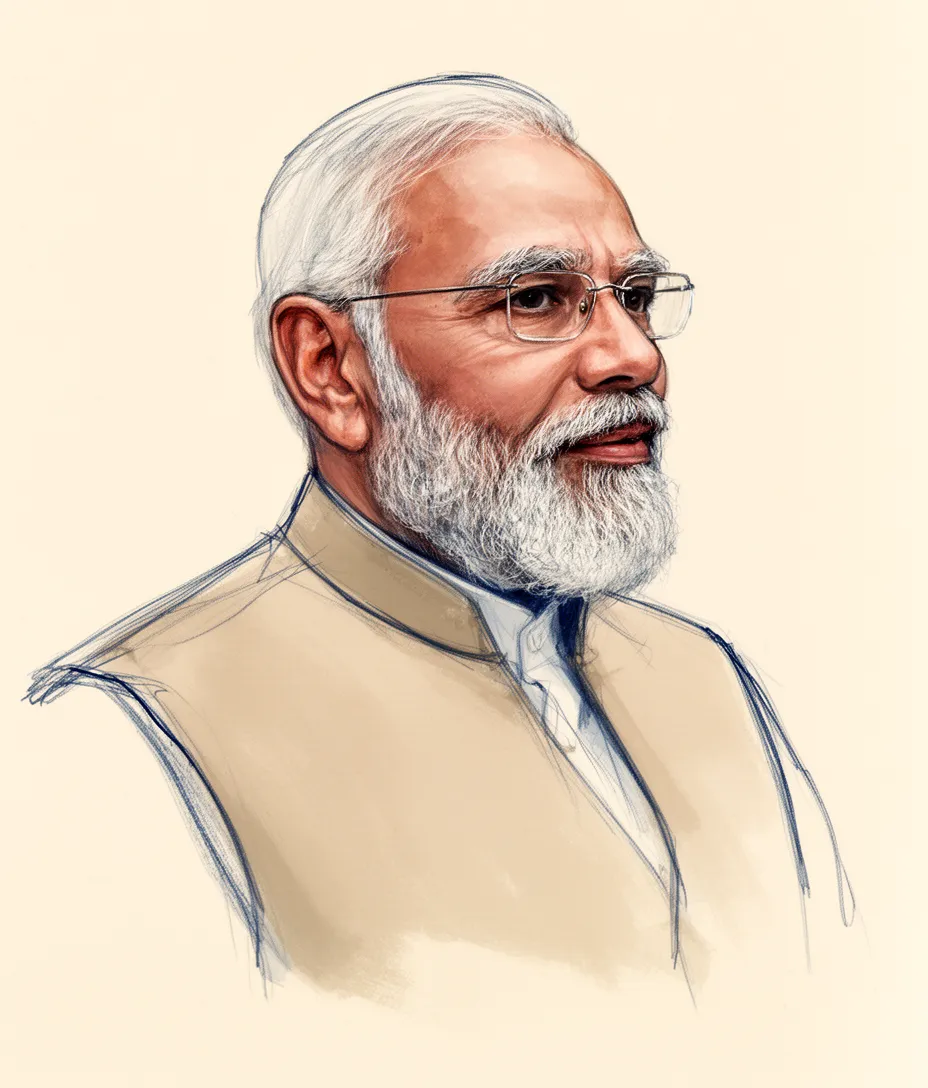
Narendra Modi on Caste System
Prime Minister Narendra Modi advocates for moving beyond caste-based politics by prioritizing development and economic parameters as the new societal division. He strongly denounces casteism and communalism as social evils that should be countered with the "nectar of development."
While condemning caste-based division, Modi has also highlighted his government's actions aimed at uplifting marginalized communities, such as granting constitutional status to the OBC Commission. Critics, however, argue that his emphasis on an economic 'two-caste' division masks the persistence of traditional caste issues and that the BJP strategically harnesses caste equations for electoral success.
In his view, the nation should focus on the two primary 'castes': the poor and those contributing to poverty alleviation, rather than traditional social groupings. This framing is presented as a narrative of change for the 21st century, suggesting that caste-centric issues like reservations should no longer be the primary focus in politics.
Context
Narendra Modi was born into an Other Backward Class (OBC) family, which is relevant context to his engagement with caste issues in India. His background connects him directly to one of the primary categories historically affected by the caste system.
His political career has involved navigating the complex dynamics of caste-based politics, both as a background factor in his rise within the BJP and as a central theme in national elections.
Actions Taken
- Policy ImplementationDefended and highlighted the granting of Constitutional status to the OBC Commission, noting it was a long-pending demand ignored by previous governments.
- RhetoricAdvocated for a socio-economic realignment by promoting the view that the only relevant 'castes' are the poor, the youth, women, and farmers.
- RhetoricStated that casteism and communalism should be fought by countering them with the "nectar of development."
- Policy ImplementationGave 10% reservation to the poor from the general category under the mantra of 'Sabka Sath, Sabka Vikas' (Together with all, Development for all).
Key Quotes
"Be it casteism or communalism, there is no place for them. In no way can they be tolerated."
"Today, attempts are being made to spread caste poison in the society... For many years, OBC MPs from all parties had been demanding constitutional status for the OBC Panel. But their demand was rejected... But we gave constitutional status to this panel."
"The four biggest castes for me are the poor, the youth, women, and farmers."
Criticism
Modi's assertion of a 'two-caste society' (the poor and contributors to poverty relief) is seen as a facade to downplay the ongoing social backwardness and untouchability faced by Scheduled Castes (SC), Scheduled Tribes (ST), and OBCs.
They contend that Modi's stance on development as the only determinant implicitly discourages raising caste-centric issues like reservation during campaigns.
The BJP under Modi has been accused of aligning various caste groups into new electoral combinations, suggesting caste remains central to their political strategy despite public rhetoric against it.
Comparison
The rhetoric from Modi appears to contrast with the traditional approach of parties centered on social justice narratives based on the Hindu caste hierarchy.
- Modi's Approach: Shifts focus from caste to economic status (the poor), framing it as the new political reality.
- Opposition Critique: Argues that caste identity and historical inequities remain fundamentally unresolved and that Modi's narrative marginalizes these established social justice concerns.
Sources5
Narendra Modi’s “two-caste society” is a facade to hide the BJP’s casteist politics
* This is not an exhaustive list of sources.