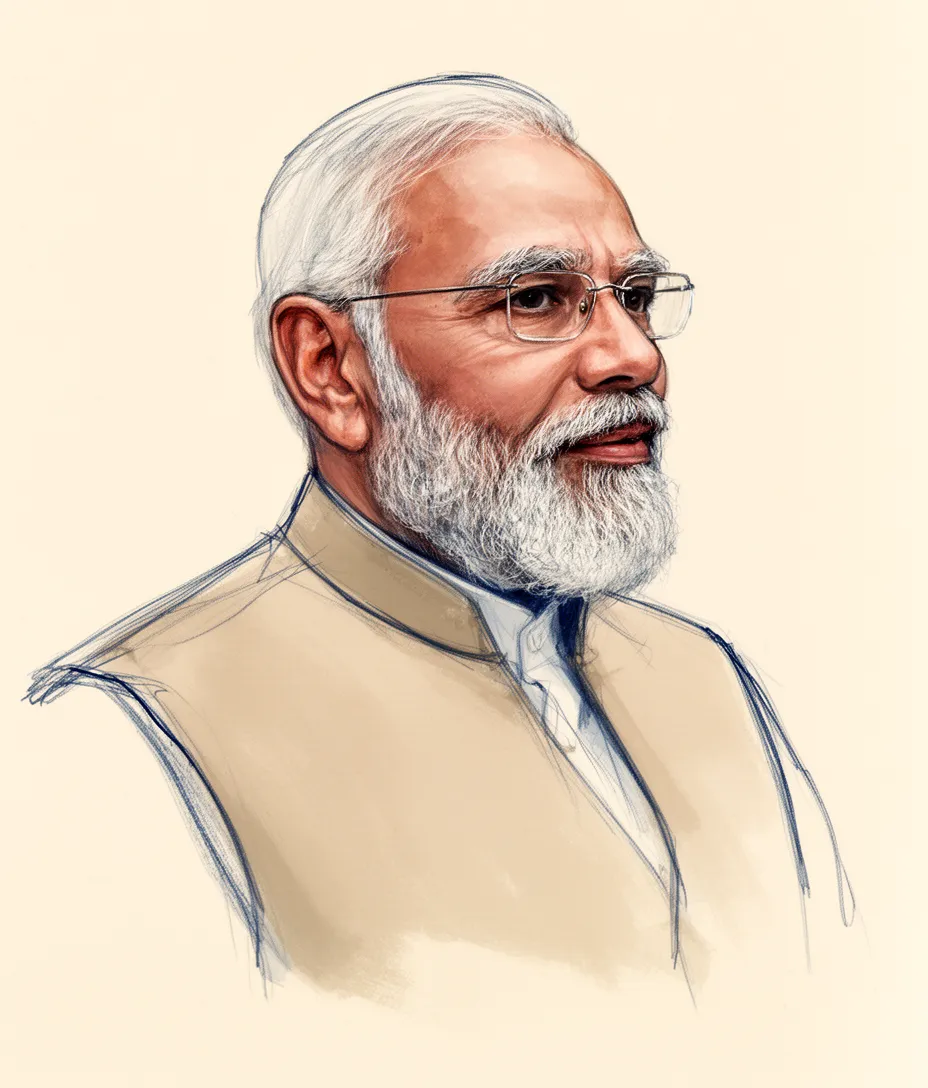
Narendra Modi on Caste Census
Narendra Modi's government, through the Cabinet Committee on Political Affairs (CCPA), decided to include caste enumeration in the forthcoming national census exercise in April 2025.
This move is currently framed by Modi as a step towards his development model, aiming to bring the marginalised and those left behind into the mainstream. The decision marks a significant change, as the BJP and Sangh Parivar leaders had historically opposed a caste census, fearing it would divide Hindus.
In the lead-up to this change, Modi had previously referred to demands for a caste census as “Maoist thinking” and an “urban Naxal idea”. The government now asserts the move is for transparency and genuine social justice, contrasting it with the previous government's limited Socio-Economic and Caste Census (SECC).
Context
Narendra Modi, as Prime Minister, controls the Union government, which has the constitutional authority over the Census (Entry 69 in the Union List). The decision on caste census is thus a direct function of his administration.
Historically, the BJP and its ideological parent, the RSS, have been wary of caste-based data, fearing it could fracture the pan-Hindutva identity and lead to competitive demands among Other Backward Class (OBC) groups.
Timeline
- The Government of India reiterated in Parliament and the Supreme Court that it would not undertake a caste census.
- Prime Minister Narendra Modi criticized the Congress party's demands for a caste census, calling it an "urban Naxal idea" during an interview.
- Following the 2024 general election setback, Modi shifted his rhetoric, with a slogan implying unity: “Ek hai toh safe hai” (If we are united, we will be safe), moving away from divisive caste talk.
- The CCPA, chaired by PM Modi, decided to include caste enumeration in the upcoming census, moving it from a separate survey to the main count.
- Addressing an NDA conclave, PM Modi praised the census decision, stating it is a step towards integrating the marginalized into the mainstream of development.
Actions Taken
- Policy decisionThe CCPA, chaired by PM Modi, decided to include caste enumeration in the upcoming national census, moving it from the previous approach of a separate survey.
- Public endorsementModi publicly supported the decision at an NDA conclave, framing the census as integral to targeted development for the marginalized.
Key Quotes
People tried to divide the country on caste lines during elections. For me, there are only four castes: women, youth, farmers, and the poor.
Jo karega jaat ki baat, usko kaske marunga laat – the one who speaks of caste, I will kick them firmly.
the caste enumeration announced as part of the decennial census was a step towards his government's model of bringing the marginalised and those left behind in every field into the mainstream of development.
Criticism
The Congress party pointed to past videos showing PM Modi criticizing the demand for a caste census as an 'urban Naxal idea' and questioning those who spoke of caste, highlighting the 'sudden and unexpected' nature of the reversal.
The sudden approval is seen by some as a 'political somersault' and a 'preemptive strike' to undercut opposition momentum on social justice and reservation politics ahead of crucial state elections, rather than a pure embrace of data transparency.
Previously, top BJP leaders, including Union minister Ashwini Vaishnaw, claimed that castes were not counted after independence, framing opposition demands as merely 'superficial politics' and a 'political weapon' of the Congress.
Sources5
Why Does Narendra Modi Suddenly Want a Caste Census?
* This is not an exhaustive list of sources.