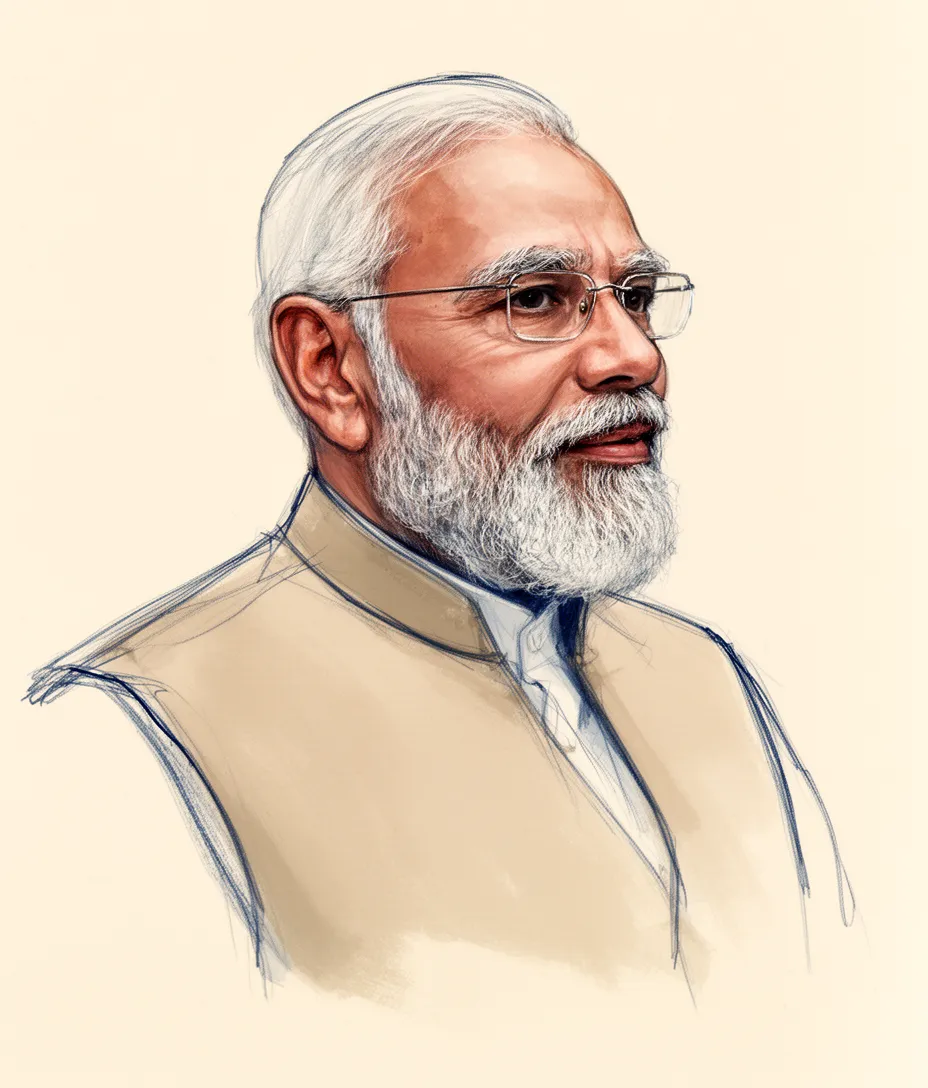
Narendra Modi on Climate Change
Narendra Modi, as Prime Minister of India, has expressed evolving views on climate change, linking its causes to shifts in human behavior before pivoting to strong international action. In 2014, Modi suggested that climate change was not about the climate itself but about spoiled human habits destroying the environment, reflecting an initial downplaying of anthropogenic climate change. However, his later premiership has been characterized by proactive international commitments, such as setting a net-zero target by 2070 and championing renewable energy infrastructure, positioning India as a major player in global climate discourse.
Context
As Prime Minister, Narendra Modi leads the world's third-largest emitter of greenhouse gases, making India's climate policy crucial for global efforts. Modi's administration often frames India's position by highlighting its negligible historical role in climate change compared to developed nations, placing responsibility on them for providing climate finance and technology transfer. This dual approach—pushing for domestic clean energy transition while demanding climate justice from developed countries—defines his premiership's climate strategy.
Timeline
- Speaking to Assamese students, Modi suggested climate change was not occurring, but rather that human habits had changed and spoiled, leading to environmental destruction.
- Modi proposed the International Solar Alliance initiative during a UN conference, seeking to mobilize investment in solar energy globally.
- At the COP26 conference, Modi announced a major climate goal for India: achieving carbon neutrality by 2070 and significantly expanding renewable energy capacity.
Actions Taken
- Government ReorganizationRenamed the Ministry of Environment and Forests to the "Ministry of Environment, Forests, and Climate Change," though the budget allocation was cut by more than half in the first budget.
- International InitiativeProposed the International Solar Alliance initiative to encourage global investment and development in solar energy.
- National CommitmentAnnounced India's goal to achieve carbon neutrality by 2070 and committed to increasing renewable energy capacity at COP26.
- Energy PolicyThe government achieved 10 percent ethanol blending ahead of schedule, supporting alternative energy goals.
Key Quotes
Climate has not changed. We have changed. Our habits have changed. Our habits have got spoiled. Due to that, we have destroyed our entire environment.
India will take the world along with it on climate change. Today, I announce in this COP, India's commitment to reach **Net Zero by 2070**.
Criticism
Despite a positive outlook on international climate goals, Modi's government was criticized for removing or diluting several domestic environmental protection laws and reducing oversight on mining projects.
The government attempted to reconstitute the National Board for Wildlife to remove NGO representatives, a move blocked by the Supreme Court of India.
Sources5
- Quote about climate change and habits
- Proposal for International Solar Alliance
- Net Zero by 2070 announcement at COP26
- Environmental ministry budget cut
- Ethanol blending achievement
* This is not an exhaustive list of sources.