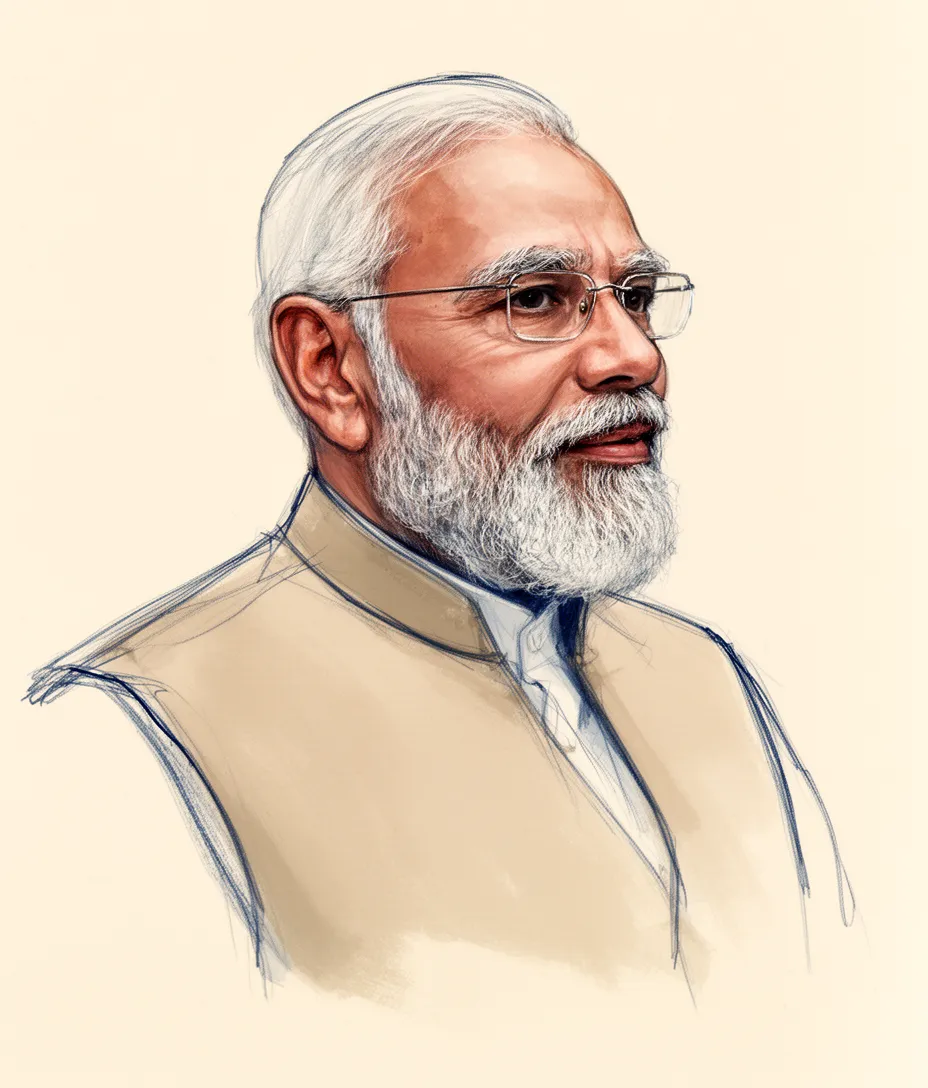
Narendra Modi on Democracy
Narendra Modi frequently champions democracy, particularly emphasizing the legitimacy drawn from his significant electoral victories as evidence of popular support for his governance. He often speaks of India as the world's largest democracy, positioning his mandate as one derived directly from the majority of the Indian electorate. Despite this vocal support for democratic principles, analysts have frequently pointed to a pattern of democratic backsliding during his premiership, characterized by the weakening of key institutions. This shift is often described as moving towards an authoritarian style of government centered around his personality, which creates a nuanced view of his actual commitment to democratic norms.
Context
Narendra Modi's views on democracy are critical as he has served as the Prime Minister of India since 2014, leading the Bharatiya Janata Party (BJP). His actions in office have direct implications for the country's democratic health, making his public statements and policies on the subject highly significant. The context is further shaped by his background in the Rashtriya Swayamsevak Sangh (RSS), an organisation whose ideology has been cited as informing the administration's shift toward Hindu nationalism.
Actions Taken
- Institutional ChangePresided over significant centralisation of power in the Prime Minister's office, for example, by abolishing the Planning Commission and replacing it with the NITI Aayog.
- LegislationEnacted the Citizenship Amendment Act (CAA), which used religion as a criterion for citizenship, a first in Indian law, drawing widespread protest.
- Constitutional AmendmentRepealed Article 370 of the constitution, which granted autonomy to Jammu and Kashmir, and revoked its statehood, followed by a lengthy lockdown.
- Freedom of ExpressionThe government was accused of using state power to intimidate and stifle critics in the media and academia, undermining freedom of expression.
Criticism
India has experienced democratic backsliding under Modi's tenure, with a notable weakening of democratic institutions, individual rights, and freedom of expression.
The administration engaged in the subversion of the Supreme Court and other major institutions by filling them with appointees favouring the BJP.
The government has been accused of using its democratic mandate to undermine democratic processes by focusing on Hindu-nationalist priorities over economic development.
Sources1
* This is not an exhaustive list of sources.