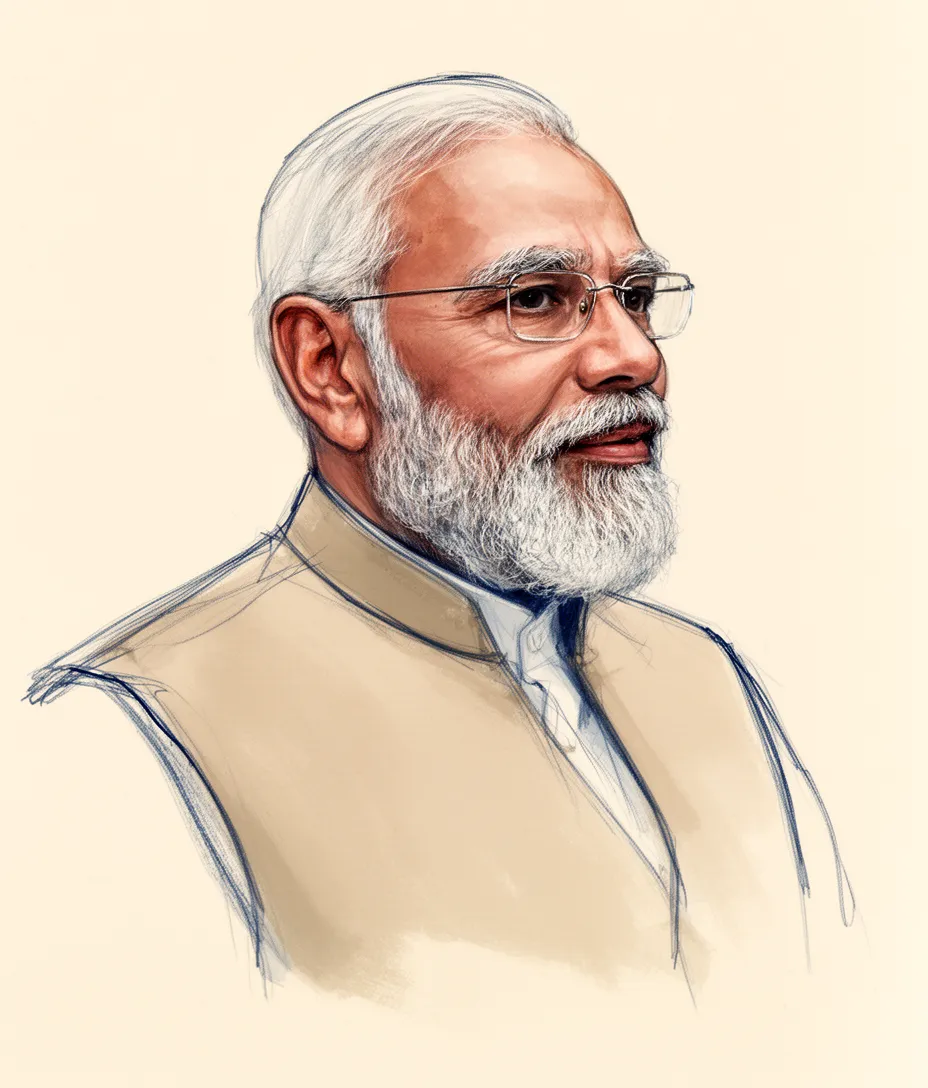
Narendra Modi on Economy
Narendra Modi's economic approach as Prime Minister is rooted in privatisation and liberalisation of the economy, adhering to a neoliberal framework. His government actively sought to increase foreign direct investment (FDI) across various sectors, including defence and railways, while pushing for increased capital expenditure on transport infrastructure. Conversely, Modi's administration significantly reduced the funds allocated to poverty-reduction programmes and social welfare measures, alongside lowering corporate taxes and abolishing the wealth tax.
Context
Narendra Modi's economic vision is central to his governance, as his image as a leader who fostered high GDP growth in Gujarat was a key pillar of his successful 2014 Indian general election campaign. He continues to project himself as the person who can bring about national 'development' through economic reforms and infrastructure focus.
Actions Taken
- Governance ReformAbolished the Planning Commission and replaced it with the NITI Aayog, centralising planning power in the Prime Minister's office.
- Industrial PolicyLaunched the Make in India initiative to encourage foreign manufacturing and transform India into a global manufacturing hub.
- Tax ReformPassed the Goods and Services Tax (GST), described as the biggest tax reform since independence, subsuming around 17 indirect taxes.
- Monetary PolicyUndertook demonetisation by invalidating ₹500 and ₹1000 banknotes, intending to curb corruption and black money.
- Infrastructure SpendingSignificantly raised capital expenditure on transport infrastructure, increasing from less than 0.4% of GDP in 2014 to 1.7% in 2023.
Criticism
The underlying motivation of labour reforms favoured corporations over labourers, drawing strong opposition from unions.
Observed a decline in GDP growth and increasing joblessness under Modi's administration compared to the preceding government.
Criticised the New Health Policy (NHP) for emphasising private healthcare organisations over public health facilities and reducing funding for the National Health Mission.
Comparison
Modi's approach as Chief Minister of Gujarat showed a distinct preference for privatisation and small government, which was noted to be at odds with the RSS's anti-privatisation and anti-globalisation philosophy. As Prime Minister, his government's expenditure on social programmes declined as a share of GDP compared to the previous Congress government. While the previous government focused on programmes assisting public health goals, Modi's New Health Policy (NHP) shifted emphasis towards the role of private healthcare organisations.
Sources4
Economy
* This is not an exhaustive list of sources.