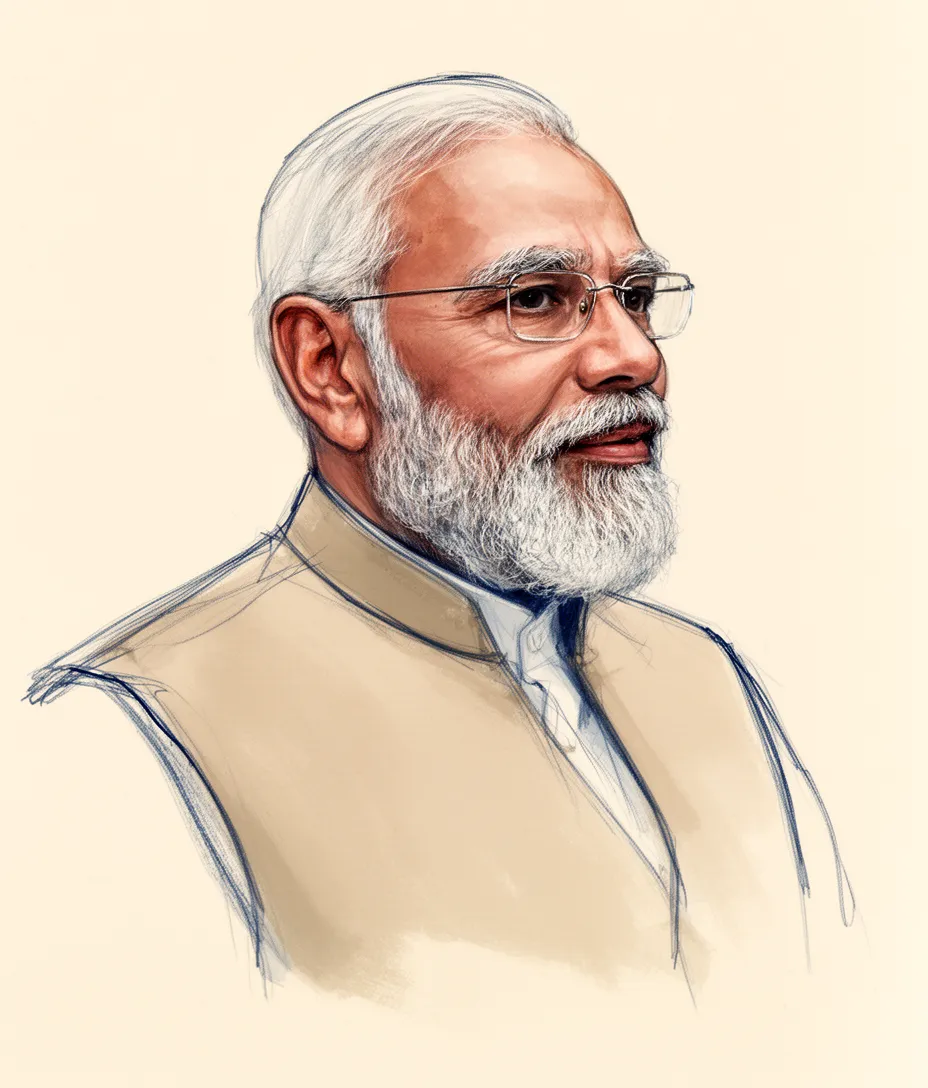
Narendra Modi on Gaza Conflict
Narendra Modi, the Prime Minister of India, maintains a carefully balanced stance on the ongoing Gaza Conflict, reflecting India's long-standing foreign policy position on the Israeli-Palestinian issue. The core of his position involves a strong condemnation of terrorism while also expressing profound worry regarding the civilian toll in Gaza. This dual focus aims to uphold India's traditional role as a voice for the Global South and a committed partner for Palestine's growth.
Modi has consistently reaffirmed India’s commitment to a two-state solution, envisioning a sovereign, viable, and independent Palestinian state coexisting peacefully with Israel while taking into account Israel's legitimate security concerns. This has been articulated in high-level meetings, such as his bilateral discussion with Palestinian President Mahmoud Abbas in New York. Furthermore, India has backed its diplomatic statements with concrete action by providing humanitarian assistance to the people of Gaza.
India's approach under Narendra Modi emphasizes a zero-tolerance stance on terrorism, a position articulated immediately following the October 7th attack by Hamas. Simultaneously, the administration has called for an immediate ceasefire and the release of hostages, viewing dialogue and diplomacy as the essential path forward to end the conflict and prevent regional escalation. This carefully calibrated messaging seeks to balance strong condemnation with humanitarian concern.
Context
As the Prime Minister of India, Narendra Modi is the nation's chief executive and primary foreign policy voice, giving his pronouncements on the Gaza Conflict significant international weight. India traditionally maintains a delicate balancing act between its strong ties with Israel and its historic support for the Palestinian cause and people. This context shapes Modi's public statements, which must navigate domestic political sensitivities, especially concerning India’s Muslim population, and its strategic relationship with the West.
India's long-standing commitment to a two-state solution forms the bedrock of its official position, making this principle a non-negotiable element in Modi's diplomatic engagement on the issue. His administration continues to use multilateral forums like the UNGA and G20 to promote dialogue and humanitarian relief.
Timeline
- PM Modi expressed shock over the terrorist attacks in Israel, stating that India stands in solidarity with Israel during that difficult hour.
- Addressing the Voice of Global South Summit, Modi reiterated condemnation of the October 7th attack and strongly condemned the civilian casualties in the Gaza Strip, urging for restraint, dialogue, and diplomacy.
- At a virtual G20 meeting, Narendra Modi reiterated India's support for a two-state solution and stated that civilian deaths are unacceptable, while also maintaining a zero-tolerance policy on terrorism.
- During a meeting with Palestinian President Mahmoud Abbas, PM Modi expressed 'deep concern' over the humanitarian situation in Gaza and reaffirmed India's continued support for the Palestinian people.
- In a letter for the International Day of Solidarity with the Palestinian People, Modi called for an immediate ceasefire, release of hostages, and end to terrorism, reiterating support for a two-state solution.
- Modi welcomed a proposed U.S. plan to end the Gaza conflict, expressing hope that all parties would support the initiative for peace, security, and development.
Actions Taken
- Diplomatic StatementExpressed shock and solidarity with Israel immediately following the Hamas attack.
- Humanitarian AidReleased an initial installment of $2.5 million to the United Nations Relief and Works Agency (UNRWA) for Palestinian refugees for the 2024-25 fiscal year.
Criticism
Alleged that PM Modi is maintaining a 'complete silence' on the 'horrific atrocities' in Gaza, calling it 'moral cowardice' and a 'total betrayal' of India's traditional stance.
Comparison
India's position under Narendra Modi on the conflict contrasts with domestic political criticism regarding his past actions and Hindu nationalist leanings.
- In Contrast to Domestic Critics: The Congress party criticizes Modi's engagement as appeasement towards his 'good friend' U.S. President Donald Trump and Israeli PM Benjamin Netanyahu, alleging moral compromise compared to India's historical conscience.
- Consistency on Two-State Solution: The call for a two-state solution is consistent with India's historical foreign policy, even as Modi has also been among the first to condemn the October 7th attack on Israel.
Sources7
PM Modi expresses 'deep concern' on Gaza situation during bilateral meeting with Palestinian President
PM Modi expresses “deep concern” on Gaza situation during bilateral meeting with Palestinian President | DD News
'Civilian Deaths Unacceptable': PM Modi On Gaza War; Denounces Terror, Backs Two-State Solution - YouTube
PM Modi expresses shock at news of terrorist attacks in Israel - PIB
PM Modi’s silence on atrocities in Gaza ‘total betrayal’ of what India has stood for: Congress
* This is not an exhaustive list of sources.