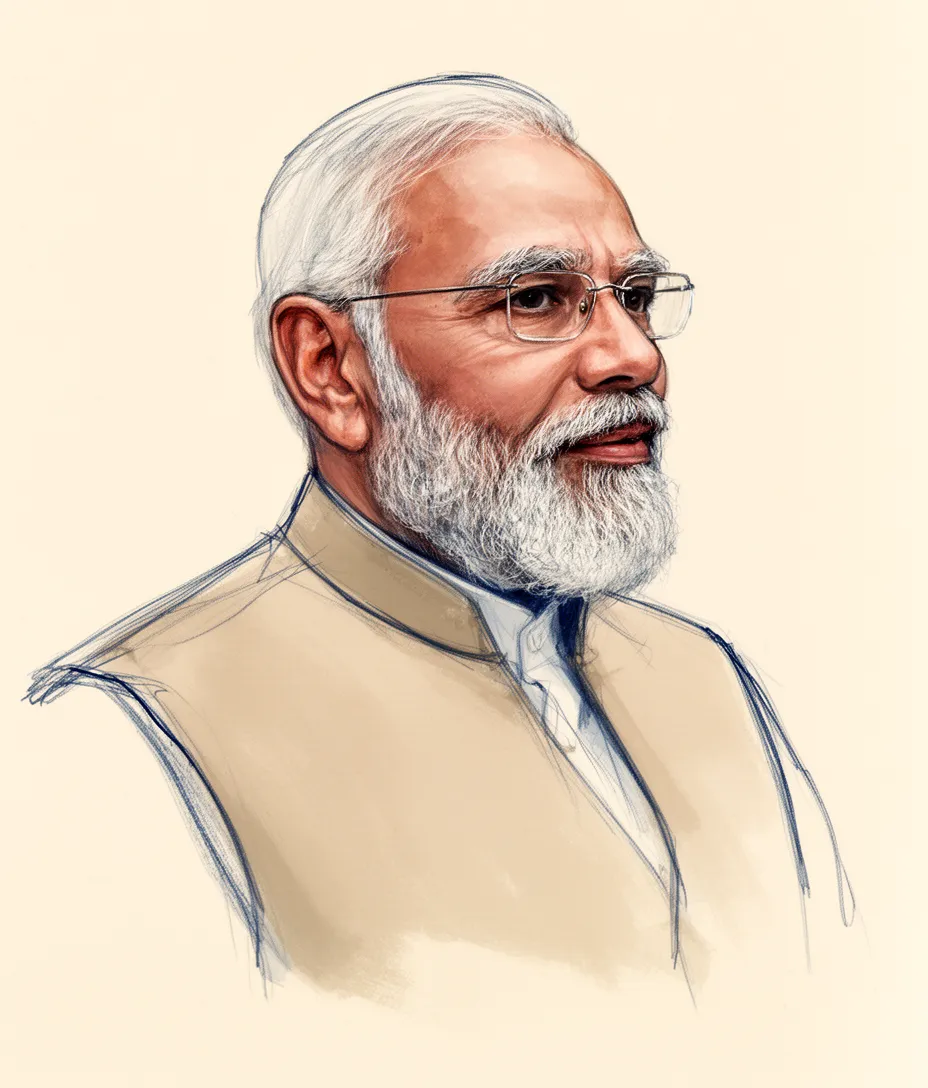
Narendra Modi on United States Relations
Under Prime Minister Narendra Modi, the relationship between India and the United States has fundamentally transformed from an ideology-driven alignment to a pragmatic, interest-based global strategic partnership.
Modi has actively worked to deepen bilateral ties across trade, defence, and technology, emphasizing cooperation in the Indo-Pacific region despite occasional bilateral strains over issues like tariffs or defence sourcing.
His approach signifies a deliberate shift from India's historical non-aligned stance to one focused on long-term strategic goals and mutual interests with the US.
Context
The relationship with the United States is a critical component of Modi's foreign policy, marking a significant evolution from India's post-independence non-aligned posture.
His tenure has seen a clear emphasis on strategic cooperation, particularly in the Indo-Pacific, redefining the partnership based on shared interests rather than ideological proximity.
Timeline
- Following his appointment as Prime Minister, the relationship with the US rapidly improved, which was an unexpected development given the US State Department had previously denied him a visa due to his record on the 2002 Gujarat riots.
- During a visit to the US, PM Modi and the US President reaffirmed commitment to fully realize the US-India 123 Civil Nuclear Agreement, moving forward with building US-designed nuclear reactors in India.
- Following strains due to US tariffs and pressure over Russian oil purchases, PM Modi publicly stated that New Delhi and Washington still shared “very positive” ties and a “forward-looking comprehensive and global strategic partnership” after the US President reaffirmed their personal friendship.
Actions Taken
- DiplomacyEngaged in informal diplomacy, including personal gestures like receiving visiting US dignitaries with hugs, to strengthen the relationship.
- Bilateral TalksFocused on expanding cooperation in trade, critical technologies, energy, defence, and security during high-level discussions.
- Nuclear CooperationParticipated in efforts to advance the US-India 123 Civil Nuclear Agreement by working towards building US-designed nuclear reactors in India, potentially involving technology transfer.
Criticism
Expressed a pessimistic outlook regarding the future of India-US relations under the US administration's emphasis on “rigid transactionalism,” especially concerning strategic partnerships and immigration.
Imposed high tariffs, up to 50 percent, on Indian imports, accusing India of fueling Moscow's attacks on Ukraine by purchasing Russian oil.
Comparison
- Style of Engagement: The style has shifted from an ideological, non-aligned, and at times anti-American stance to a pragmatic approach focused on interest-based policies.
- Strategic Focus: The direction has moved towards greater strategic cooperation, especially in the Indo-Pacific region, contrasting with earlier ideological inflexibility.
Sources5
India's Modi says US ties 'very positive' after strains with Trump over Pakistan ceasefire
India's Modi says ties with US still 'very positive' | The Straits Times
Transforming India-US Relations Under Prime Minister Narendra Modi: A Strategic Partnership Redefined
India walks the Trump tightrope - East Asia Forum
PM Modi speaks to US President Trump, reviews progress of bilateral ties - Deccan Herald
* This is not an exhaustive list of sources.