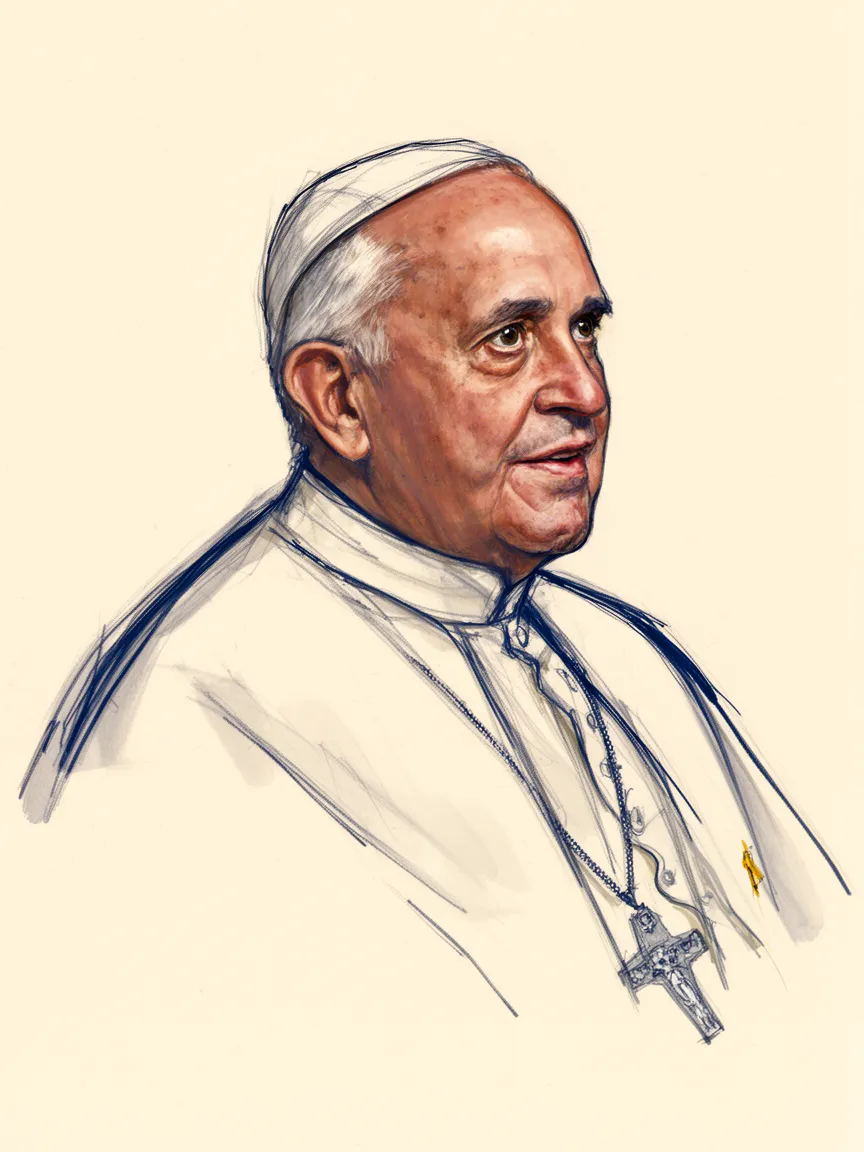
Pope Francis on Artificial Intelligence (AI)
Pope Francis views Artificial Intelligence (AI) as a powerful tool that arises from humanity's God-given creative potential, capable of aiding in various fields from medicine to culture. He has consistently advocated that AI must be developed and deployed ethically, ensuring it serves humanity and enhances well-being, rather than becoming an idol or prioritizing efficiency over human dignity and fraternity.
Despite recognizing the excitement surrounding its possibilities, the Pope voices strong reservations regarding the perils associated with unchecked technological advancement. He is particularly concerned that AI could exacerbate global inequality, contribute to the crisis of truth through the proliferation of fake news, and fundamentally change how humanity conceives of its own identity.
A core tenet of Pope Francis's position is the insistence on maintaining effective and concrete human control over these systems, stating clearly that no machine should ever make life-or-death decisions. He actively calls for international agreements, such as a global treaty, to regulate its use and ensure that AI remains subordinate to fundamental human values like compassion, mercy, and morality.
Timeline
- The Pontifical Academy for Life, alongside major tech firms like Microsoft and IBM, organized a summit resulting in the 'Rome Call for AI Ethics'.
- In his message for the World Day of Peace, Pope Francis called for an international treaty to regulate Artificial Intelligence, emphasizing the need for human values like compassion and mercy.
- Pope Francis addressed the G7 Summit, endorsing AI as a tool derived from creativity but warning against the 'technocratic paradigm' and demanding effective human control, especially over lethal autonomous weapons.
- Addressing leaders at Davos, he stated that AI worsening inequality or increasing fake news should not be considered 'progress' and must serve integral human development.
- Speaking to communications professionals, the Pope said he was more concerned about the development of human intelligence than AI itself, framing AI as a tool that should be used for positive networking.
Actions Taken
- AdvocacyCalled for an international treaty to ensure the ethical development and use of Artificial Intelligence in his message for the World Day of Peace.
- Diplomacy/addressParticipated in discussions on AI ethics by addressing the G7 Summit, making him the first pontiff to speak at the event.
- Policy InitiativeThe Vatican, through the Pontifical Academy for Life, helped organize a summit that produced the 'Rome Call for AI Ethics' document.
Key Quotes
“Technological developments that do not improve life for everyone, but instead create or worsen inequalities and conflicts, cannot be called true progress.”
“No machine should ever choose to take the life of a human being.”
“What worries me — more than artificial intelligence — is natural intelligence, the intelligence that we must develop.”
“Let us think of how much we could accomplish together — thanks to the new tools of the digital era and to artificial intelligence — if instead of turning technology into an idol, we were more committed to networking.”
Sources5
Pope Francis Says He's More Concerned About Human Intelligence Than AI
* This is not an exhaustive list of sources.