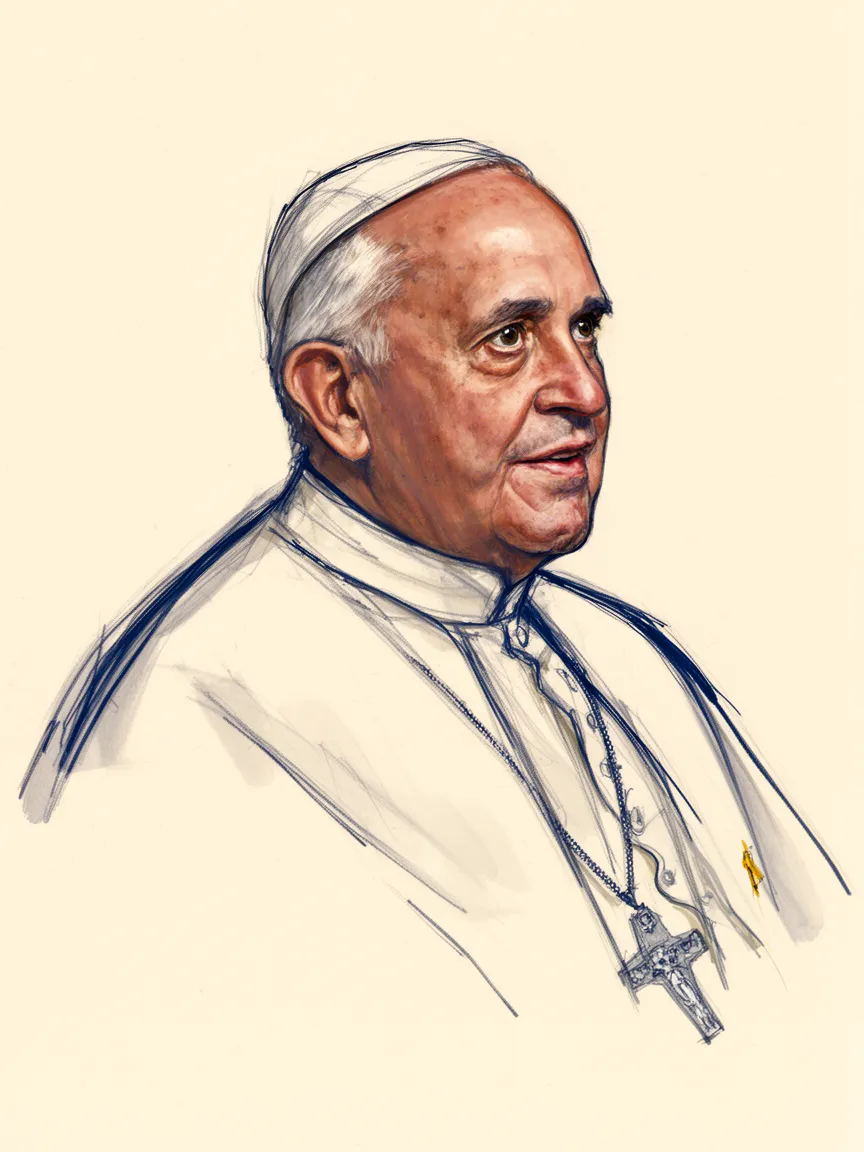
Pope Francis on China
Pope Francis expresses a consistent desire to engage in dialogue with China, viewing encounter as the path to peace and fostering a relationship based on mutual respect.
His position is characterized by a strong admiration for the Chinese people and their culture, which he often highlights, even while acknowledging the historical difficulties between the Holy See and Beijing.
The core of his active policy involves pursuing a pragmatic path to normalize relations, which centers on the controversial 2018 provisional agreement concerning the appointment of Catholic bishops on the mainland.
This engagement strategy seeks to reassure Chinese citizens that the Catholic Church is not a foreign influence and respects their national values, aiming to overcome decades of strained ties since diplomatic relations were severed in 1951.
The Pope has repeatedly indicated a personal wish to visit China, a journey no pontiff has yet accomplished, signaling the high priority he places on this relationship for the future of the Church in the country.
Timeline
- The Pope expressed a desire to visit China and was allowed to fly through Chinese airspace en route to South Korea, extending well-wishes to President Xi Jinping.
- In an interview, Pope Francis spoke in 'glowing terms' about the 'greatness' and culture of the Chinese people, calling for dialogue and refraining from direct criticism of past policies like the one-child policy.
- The Holy See and China signed a historic provisional agreement on the appointment of Catholic bishops, a key step in Francis's agenda to repair relations.
- The Pope described the Vatican-China deal as 'not ideal' but 'moving well,' framing it as diplomacy being 'the art of the possible' rather than the 'ideal way.'
- Speaking after a trip to Mongolia, Pope Francis reassured that 'all channels are open' with China and stressed the need for progress on the religious aspect so the Church is not seen as a 'foreign power.'
- The provisional agreement with China on bishop appointments was renewed for a third time, extending the controversial deal for a longer period of four years.
Actions Taken
- Diplomatic AgreementSigned a provisional agreement with Beijing on the appointment of Catholic bishops, which grants the Pope the right to appoint and veto candidates proposed by the CCP.
- Episcopal RecognitionApproved seven bishops who had previously been appointed by Beijing without papal approval, withdrawing earlier Church censures against them.
- Public DiplomacyExpressed personal admiration for the Chinese people and culture in multiple public statements, seeking to foster a cultural bridge.
- Episcopal ReconciliationOfficially recognized a controversial transfer of Bishop Shen Bin to the Diocese of Shanghai in 2023, which had been executed without prior Vatican knowledge.
Criticism
Denounced the 2018 agreement as an 'incredible betrayal' and a sellout to the communist government, warning it would damage the Church's credibility.
Questioned the practical implementation of the deal, pointing to reported harassment of unregistered bishops and continuing government control over religious affairs.
Pointed out that the rate of bishop appointments under the deal is very slow, suggesting it would take decades to fill all vacant dioceses.
Comparison
The Pope's engagement strategy with China is often compared to the Vatican's Ostpolitik during the Cold War, which involved engagement with Communist governments despite persecution of the Church, suggesting a long-term view over immediate ideal conditions.
Sources8
Three things the pope said in an interview on China — and a couple he didn't
* This is not an exhaustive list of sources.