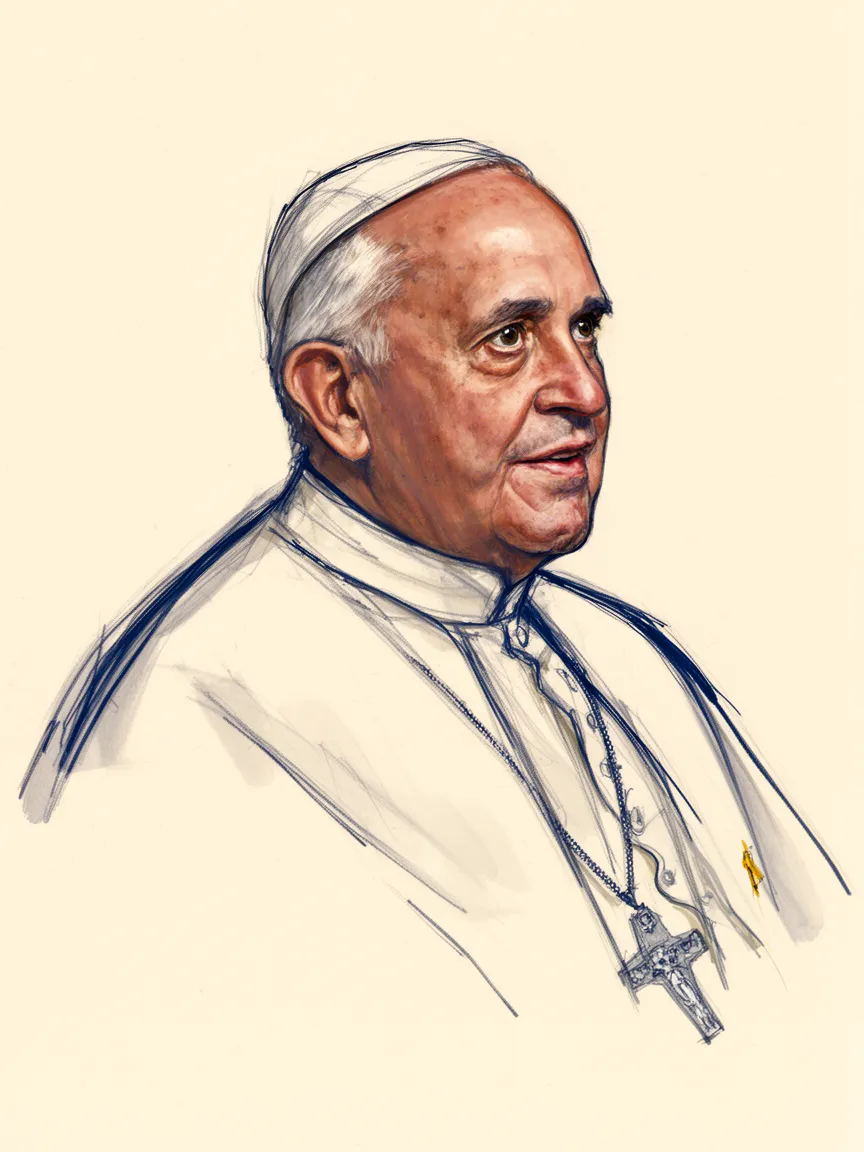
Pope Francis on Environmental Protection
Pope Francis expresses a profound conviction regarding the necessity of Environmental Protection, considering the Earth as our common home and a gift from God that demands responsible stewardship. He asserts that climate change is real and largely results from human activity, emphasizing that the destruction of nature reflects violence within the human heart wounded by sin.
His stance integrates ecological concern with social issues, coining the concept of integral ecology, which demands that debates on the environment must also incorporate questions of justice. This framework highlights that the world's poorest and most vulnerable populations suffer the most from environmental damage, meaning humanity must hear both the "cry of the earth and the cry of the poor."
Pope Francis urges a fundamental shift away from a culture driven by greed, consumerism, and the arrogant domination of nature toward one rooted in respect, care, and contemplation of creation's beauty. He calls upon all people of goodwill, not just Catholics, to take swift and unified global action to alter the course of environmental history and build a more equitable world for current and future generations.
Context
The topic of Environmental Protection is central to the pontificate of Pope Francis because he views it as inseparable from Catholic social teaching. His encyclical Laudato Si' is the second published by the Pope and is generally seen as the first one entirely his own work, signifying its importance to his personal agenda.
He frames the crisis not only as a scientific or economic problem but as a moral imperative requiring honesty, courage, and responsibility from leaders and individuals alike. This holistic approach connects the care for the Earth with solidarity for the poor, stating that environmental degradation disproportionately affects vulnerable populations.
Actions Taken
- Official DocumentPublished the encyclical Laudato Si' ("On Care for Our Common Home"), which directly addresses environmental degradation, global warming, and calls for swift global action.
- Official Document Follow UpReleased a follow-up document to the encyclical Laudato Si' to address current environmental issues.
Key Quotes
Nature is a magnificent book in which God speaks to us and grants us a glimpse of his infinite beauty and goodness. Rather than a problem to be solved, the world is a joyful mystery to be contemplated with gladness and praise.
Take good care of creation. St. Francis wanted that. People occasionally forgive, but nature never does. If we don't take care of the environment, there's no way of getting around it.
You are called to care for creation not only as responsible citizens but also as followers of Christ! Respect for the environment means more than simply using cleaner products or recycling what we use. These are important aspects, but not enough.
Although the post-industrial period may well be remembered as one of the most irresponsible in history, nonetheless there is reason to hope that humanity at the dawn of the twenty-first century will be remembered for having generously shouldered its grave responsibilities.