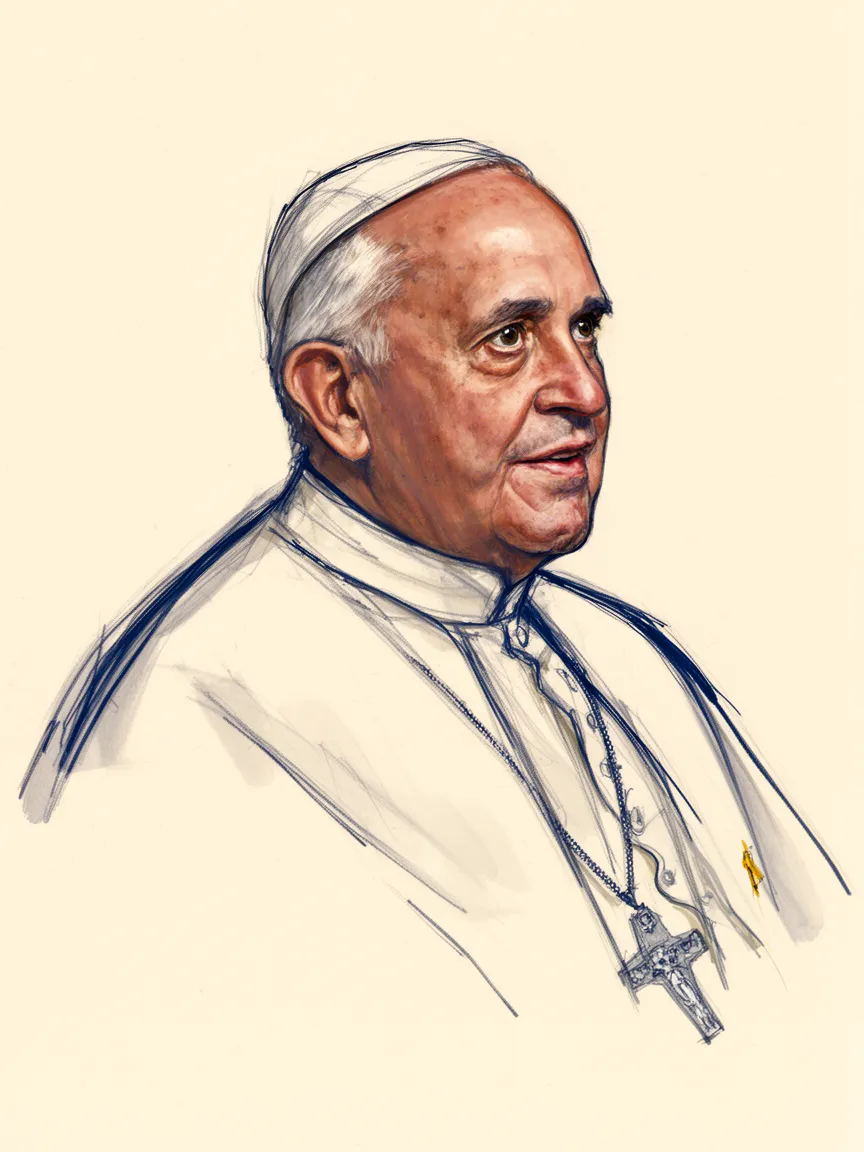
Pope Francis on Interreligious Dialogue
Pope Francis holds a deeply committed and public stance on Interreligious Dialogue, integrating it consistently into his teachings and pontificate. He views dialogue as an essential means to foster human fraternity and heal a world that is often divided by tensions, hatred, and war.
For the Pope, dialogue begins with an attitude of respect for the other person and the conviction that everyone has something valuable to share. This approach requires a cordial reception of others' viewpoints rather than a prior condemnation of them, even when fundamental differences persist.
This commitment extends beyond formal meetings; it is proposed as a way of life centered on building bridges between people of all faiths and even non-believers. The ultimate goal is to see others as brothers and sisters to be welcomed and embraced, promoting peace and security globally.
Context
The importance of Interreligious Dialogue to Pope Francis is directly linked to his understanding of the role of faith leaders in global peacemaking. His title, pontiff, is interpreted by him as a "builder of bridges," reflecting this core mission to connect disparate groups.
This focus is also seen in his broader efforts to foster social friendship, suggesting that dialogue is not an isolated activity but must intersect with economic, political, and social matters to be truly effective in promoting human well-being.
Actions Taken
- Diplomatic InitiativeCalled for intensified outreach and dialogue, particularly with Islam, shortly after his election in 2013.
- Papal TeachingWrote the encyclical Fratelli Tutti (FT), which heavily features themes of universal fraternity and the necessity of interreligious encounter for building a better world.
- Joint DeclarationSigned the Document on Human Fraternity for World Peace and Living Together with the Grand Imam of Al-Azhar, Ahmad Al-Tayeb, in 2019, a foundational text for Catholic-Muslim relations.
- Papal AddressMet with participants from the plenary assembly of the Pontifical Council for Interreligious Dialogue to underline the importance of friendship and respect across religious traditions.
Key Quotes
Dialogue is born from an attitude of respect for the other person, from a conviction that the other person has something good to say. It assumes that there is room in the heart for the person's point of view, opinion, and proposal. Dialogue entails a cordial reception, not a prior condemnation.
Our world is divided and torn apart by hatred, tensions, wars and threats of nuclear conflict. This situation pushes us, believers in the God of peace, to pray and work for dialogue, reconciliation, peace, security and the integral development of all of humanity.
Interreligious dialogue, the pope said, “allows one to break out from the structured frameworks to open themselves to an encounter with the large, universal human family.”
Comparison
The Pope’s emphasis on dialogue and friendship builds upon the foundation laid by his predecessors, but with a distinct focus:
- Continuity with Benedict XVI: Both pontiffs supported interreligious efforts, but Francis often frames it more in terms of social action and fraternity as a direct response to global conflict.
- Emphasis on Practical Wisdom: Francis acknowledges that non-Christians possess "various forms of practical wisdom which help people to bear suffering and to live in greater peace and harmony," suggesting a greater mutual benefit than sometimes emphasized previously.
Sources5
Pope Francis and Interreligious Dialogue
* This is not an exhaustive list of sources.