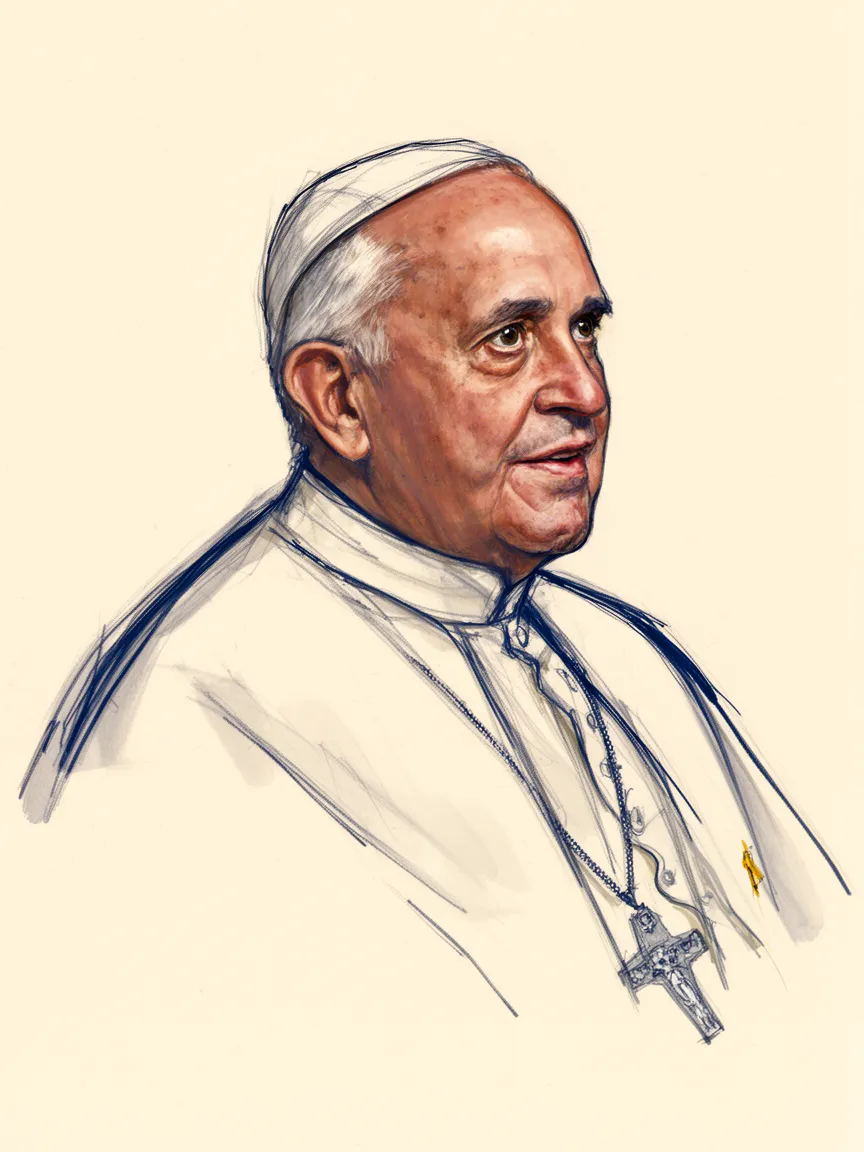
Pope Francis on Russia-Ukraine War
Pope Francis maintains a consistent call for peace and dialogue regarding the Russia-Ukraine War, although his specific statements have varied and sometimes caused controversy.
He has condemned the "ferocity and cruelty" of the Russian troops and the invasion as a violation of a country's right to self-determination, while also cautioning against viewing the conflict in simplistic good-versus-evil terms. The Pope has repeatedly stated his desire for an end to the suffering of the Ukrainian people and has urged all parties toward negotiation, even suggesting that Ukraine should have the courage to negotiate if facing defeat.
This diplomatic effort has led to criticisms that he is not sufficiently condemning Russia or is encouraging concessions from Ukraine. The Vatican's traditional diplomatic neutrality, which Pope Francis seeks to maintain, often underpins his appeals for peace, dialogue, and humanitarian concern for all victims.
Timeline
- Pope Francis condemned the invasion of Ukraine shortly after it began, calling for an immediate stop to the violence.
- Pope Francis mentioned speaking with Russian President Vladimir Putin about stopping the war and suggested the conflict's causes were complex, citing warnings that NATO was 'barking at Russia's door.'
- In an interview, Pope Francis stated the Moscow invasion was 'perhaps somehow provoked' and warned against perceiving the conflict as purely good versus evil, while still condemning Russian cruelty.
- Pope Francis publicly suggested Ukraine should 'raise the white flag' and negotiate an end to the war, sparking significant international backlash.
- President Volodymyr Zelenskyy met with Pope Francis at the Vatican.
- Pope Francis wrote to his nuncio in Russia stating there is no religious justification for the war, and called for renewed diplomatic efforts.
Actions Taken
- Diplomatic OutreachCalled Russian President Vladimir Putin to inquire about stopping the war shortly after the 2022 invasion.
- Diplomatic CorrespondenceSent letters to the Vatican nuncios in both Ukraine and Russia, repeatedly calling for prayers and dialogue for peace.
Key Quotes
I think that the strongest one is the one who looks at the situation, thinks about the people and has the courage of the white flag, and negotiates.
The word negotiate is a courageous word. When you see that you are defeated, that things are not going well, you have to have the courage to negotiate. Negotiations are never a surrender.
It's wrong to think of [the Russia-Ukraine war] like a cowboy movie where there are good guys and bad guys.
The patriarch cannot turn himself into Putin's altar boy.
their cry rises to God, invoking peace instead of war, dialogue instead of the din of weapons, solidarity instead of partisan interests, because one cannot kill in the name of God.
Criticism
Responded to the 'white flag' comments by stating Ukraine's flag is yellow and blue, and they will never raise another one.
Suggested that for balance, the Pope should encourage Putin to withdraw his army, which would immediately bring peace.
Described the Pope's early attempt to call Vladimir Putin to ask him to stop the war as a 'disaster.'
Sources5
Pope Francis says Ukraine war was 'perhaps somehow provoked'
* This is not an exhaustive list of sources.