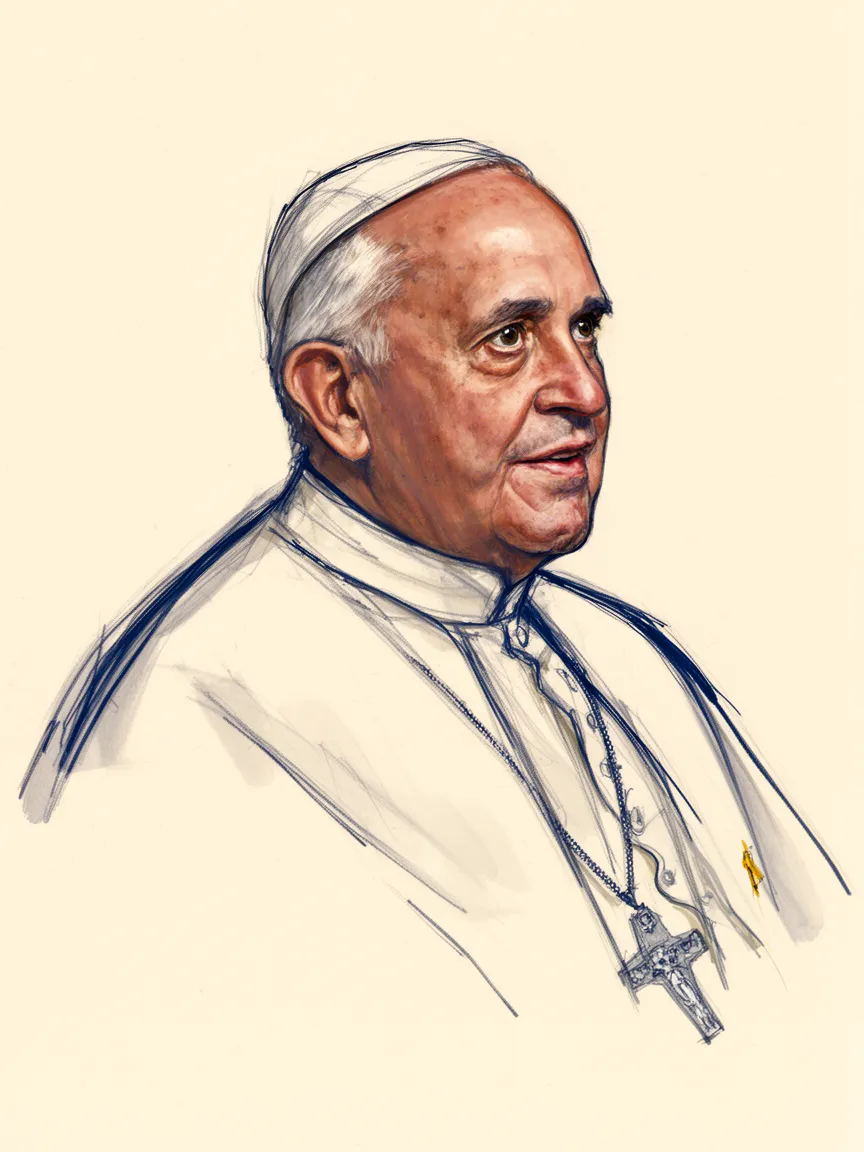
Pope Francis on Social Justice
Pope Francis links social justice directly to the human dignity of every person, emphasizing that it is a moral imperative to actively combat societal wrongs. He consistently calls for an end to the "throwaway culture" and the mentality of indifference that allows vast inequalities to persist. This commitment is foundational to his pontificate and shapes his critique of global economic structures.
His advocacy extends beyond simple charity to demanding structural change, advocating for economic systems that prioritize fairness, inclusivity, and the equitable distribution of resources over the absolute autonomy of markets. Pope Francis insists that true social justice is impossible if the human person is not the center of concern, criticizing scenarios where the wealth of a minority increases exponentially while the majority suffers from crumbling incomes.
Furthermore, Pope Francis integrates environmental justice into his framework, asserting in his encyclical Laudato Si' that caring for the environment is inseparable from caring for the world's most vulnerable populations. He actively champions solidarity as the essential virtue for creating a more just and compassionate world, urging leaders and individuals to work together for the common good.
Context
The topic of social justice is central to Pope Francis's papacy because it is a cornerstone of Catholic Social Teaching (CST), a body of doctrine developed over centuries in response to modern social questions. His role as Pope grants him a significant moral platform to influence global discourse on ethics and economics.
Pope Francis’s approach builds upon this tradition, emphasizing key principles like the preferential option for the poor, solidarity, and the common good. He is noted for addressing issues like economic inequality and environmental concern—which he explicitly links—more directly and forcefully than some of his predecessors, integrating them into a holistic view of justice.
Actions Taken
- Official DocumentIssued the encyclical Laudato Si', which frames environmental care as an issue of social justice affecting the poor.
- Official DocumentIssued the encyclical Fratelli tutti, focusing on fraternity and social friendship as paths toward a more just global order.
- Message to LeadersCalled on world leaders at the World Economic Forum to implement policies supporting the family and offering opportunities for integral human development.
- Public Action/StatementApologized for the Catholic Church's role in the cultural genocide of Indigenous tribes during a trip to Canada.
Key Quotes
While the income of a minority is increasing exponentially, that of the majority is crumbling. This imbalance results from ideologies which uphold the absolute autonomy of markets and financial speculation...
There cannot be true social justice amid deep inequality.
We must move forward together as one in a renewed spirit of fraternity and solidarity, cooperating generously for the common good.
How I would love a Church that is poor and for the poor.
Criticism
The Pope has faced criticism from some quarters for actions or statements that they felt fell short of his public remarks or undercut his own commitments on social issues.
His encyclicals, Laudato si' and Fratelli tutti, were criticized by some for being overly optimistic in their proposed solutions for the social, political, and economic orders.
Sources6
Building a Just Society: Lessons from Pope Francis and Catholic Teachings
* This is not an exhaustive list of sources.